✓ Quantum computers use qubits, which can represent 0, 1, or both simultaneously.
✓ Superposition and entanglement are key quantum phenomena enabling their power.
✓ They can solve certain complex problems intractable for classical computers.
✓ Applications range from drug discovery to financial modeling and AI.
How It Works
1
Qubits vs. Bits
Classical computers use bits (0 or 1). Quantum computers use qubits, which leverage quantum mechanics to exist in multiple states simultaneously (superposition).
2
Superposition
A qubit can be 0, 1, or a combination of both at the same time. This allows quantum computers to process vast amounts of information in parallel, dramatically increasing computational power.
3
Entanglement
Entanglement links qubits together, so the state of one instantly influences the state of another, regardless of distance. This creates a powerful, interconnected computational system.
4
Quantum Gates
Similar to logic gates in classical computing, quantum gates manipulate qubit states. These operations, when applied in sequence, form quantum algorithms designed to solve specific problems.
The Fundamental Leap: Beyond Classical Computing
Photo: Google DeepMind / Pexels
To truly grasp what is quantum computing explained, we must first understand its fundamental departure from the classical computers we use daily. Our laptops, smartphones, and even supercomputers operate on principles developed decades ago, processing information as binary bits—either a 0 or a 1. This deterministic approach, while incredibly powerful for a vast array of tasks, hits a wall when confronted with problems of immense complexity, such as simulating molecular interactions for new drug discovery, optimizing global logistics at an unprecedented scale, or breaking modern encryption standards. The number of variables and potential outcomes in these scenarios grows exponentially, quickly overwhelming even the most powerful classical machines. This is where the quantum leap becomes critical. Unlike classical bits, quantum computers utilize 'qubits'. A qubit isn't just a 0 or a 1; thanks to the weird and wonderful laws of quantum mechanics, a qubit can be both 0 and 1 simultaneously. This phenomenon is known as superposition. Imagine flipping a coin that, instead of landing on heads or tails, could exist as both heads AND tails until you observe it. This ability to hold multiple states at once allows quantum computers to explore many possibilities concurrently, rather than sequentially. Instead of trying each path one by one, a quantum computer can, in a sense, explore all paths at the same time. This parallel processing capability is the cornerstone of quantum computing's potential. Furthermore, another mind-bending quantum phenomenon, entanglement, allows qubits to become inextricably linked. Even when physically separated, the state of one entangled qubit instantly influences the state of another. This creates a deeply interconnected network where the processing power doesn't just add up but multiplies exponentially with each additional qubit. It's this combination of superposition and entanglement that grants quantum computers their extraordinary computational advantage for specific types of problems. While still in its nascent stages, this radical shift in how information is processed promises to unlock solutions to challenges that have remained intractable for centuries, paving the way for breakthroughs across science, medicine, finance, and artificial intelligence. Understanding this fundamental difference is the first step in appreciating the profound implications of this emerging technology.
Key Principles of Quantum Mechanics in Action
Photo: Pixabay / Pexels
The power of quantum computing is rooted in three core principles of quantum mechanics: superposition, entanglement, and interference. Understanding these concepts is paramount to fully grasping what is quantum computing explained. We've touched upon superposition – the ability of a qubit to exist in multiple states (0, 1, or both) simultaneously. This is not merely a theoretical concept; it's physically realized in various ways, such as the spin of an electron or the polarization of a photon. When a quantum computer initializes its qubits, it sets them up in a state of superposition, creating a complex array of possibilities that can be explored in parallel. This is akin to a classical computer needing to run countless calculations sequentially, whereas a quantum computer can perform a single calculation that implicitly covers all these possibilities. The second crucial principle is entanglement. Imagine two coins that, no matter how far apart, always land on the same side, or always on opposite sides, even though each individual coin's outcome is random. That's a simplified way to think about entanglement. When qubits become entangled, their fates are intertwined. Measuring the state of one instantly tells you the state of the other, regardless of the distance between them. This phenomenon is so bizarre that Albert Einstein famously called it 'spooky action at a distance.' In quantum computing, entanglement is used to create highly correlated states between qubits, which allows for complex calculations and information transfer that would be impossible with independent qubits. It enables a kind of shared computational resource where the whole is greater than the sum of its parts. Finally, quantum interference is the mechanism by which quantum computers amplify the correct answers and cancel out the incorrect ones. Think of waves in water: when two waves meet, they can either reinforce each other (constructive interference) or cancel each other out (destructive interference). Quantum algorithms are designed to manipulate the probabilities of qubit states such that the paths leading to correct solutions interfere constructively, increasing their likelihood of being measured, while paths leading to incorrect solutions interfere destructively, suppressing their likelihood. This directed interference allows the quantum computer to 'zero in' on the right answer from the vast landscape of possibilities created by superposition and entanglement. These three principles, working in concert, unlock the extraordinary potential of quantum computing, allowing it to tackle problems that are beyond the reach of even the most powerful classical supercomputers.
Building a Quantum Computer: Challenges and Approaches
Photo: Pok Rie / Pexels
The theoretical promise of quantum computing is immense, but translating these quantum mechanical principles into functional hardware presents monumental engineering challenges. Building a quantum computer is not like building a more powerful classical chip; it's an entirely different paradigm. One of the primary hurdles is qubit stability. Qubits are incredibly fragile and prone to 'decoherence,' where they lose their quantum properties and revert to classical bits due to interactions with their environment (heat, electromagnetic fields, vibrations). To maintain superposition and entanglement, qubits must be isolated from these external influences, often requiring extreme conditions like temperatures near absolute zero (colder than deep space) or ultra-high vacuums. This makes quantum computers large, expensive, and difficult to operate. Several different physical approaches are being explored to create stable and controllable qubits. Superconducting qubits, used by companies like IBM and Google, are tiny circuits chilled to cryogenic temperatures. Trapped-ion qubits, pursued by companies like IonQ, use electromagnetic fields to suspend individual atoms and manipulate them with lasers. Other approaches include topological qubits, photonic qubits, and silicon-based qubits, each with its own advantages and disadvantages in terms of stability, scalability, and error rates. Error correction is another massive challenge. Because qubits are so susceptible to noise and decoherence, quantum computations are highly error-prone. Developing robust quantum error correction codes is crucial for building fault-tolerant quantum computers that can perform complex calculations reliably. This typically requires a large number of physical qubits to encode a single 'logical' qubit, further complicating scalability. Despite these formidable obstacles, significant progress is being made. Companies and research institutions worldwide are investing heavily in quantum hardware development, continuously pushing the boundaries of qubit count, coherence times, and connectivity. While a fully fault-tolerant, universal quantum computer is still some years away, the current generation of 'Noisy Intermediate-Scale Quantum' (NISQ) devices is already demonstrating capabilities that hint at the transformative potential to come. The journey from theoretical possibility to practical quantum machine is a testament to human ingenuity and perseverance.
Quantum's Impact: Potential Applications and Ethical Considerations
Photo: Pachon in Motion / Pexels
The implications of what is quantum computing explained extend far beyond theoretical physics; they promise to revolutionize a vast array of industries and aspects of human life. From medicine to finance, materials science to artificial intelligence, the potential applications are staggering. In drug discovery and materials science, quantum computers could simulate molecular interactions with unprecedented accuracy, accelerating the development of new pharmaceuticals, designing novel catalysts, and engineering materials with bespoke properties. This could lead to cures for currently untreatable diseases, more efficient energy solutions, and lighter, stronger materials for everything from aerospace to consumer goods. For artificial intelligence, quantum machine learning algorithms could process vast datasets exponentially faster, leading to more sophisticated AI models, enhanced pattern recognition, and more powerful optimization techniques. This could impact everything from personalized medicine and autonomous systems to advanced financial modeling and climate prediction. The financial sector stands to benefit immensely from quantum optimization algorithms, which could optimize investment portfolios, detect fraud with greater precision, and create more accurate market predictions. Furthermore, quantum cryptography holds the promise of truly unhackable communication, while also posing a significant threat to current encryption methods (e.g., RSA) that underpin much of our digital security. This dual-edged sword highlights the critical ethical considerations surrounding quantum computing. The ability to break current encryption could destabilize global cybersecurity, necessitating a rapid transition to 'post-quantum cryptography.' The immense power of quantum computing also raises questions about access, control, and potential misuse. Ensuring equitable access, developing international standards, and addressing the societal impact of such a powerful technology are crucial. Researchers and policymakers are already working on these 'quantum ethics' to ensure that this revolutionary technology is developed and deployed responsibly for the benefit of all humanity. These discussions are as vital as the technological advancements themselves, ensuring that as we unlock the secrets of the quantum world, we do so with foresight and wisdom.
Comparison
Feature
Quantum Computer
Classical Computer
Human Brain
Information Unit
Qubit (0, 1, or both)
Bit (0 or 1)
Neuron (on/off, complex states)
Processing Method
Superposition, Entanglement
Sequential, Binary Logic
Parallel, Associative
Problem Solving
Specific complex optimization, simulation
General purpose, vast data processing
Pattern recognition, intuition, learning
Scalability
Extremely challenging (decoherence)
Highly scalable (Moore's Law)
Biological limits, energy intensive
Error Rate
High (requires error correction)
Low (highly reliable)
Subject to bias, fatigue
Best Use Cases
Drug discovery, materials science, AI, finance
Everyday computing, large databases, internet
Creativity, emotion, consciousness
What Readers Say
★★★★★
"This article provided an exceptionally clear explanation of what is quantum computing explained. As a biophysicist, I found the analogies for superposition and entanglement particularly helpful in demystifying these complex concepts."
Dr. Evelyn Reed · Boston, MA
★★★★★
"I've tried to understand quantum computing before, but this is the first resource that truly broke it down without oversimplifying. The distinctions between classical and quantum are very well articulated."
Mark Chen · San Francisco, CA
★★★★★
"The section on building a quantum computer really highlighted the immense engineering challenges, which made me appreciate the progress even more. It helped me understand why this technology isn't ubiquitous yet."
Sarah Miller · Austin, TX
★★★★★
"A very comprehensive overview. While some parts are still dense for a layperson, the overall structure and depth of information provided an excellent foundation for further learning about quantum computing's potential."
David Kim · Seattle, WA
★★★★★
"As an investor in emerging tech, understanding what is quantum computing explained is crucial. This article gave me a solid grasp of its current state and future impact, informing my strategic decisions."
Jessica Lopez · New York, NY
Frequently Asked Questions
What is the main difference between quantum and classical computers?
The main difference lies in how they process information. Classical computers use bits (0 or 1), processing data sequentially. Quantum computers use qubits, which can be 0, 1, or both simultaneously (superposition) and can be linked (entanglement), allowing for parallel processing of complex problems.
Is quantum computing going to replace classical computers?
No, quantum computing is not expected to replace classical computers for general tasks. It's a specialized tool designed to solve specific, highly complex problems that are intractable for classical machines. They will likely work in tandem, with classical computers handling everyday tasks and quantum computers tackling niche, computationally intensive challenges.
How do quantum computers perform calculations if qubits are so unstable?
Quantum computers perform calculations by manipulating the probability distribution of qubit states using quantum gates. While qubits are indeed unstable (prone to decoherence), engineers employ extreme isolation (e.g., near absolute zero temperatures) and are developing sophisticated quantum error correction techniques to maintain their quantum properties long enough for calculations.
How much does a quantum computer cost?
Currently, quantum computers are incredibly expensive, ranging from millions to tens of millions of dollars, largely due to the extreme engineering required for cooling, isolation, and control. They are primarily accessible through cloud-based services offered by companies like IBM, Google, and Amazon, rather than direct purchase.
How does quantum computing compare to artificial intelligence?
Quantum computing is a type of hardware and computational paradigm, while artificial intelligence (AI) is a field of computer science focused on creating intelligent machines. Quantum computers can enhance AI by speeding up complex machine learning algorithms, processing larger datasets, and enabling more sophisticated models, effectively acting as a powerful tool for AI development.
Who should be learning about quantum computing now?
Researchers in fields like materials science, chemistry, drug discovery, and finance should be exploring quantum computing's potential. Additionally, computer scientists, mathematicians, and engineers interested in cutting-edge technology, as well as business leaders looking for disruptive innovation, should gain a foundational understanding.
What are the risks associated with quantum computing?
The primary risks include the potential to break current encryption standards, posing a threat to data security and privacy. There are also ethical concerns regarding equitable access and potential misuse of such powerful technology. Robust research into post-quantum cryptography and international governance is ongoing to mitigate these risks.
What is the future outlook for quantum computing?
The future outlook is highly promising. While still in its early stages, quantum computing is expected to mature significantly over the next decade. We anticipate breakthroughs in various fields as more stable and powerful quantum computers are developed, moving from NISQ devices to fault-tolerant universal quantum computers, unlocking solutions to currently unsolvable problems.
Embark on your journey into the future of computation. Understanding what is quantum computing explained today positions you at the forefront of tomorrow's technological landscape. Explore its potential and prepare for the next era of innovation.

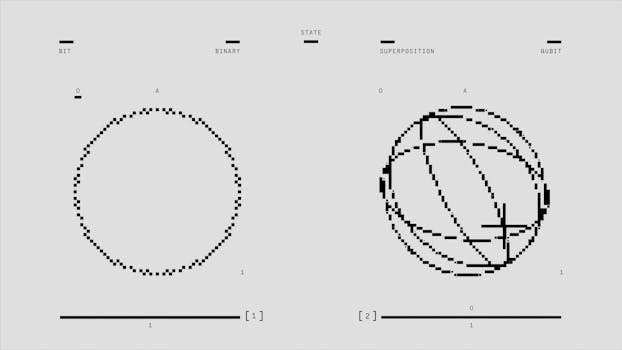 Photo: Google DeepMind / Pexels
 Photo: Pixabay / Pexels
 Photo: Pok Rie / Pexels
 Photo: Pachon in Motion / Pexels