✓ AI encompasses machines performing human-like cognitive functions.
✓ Machine Learning is a subset of AI, enabling systems to learn from data.
✓ Deep Learning is a specialized ML technique using neural networks.
✓ AI is rapidly transforming industries from healthcare to finance.
How It Works
1
Data Collection & Preparation
AI systems require vast amounts of data to learn. This data is gathered, cleaned, and organized to be usable for training.
2
Algorithm Selection & Training
Developers choose suitable algorithms (e.g., neural networks) and feed the prepared data to the AI model. The model then learns patterns and relationships within the data.
3
Model Evaluation & Refinement
After training, the AI model's performance is tested against new, unseen data. Adjustments are made to improve accuracy and efficiency.
4
Deployment & Application
Once optimized, the AI model is deployed into real-world applications. It can then perform tasks like image recognition, natural language processing, or predictive analysis.
Demystifying Artificial Intelligence: The Core Concepts
Photo: Laura Musikanski / Pexels
Artificial Intelligence, often abbreviated as AI, is a field of computer science dedicated to creating machines that can perform tasks typically requiring human intelligence. This isn't just about robots walking around; it's about systems that can perceive, reason, learn, and act in complex environments. At its heart, AI aims to simulate human cognitive abilities, enabling machines to solve problems, understand language, recognize patterns, and even make decisions. The journey to define 'intelligence' in a machine context is ongoing, evolving as our understanding of both human cognition and computational power advances.
The concept of AI isn't new; it has roots dating back to the 1950s with pioneers like Alan Turing, who pondered the question, "Can machines think?" Early AI research focused on symbolic reasoning, attempting to encode human knowledge into rules that computers could follow. This led to expert systems that could make decisions in specific domains, but they often struggled with ambiguity and real-world complexity. The 'AI winter' periods, characterized by funding cuts and skepticism, followed these early ambitious but often unmet promises. However, advancements in computing power, the availability of massive datasets, and new algorithmic approaches have ushered in a golden age for AI.
Today, when we talk about AI, we often refer to its prominent subfields: Machine Learning (ML) and Deep Learning (DL). Machine Learning is a method of teaching computers to learn from data without being explicitly programmed. Instead of writing specific instructions for every possible scenario, ML algorithms identify patterns in data and use those patterns to make predictions or decisions. For instance, an ML algorithm can learn to distinguish between spam and legitimate emails by analyzing thousands of examples. This iterative learning process allows systems to improve their performance over time as they are exposed to more data. Deep Learning takes this a step further, utilizing artificial neural networks with multiple layers (hence 'deep') to model high-level abstractions in data. Inspired by the structure and function of the human brain, these networks are particularly effective at tasks like image recognition, speech processing, and natural language understanding. The ability of deep learning models to automatically discover intricate patterns in raw data has revolutionized many AI applications. Understanding these foundational concepts is crucial to grasping the true scope and potential of what is artificial intelligence today. For a deeper dive into how these systems are built, explore the principles of AI development.
Beyond ML and DL, other branches of AI include Natural Language Processing (NLP), which enables computers to understand, interpret, and generate human language; Computer Vision, allowing machines to 'see' and interpret visual information from the world; Robotics, which integrates AI into physical machines to perform tasks in the real world; and Expert Systems, which, while an older branch, still find niche applications in areas requiring specialized knowledge and reasoning. Each of these subfields contributes to the broader goal of creating intelligent agents that can interact with and understand the world in increasingly sophisticated ways. The convergence of these areas is what truly powers the most advanced AI systems we see today, moving us closer to truly intelligent machines that can assist, augment, and even transcend human capabilities in various domains.
The Landscape of Artificial Intelligence: Types and Categories
Photo: Matheus Bertelli / Pexels
To truly comprehend what is artificial intelligence, it's helpful to categorize it. AI is not a monolithic entity; rather, it exists along a spectrum of capabilities and functionalities. The most common way to classify AI is into four types, based on their complexity and cognitive abilities: Reactive Machines, Limited Memory, Theory of Mind, and Self-Aware AI. These categories help us understand the current state of AI and where the field is headed.
Reactive Machines are the most basic form of AI. They operate purely on present data, reacting to specific inputs without forming memories or learning from past experiences. IBM's Deep Blue, which famously beat chess grandmaster Garry Kasparov, is an excellent example. Deep Blue could analyze the current chessboard and predict the best next move, but it couldn't learn from its past games or understand the concept of a 'game' beyond its immediate calculations. These systems are highly specialized and excel at narrow tasks but lack any form of 'memory' or adaptability. They don't have a concept of the world outside their immediate perception and are incapable of independent learning or decision-making beyond their programmed responses.
Limited Memory AI represents a significant leap forward. These systems can look into the past, using previously learned experiences or observed data to inform future decisions. Most of the AI applications we interact with today, such as self-driving cars, virtual assistants, and recommendation engines, fall into this category. For instance, a self-driving car uses sensors to observe its surroundings (other cars' speed, lane markings, traffic lights) and combines this with recent historical data (e.g., the trajectory of nearby vehicles over the last few seconds) to make immediate decisions like changing lanes or braking. However, their 'memory' is temporary and task-specific; they don't retain a lifetime of experiences like humans do. They learn patterns and make predictions based on data they've been trained on and recent observations, but they don't develop a general understanding or 'common sense'.
Theory of Mind AI is a futuristic category that aims to endow machines with the ability to understand emotions, beliefs, intentions, and desires—not just their own, but also those of humans and other AI entities. This level of AI would be able to comprehend that humans have thoughts and feelings that influence their behavior, allowing for more natural and intuitive human-computer interaction. Imagine an AI assistant that not only understands your spoken words but also your tone of voice, facial expressions, and even predicts your emotional state to offer more empathetic and helpful responses. This is a significant hurdle for AI research, as it requires a deep understanding of psychology and the ability to model complex social dynamics. While significant progress has been made in areas like sentiment analysis, achieving a true 'theory of mind' in machines remains a distant goal, requiring breakthroughs in cognitive modeling and emotional intelligence simulation.
Finally, Self-Aware AI is the most advanced and currently purely theoretical type of AI. This is where AI would develop consciousness, self-awareness, and sentience, much like humans. Such an AI would understand its own existence, have desires, emotions, and a sense of self. This concept is often explored in science fiction, raising profound ethical and philosophical questions about the nature of intelligence, consciousness, and the future relationship between humans and machines. While the prospect of self-aware AI is fascinating, it is currently beyond the scope of our technological capabilities and understanding. Researchers are still grappling with defining consciousness itself, let alone replicating it in artificial systems. The progression from reactive machines to potentially self-aware entities illustrates the ambitious long-term vision of artificial intelligence research and the profound implications it holds for humanity.
Transformative Applications of Artificial Intelligence Across Industries
Photo: Magda Ehlers / Pexels
The impact of what is artificial intelligence is no longer confined to research labs; it's actively reshaping almost every sector of our economy and daily lives. From enhancing operational efficiencies to creating entirely new services, AI's applications are diverse and growing at an exponential rate. Understanding these real-world implementations helps to grasp the practical value and pervasive influence of this technology. One of the most visible applications is in healthcare, where AI is revolutionizing diagnostics, drug discovery, and personalized medicine. AI algorithms can analyze medical images like X-rays and MRIs with remarkable accuracy, sometimes even surpassing human experts in detecting anomalies such as tumors or diseases in their early stages. This speeds up diagnosis and allows for earlier intervention, potentially saving lives. Furthermore, AI is accelerating drug discovery by sifting through vast chemical databases to identify potential compounds for new medications, significantly reducing the time and cost associated with traditional research and development. Personalized treatment plans, tailored to an individual's genetic makeup and health data, are also becoming a reality thanks to AI's ability to process complex biological information.
In the financial sector, AI is instrumental in fraud detection, algorithmic trading, and personalized financial advice. Machine learning models can analyze transaction patterns in real-time to identify suspicious activities, flagging potential fraud before it escalates. This protects both financial institutions and consumers. Algorithmic trading, where AI systems execute trades at high speeds based on market analysis, has become a cornerstone of modern financial markets. Moreover, AI-powered chatbots and virtual assistants are providing customers with instant support and personalized financial guidance, making banking more accessible and efficient. The retail industry has also been profoundly transformed by AI, particularly in areas like personalized recommendations, inventory management, and customer service. E-commerce giants leverage AI to analyze browsing and purchase history, offering highly relevant product suggestions that significantly boost sales. AI optimizes supply chains by predicting demand fluctuations, ensuring that products are stocked efficiently and reducing waste. Chatbots handle customer inquiries around the clock, providing quick answers and improving customer satisfaction, allowing human agents to focus on more complex issues. For businesses looking to integrate these powerful tools, exploring AI consulting services can be a crucial first step.
Beyond these major sectors, AI is making significant strides in transportation with autonomous vehicles, in manufacturing with predictive maintenance and robotic automation, and in education with personalized learning platforms. Self-driving cars, while still under development, promise to reduce accidents and traffic congestion, fundamentally changing how we commute. In factories, AI-driven systems monitor machinery to predict potential failures, allowing for proactive maintenance that minimizes downtime and increases productivity. Educational platforms use AI to adapt learning materials and teaching methods to individual student needs, providing a more engaging and effective learning experience. Even in creative fields, AI is assisting artists, musicians, and writers, generating new ideas or helping to refine existing works. The breadth of AI's application highlights its versatility and its potential to continue innovating across countless domains, fundamentally redefining what is artificial intelligence capable of achieving in the real world.
Navigating the Future: Challenges, Ethical Considerations, and Trends in AI
Photo: Mikhail Nilov / Pexels
As we delve deeper into what is artificial intelligence, it's crucial to address not only its immense potential but also the significant challenges and ethical considerations it presents. The rapid advancement of AI technology brings with it a complex array of societal, economic, and moral questions that demand careful attention and proactive solutions. One of the foremost challenges is the issue of bias in AI systems. Since AI learns from data, if that data reflects existing societal biases—whether due to historical discrimination or skewed collection methods—the AI will perpetuate and even amplify those biases. This can lead to unfair or discriminatory outcomes in critical areas like hiring, lending, criminal justice, and healthcare. Ensuring fairness and equity in AI requires meticulous data curation, algorithm design, and continuous auditing of AI models to detect and mitigate bias. Developers and policymakers must collaborate to establish ethical guidelines and regulatory frameworks that prioritize fairness and transparency.
Another major concern is the impact of AI on employment. While AI is creating new jobs, it's also automating tasks traditionally performed by humans, leading to fears of widespread job displacement. Industries from manufacturing to customer service are already seeing significant automation. Addressing this requires investment in reskilling and upskilling programs for the workforce, fostering lifelong learning, and potentially exploring new economic models to support individuals in an AI-driven economy. The goal should be to leverage AI to augment human capabilities, allowing people to focus on more creative, strategic, and empathetic tasks, rather than simply replacing them. The future of work will likely involve a symbiotic relationship between humans and AI, where collaboration and adaptability become key skills.
Ethical considerations extend to privacy, security, and accountability. AI systems often rely on vast amounts of personal data, raising questions about data privacy and how this information is collected, stored, and used. Strong data protection regulations are essential to safeguard individual rights. Furthermore, as AI systems become more autonomous, determining accountability when things go wrong becomes complex. Who is responsible if an autonomous vehicle causes an accident, or if an AI system makes a harmful decision in a medical context? Establishing clear lines of responsibility for AI actions is a critical legal and ethical challenge. The potential for AI misuse, such as in autonomous weapons systems or for surveillance, also necessitates robust ethical guidelines and international agreements to prevent harmful applications.
Looking ahead, several trends are shaping the future of AI. Explainable AI (XAI) is gaining traction, aiming to make AI decisions more transparent and understandable to humans, moving away from 'black box' models. Federated Learning is emerging as a solution for privacy-preserving AI, allowing models to train on decentralized data without sharing the raw information. Edge AI, where AI processing happens directly on devices rather than in the cloud, promises faster responses and enhanced privacy. Quantum AI, though still in its nascent stages, holds the potential to revolutionize AI's computational power. As AI continues to evolve, a multi-disciplinary approach involving technologists, ethicists, policymakers, and the public will be essential to ensure that this powerful technology is developed and deployed responsibly, for the benefit of all humanity. The ongoing dialogue around these challenges and trends will define the trajectory of what is artificial intelligence in the coming decades.
Comparison
Feature
Human Intelligence
Current AI (e.g., GPT-4)
Future AGI (Hypothetical)
Learning Method
Experience, intuition, social interaction
Data analysis, pattern recognition
Experience, intuition, self-reflection
Adaptability
High, across diverse contexts
Limited to trained domains
High, across diverse contexts
Creativity
High, novel and abstract thought
Generative, but often derivative
High, truly novel and abstract
Emotional Intelligence
✓
✗ (simulated)
✓ (hypothetical)
Common Sense
✓
✗ (learned patterns)
✓ (hypothetical)
Energy Consumption
Low (biological)
High (computational)
Potentially high, but efficient
Ethical Reasoning
Complex, subjective, evolving
Programmed rules, limited context
Complex, objective, evolving (hypothetical)
Self-Awareness
✓
✗
✓ (hypothetical)
What Readers Say
★★★★★
"This article on what is artificial intelligence was incredibly insightful. It broke down complex topics into digestible pieces, making me feel much more confident in understanding AI's real-world impact."
Sarah J. · Austin, TX
★★★★★
"As someone curious about tech, this guide perfectly explained what artificial intelligence is, from its history to its future. The examples were very helpful in illustrating key concepts."
Mark D. · Seattle, WA
★★★★★
"The depth of information provided on what is artificial intelligence, especially regarding its applications in healthcare and finance, is outstanding. It helped me connect theory to practical outcomes seamlessly."
Dr. Emily R. · Boston, MA
★★★★★
"A very comprehensive overview of what is artificial intelligence. While excellent, I would have loved even more detail on the philosophical implications, but it's a fantastic starting point."
Alex K. · San Francisco, CA
★★★★★
"I needed to understand what is artificial intelligence for my new role, and this article delivered. It's clear, well-structured, and made me feel prepared to discuss AI with colleagues."
Jessica L. · Chicago, IL
Frequently Asked Questions
What is the simplest definition of artificial intelligence?
Artificial intelligence (AI) refers to the simulation of human intelligence in machines that are programmed to think like humans and mimic their actions. It encompasses systems capable of learning, reasoning, problem-solving, perception, and language understanding, aiming to perform tasks that typically require human cognitive abilities.
Is AI going to take over all human jobs?
While AI will undoubtedly automate many routine tasks and change the nature of work, experts generally agree it's more likely to augment human capabilities rather than completely replace all jobs. New roles will emerge, and the focus will shift towards skills that complement AI, such as creativity, critical thinking, and emotional intelligence.
How do I start learning about AI?
To start learning about AI, begin with foundational computer science concepts, then explore online courses on platforms like Coursera or edX focusing on Python programming, machine learning, and deep learning. Reading introductory books and following AI news from reputable sources can also provide a solid understanding.
Is investing in AI technology worth it for small businesses?
Yes, investing in AI can be highly beneficial for small businesses. Even basic AI tools can automate customer service, personalize marketing, optimize operations, and provide data insights, leading to increased efficiency, reduced costs, and improved customer engagement, offering a significant competitive advantage.
What is the difference between AI, Machine Learning, and Deep Learning?
AI is the broad concept of machines simulating human intelligence. Machine Learning (ML) is a subset of AI that allows systems to learn from data without explicit programming. Deep Learning (DL) is a subset of ML that uses multi-layered neural networks to learn complex patterns from vast amounts of data, particularly effective for tasks like image and speech recognition.
Who should be concerned about the ethical implications of AI?
Everyone should be concerned about the ethical implications of AI. Developers, policymakers, businesses, and the general public all have a role in ensuring AI is developed and deployed responsibly, addressing issues like bias, privacy, accountability, and its societal impact to create a beneficial and equitable future.
What are some common risks associated with AI?
Common risks associated with AI include algorithmic bias leading to unfair outcomes, job displacement due to automation, privacy violations from extensive data collection, security vulnerabilities, the potential for misuse in autonomous weapons or surveillance, and the challenge of ensuring accountability for AI decisions.
What does the future hold for artificial intelligence?
The future of AI promises continued rapid advancement, with trends towards more explainable, ethical, and personalized AI. We can expect AI to become even more integrated into daily life, driving innovation in areas like healthcare, smart cities, and sustainable energy, while also prompting ongoing societal adaptation and regulatory development.
Now that you have a comprehensive understanding of what is artificial intelligence, its capabilities, and its future, you are better equipped to navigate this transformative era. Embrace the knowledge and explore how AI can empower your personal and professional world.

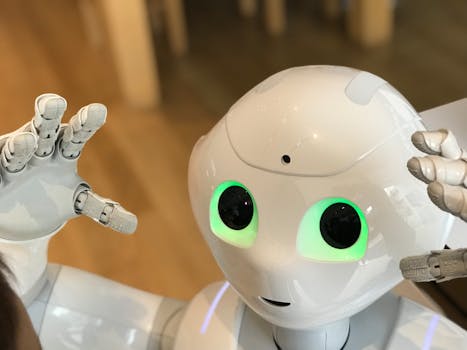 Photo: Laura Musikanski / Pexels
 Photo: Matheus Bertelli / Pexels
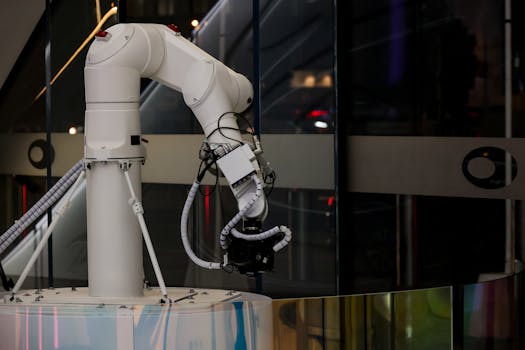 Photo: Magda Ehlers / Pexels
 Photo: Mikhail Nilov / Pexels