✓ AI simulates human intelligence processes through machines.
✓ Machine Learning is a core subset of AI, enabling systems to learn from data.
✓ AI is rapidly transforming industries from healthcare to finance.
✓ Ethical considerations are paramount in AI development and deployment.
How It Works
1
Data Ingestion & Preprocessing
AI systems begin by collecting vast amounts of data from various sources. This raw data is then cleaned, organized, and transformed into a format suitable for analysis.
2
Algorithm Selection & Training
Developers choose appropriate algorithms (e.g., neural networks, decision trees) and train them using the preprocessed data. During training, the algorithm learns patterns and relationships within the data.
3
Model Evaluation & Refinement
The trained AI model is evaluated on new, unseen data to assess its performance and accuracy. Based on these results, the model is refined and optimized to improve its predictive capabilities.
4
Deployment & Application
Once a model meets performance benchmarks, it's deployed into real-world applications. It then uses its learned intelligence to perform tasks, make decisions, or provide insights autonomously.
Defining Artificial Intelligence: The Core Concepts
Photo: Tara Winstead / Pexels
To truly grasp what is AI in technology, we must first establish a foundational understanding of its core concepts. At its heart, Artificial Intelligence refers to the simulation of human intelligence processes by machines, especially computer systems. These processes include learning (the acquisition of information and rules for using the information), reasoning (using rules to reach approximate or definite conclusions), and self-correction. Unlike traditional programming, where every instruction is explicitly coded, AI systems are designed to learn, adapt, and make decisions based on data and experience.
The genesis of AI can be traced back to the mid-20th century, with pioneers like Alan Turing questioning whether machines could think. The term 'Artificial Intelligence' itself was coined by John McCarthy in 1956 at the Dartmouth Conference, marking the official birth of the field. Initially, AI focused on symbolic reasoning and expert systems, attempting to encode human knowledge into rules that computers could follow. While these early approaches had their successes, they struggled with tasks requiring common sense or dealing with ambiguity.
The modern era of AI, particularly in the last two decades, has been largely driven by advancements in Machine Learning (ML) and Deep Learning (DL). Machine Learning, a subset of AI, focuses on developing algorithms that allow computers to learn from data without being explicitly programmed. Instead of hard-coding rules, ML models are trained on vast datasets, identifying patterns and making predictions or decisions. Deep Learning, a further specialized subset of ML, uses artificial neural networks with multiple layers (hence 'deep') to learn complex patterns from large amounts of data, mimicking the structure and function of the human brain. This hierarchical learning approach has been instrumental in breakthroughs in image recognition, natural language processing, and speech recognition.
Understanding the distinction between AI, ML, and DL is crucial. AI is the overarching concept of creating intelligent machines. ML is the method by which many AI systems achieve intelligence, by learning from data. DL is a specific, powerful type of ML that uses neural networks. Together, these concepts form the backbone of what we perceive as 'smart' technology today, from recommendation engines to self-driving cars. The progression from rule-based systems to data-driven learning represents a paradigm shift, enabling AI to tackle problems of unprecedented complexity and scale. This evolution underscores the dynamic and rapidly advancing nature of the field, constantly pushing the boundaries of what machines can achieve. For more insights into the broader technological landscape, explore our guide on understanding modern tech.
The Pillars of AI: Key Technologies and Methodologies
Photo: Pavel Danilyuk / Pexels
Delving deeper into what is AI in technology reveals a sophisticated interplay of various technologies and methodologies that empower these intelligent systems. Beyond Machine Learning and Deep Learning, several other critical components contribute to the vast capabilities of AI. Natural Language Processing (NLP) is one such pillar, enabling computers to understand, interpret, and generate human language. This technology is behind virtual assistants like Siri and Alexa, translation services, and sentiment analysis tools that gauge public opinion from text data. NLP allows machines to bridge the communication gap between human language and computational logic, opening up new avenues for interaction and information extraction.
Another fundamental aspect is Computer Vision, which grants machines the ability to 'see' and interpret visual information from the world, much like humans do. This involves tasks such as image recognition, object detection, facial recognition, and video analysis. Computer Vision systems are integral to applications ranging from autonomous vehicles, which need to identify traffic signs and pedestrians, to medical imaging analysis, where they assist in detecting anomalies. The advancements in deep learning, particularly convolutional neural networks (CNNs), have revolutionized computer vision, making it remarkably accurate and robust.
Robotics, while often associated with physical machines, frequently incorporates AI to enhance its capabilities. AI-powered robots can perform complex tasks autonomously, navigate dynamic environments, and interact with humans more naturally. This includes industrial robots on manufacturing lines, service robots in healthcare, and even exploration robots in hazardous environments. The integration of AI allows these robots to learn from their experiences, adapt to new situations, and perform tasks with greater precision and efficiency than ever before.
Furthermore, technologies like Expert Systems, while older, still hold relevance in specific domains. These systems mimic the decision-making ability of a human expert within a narrow field, using a knowledge base and inference engine. More recently, Reinforcement Learning (RL) has gained prominence. RL involves an agent learning to make decisions by performing actions in an environment and receiving rewards or penalties. This trial-and-error approach has led to AI mastering complex games like Chess and Go, and shows immense promise in areas like robotics control and resource management. The combination and continuous evolution of these diverse technologies collectively define the expansive and powerful domain of AI in technology, constantly pushing the boundaries of what intelligent machines can achieve.
Transformative Applications and Societal Impact of AI
Photo: Kindel Media / Pexels
The practical applications of what is AI in technology are vast and continue to expand, reshaping industries and impacting daily life in profound ways. In healthcare, AI is revolutionizing diagnosis, treatment, and drug discovery. AI algorithms can analyze medical images (like X-rays, MRIs) with remarkable accuracy, often assisting clinicians in detecting diseases such as cancer earlier. Predictive analytics powered by AI helps identify patients at risk of chronic conditions, enabling proactive interventions. Furthermore, AI accelerates drug discovery by simulating molecular interactions and screening compounds, significantly reducing the time and cost associated with bringing new medicines to market. This translates into better patient outcomes and more efficient healthcare systems.
The financial sector has also embraced AI for fraud detection, algorithmic trading, and personalized financial advice. AI systems can analyze vast transactional data in real-time, identifying anomalous patterns indicative of fraudulent activity with greater speed and accuracy than human analysts. In trading, AI algorithms execute trades at optimal times, capitalizing on market fluctuations. Robo-advisors powered by AI offer tailored investment strategies based on individual risk profiles and financial goals, making sophisticated financial planning accessible to a broader audience. These applications enhance security, efficiency, and accessibility within finance.
Beyond these sectors, AI's influence is seen in transportation, with the development of self-driving cars and optimized logistics. AI-powered navigation systems analyze real-time traffic data to suggest the most efficient routes, while autonomous vehicles promise to enhance safety and efficiency on our roads. In education, AI personalizes learning experiences, adapting content and pace to individual student needs, identifying learning gaps, and providing targeted feedback. In retail, AI drives personalized recommendations, optimizes inventory management, and powers chatbots for customer service, leading to improved customer satisfaction and operational efficiency.
However, the widespread adoption of AI also brings significant societal implications. Ethical considerations surrounding data privacy, algorithmic bias, and job displacement are critical. AI systems, if trained on biased data, can perpetuate and even amplify existing societal inequalities. The potential for job displacement due to automation requires careful consideration of reskilling and upskilling initiatives. Ensuring transparency, accountability, and fairness in AI development and deployment is paramount to harnessing its benefits responsibly and mitigating its risks. Understanding these ethical dimensions is as crucial as understanding the technology itself, fostering a balanced approach to integrating AI into our future. For more on how technology impacts society, read our article on the digital transformation.
Navigating the Future of AI: Challenges and Opportunities
As we ponder what is AI in technology, it's impossible to ignore the future trajectory of this field, which is brimming with both formidable challenges and unprecedented opportunities. One of the most significant challenges lies in the realm of ethical AI. Ensuring that AI systems are fair, transparent, and accountable is a complex task. Algorithmic bias, often stemming from biased training data, can lead to discriminatory outcomes in areas like hiring, lending, and even criminal justice. Developing robust methods to detect and mitigate bias, along with creating frameworks for ethical AI development, is a critical area of ongoing research and policy discussion. Trust in AI systems hinges on our ability to address these ethical dilemmas effectively.
Another challenge is the concept of 'explainable AI' (XAI). Many advanced AI models, particularly deep neural networks, operate as 'black boxes,' making it difficult for humans to understand how they arrive at their decisions. For applications in sensitive areas like medicine or law, knowing the reasoning behind an AI's output is crucial for trust and accountability. Researchers are actively working on developing techniques to make AI models more interpretable, allowing for greater transparency and debugging capabilities.
Data privacy and security also present ongoing hurdles. AI systems require vast amounts of data, raising concerns about how this data is collected, stored, and used. Protecting sensitive information from breaches and ensuring compliance with regulations like GDPR and CCPA is paramount. Furthermore, the potential for AI to be used maliciously, such as in sophisticated cyberattacks or autonomous weapons, underscores the need for robust security measures and international ethical guidelines.
Despite these challenges, the opportunities presented by the future of AI are immense. We are on the cusp of breakthroughs in areas like general AI, where systems could perform intellectual tasks across various domains, rather than being specialized for one. Quantum computing could unlock entirely new levels of AI capabilities, processing information at speeds and scales currently unimaginable. AI is also poised to play a central role in addressing global challenges, from climate change mitigation through optimized energy grids and resource management, to personalized medicine that could eradicate diseases. The continued integration of AI with other emerging technologies like IoT (Internet of Things) and 5G will create intelligent environments that are more responsive and efficient.
To navigate this future successfully, collaboration between researchers, policymakers, industry leaders, and the public is essential. Investing in AI education, fostering interdisciplinary research, and establishing clear regulatory frameworks will be key to harnessing the transformative power of AI for the benefit of all. The journey of AI is far from over; it's an evolving frontier that promises to redefine human potential and our interaction with the digital world. The ongoing dialogue and proactive development in these areas will shape whether AI becomes a force for widespread good, or introduces unforeseen complications. The responsibility rests on current and future innovators to steer this powerful technology towards a positive future.
Comparison
Feature
Traditional Software
Machine Learning (ML)
Deep Learning (DL)
Programming Paradigm
Explicit Rules & Logic
Learns from Data
Learns from Data (Neural Nets)
Data Dependency
Low to Moderate
High
Very High (Big Data)
Task Complexity
Simple to Moderate
Moderate to Complex
Highly Complex (e.g., Vision, NLP)
Adaptability
Low (Requires Reprogramming)
High (Adapts to new data)
Very High (Self-optimizing)
Human Intervention
High (Rule definition)
Moderate (Feature Engineering)
Low (Feature Learning)
Typical Use Cases
Calculators, Databases
Recommendations, Spam Detection
Image Recognition, Autonomous Driving
What Readers Say
★★★★★
"This article provided an exceptionally clear and thorough explanation of what is AI in technology. As a researcher, I appreciated the breakdown of ML and DL, making complex concepts accessible without oversimplifying. It's a must-read for anyone entering the field."
Dr. Evelyn Reed · Boston, MA
★★★★★
"I've always found AI a bit daunting, but this guide truly demystified it. The examples of AI applications in various industries helped me connect the dots and see its real-world impact. Highly recommend for a comprehensive overview."
Marcus Chen · Seattle, WA
★★★★★
"Understanding what is AI in technology is crucial for my startup. This article not only explained the basics but also highlighted ethical considerations, which is vital for responsible innovation. It directly influenced our product development roadmap."
Sarah Jenkins · Austin, TX
★★★★★
"A very informative read, though I would have liked a bit more depth on the specific algorithms within deep learning. Nevertheless, it's a solid foundation for understanding AI's role in modern tech and its societal implications."
David Miller · Chicago, IL
★★★★★
"As a non-technical professional in a tech-heavy industry, this article was a godsend. It explained what is AI in technology in a way that empowered me to engage in meaningful conversations with our engineering team about future AI integrations. Excellent work!"
Elena Rodriguez · San Francisco, CA
Frequently Asked Questions
What is the fundamental difference between AI and traditional programming?
The fundamental difference lies in how they achieve results. Traditional programming relies on explicit, step-by-step instructions coded by humans for every possible scenario. AI, particularly through Machine Learning, enables systems to learn from data, identify patterns, and make decisions or predictions without being explicitly programmed for every outcome, allowing for adaptability and handling of complex, unforeseen situations.
Is AI going to take all human jobs?
While AI and automation will undoubtedly transform the job market, the consensus among experts is that it's more likely to change jobs rather than eliminate them entirely. AI will automate repetitive and routine tasks, freeing up humans to focus on tasks requiring creativity, critical thinking, emotional intelligence, and complex problem-solving. New job categories will also emerge from AI innovation.
How can I start learning about AI?
To start learning about AI, begin with foundational concepts in mathematics (linear algebra, calculus, probability) and programming (Python is highly recommended). Then, explore online courses from platforms like Coursera, edX, or Udacity focusing on Machine Learning and Deep Learning. Practical experience through projects is crucial for solidifying understanding.
What is the cost of implementing AI solutions for businesses?
The cost of implementing AI solutions varies widely depending on complexity, data volume, infrastructure needs, and talent acquisition. It can range from affordable, off-the-shelf AI services for small tasks to multi-million dollar investments for bespoke, large-scale AI systems. Initial costs often involve data preparation, model development, and integration, with ongoing costs for maintenance and scaling.
How does AI compare to human intelligence?
Currently, AI excels at specific, narrow tasks (e.g., playing chess, identifying objects) often surpassing human capabilities in speed and data processing. However, human intelligence encompasses broad capabilities like common sense, emotional understanding, creativity, and abstract reasoning, which AI struggles to replicate. The goal of 'General AI' aims to bridge this gap, but it remains a distant prospect.
Who should use AI in their operations or personal life?
Anyone looking to optimize processes, gain deeper insights from data, automate repetitive tasks, or enhance decision-making can benefit from AI. Businesses across all sectors can leverage AI for efficiency and innovation. Individuals can use AI-powered tools for productivity, personalized recommendations, and smart home automation, making daily life more convenient and informed.
Are there any risks associated with developing AI?
Yes, significant risks include algorithmic bias leading to unfair outcomes, privacy breaches due to extensive data collection, the potential for autonomous weapons systems, and job displacement. There are also concerns about the 'black box' problem, where AI decision-making isn't transparent, and the long-term societal impact of increasingly powerful AI systems.
What is the future trend for AI in the next decade?
In the next decade, AI is expected to become more pervasive, seamlessly integrated into daily life and infrastructure. Key trends include advancements in personalized AI, further integration with IoT and 5G, more robust and explainable AI models, and increased focus on ethical AI development and regulation. We'll also see AI playing a larger role in scientific discovery and addressing global challenges.
Understanding what is AI in technology is no longer optional; it's essential for navigating our rapidly evolving world. Equip yourself with this knowledge and be part of shaping the intelligent future. Dive deeper into AI today and unlock its full potential.

 Photo: Tara Winstead / Pexels
 Photo: Pavel Danilyuk / Pexels
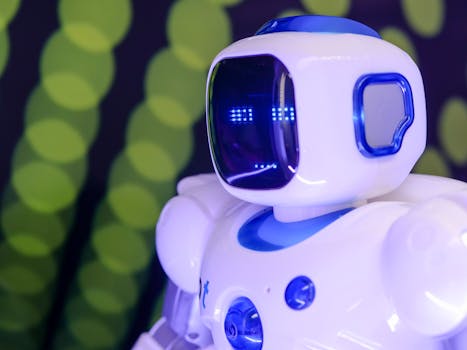 Photo: Kindel Media / Pexels