✓ 5G is the fifth generation of cellular technology, designed to deliver higher multi-Gbps peak speeds, ultra-low latency, and massive capacity.
✓ It operates across three main spectrum bands: low-band, mid-band, and high-band (mmWave), each offering different characteristics.
✓ Key enhancements include enhanced Mobile Broadband (eMBB), Ultra-Reliable Low-Latency Communications (URLLC), and Massive Machine-Type Communications (mMTC).
✓ 5G promises to unlock new applications in IoT, AI, autonomous vehicles, and telemedicine, fundamentally changing how we interact with the digital world.
How It Works
1
New Radio Technology (5G NR)
5G introduces a new air interface, 5G NR, designed for greater flexibility and efficiency across various spectrum types. It optimizes how devices communicate with base stations.
2
Massive MIMO Antennas
Unlike previous generations, 5G utilizes Massive Multiple-Input, Multiple-Output (MIMO) antenna technology. These antennas can send and receive data simultaneously from many users, significantly boosting network capacity and speed.
3
Millimeter Wave (mmWave) Spectrum
5G leverages higher frequency bands, particularly millimeter wave (mmWave), for extremely fast speeds and low latency. While powerful, mmWave has a shorter range and is more susceptible to obstacles.
4
Network Slicing & Edge Computing
5G's architecture supports network slicing, allowing operators to create virtual, customized networks for specific applications. Edge computing brings data processing closer to the source, reducing latency and improving real-time response.
Understanding the Core Components of 5G Technology
Photo: panumas nikhomkhai / Pexels
To truly grasp what is 5G technology, it's crucial to delve into the foundational elements that set it apart from its predecessors. At its heart, 5G isn't just a faster version of 4G; it's a paradigm shift in network architecture and capability. The core innovation lies in its ability to utilize a much broader range of radio frequencies, from existing low-band spectrums to entirely new high-band millimeter wave (mmWave) frequencies. This multi-spectrum approach is key to delivering the promised trifecta of benefits: incredibly high speeds, ultra-low latency, and massive capacity for connected devices.
One of the most significant advancements is the introduction of 5G New Radio (NR). This is the global standard for the air interface of 5G, designed from the ground up to be more flexible, efficient, and scalable than previous generations. 5G NR supports diverse deployment scenarios, from standalone (SA) 5G networks that are entirely new to non-standalone (NSA) deployments that initially leverage existing 4G LTE infrastructure. This flexibility allows for a more gradual and cost-effective rollout while still paving the way for future enhancements. Beyond the air interface, 5G extensively employs Massive Multiple-Input, Multiple-Output (Massive MIMO) antenna technology. Where 4G might use a few antennas per cell tower, Massive MIMO systems can deploy dozens or even hundreds, enabling them to send and receive data from many users simultaneously, dramatically increasing throughput and spectral efficiency. This is like having multiple lanes on a highway instead of just one, allowing far more traffic to flow smoothly.
Another critical architectural change is the move towards a more virtualized and software-defined network core. This means that many network functions that were once handled by dedicated hardware are now managed by software, running on general-purpose servers. This virtualization allows for greater agility, scalability, and efficiency in network management. It also enables advanced features like network slicing, where a single physical 5G network can be virtually partitioned into multiple independent logical networks. Each 'slice' can be optimized for specific services or applications, such as a high-bandwidth slice for streaming 8K video, an ultra-low latency slice for autonomous vehicles, or a massive connectivity slice for IoT sensors. This level of customization and resource allocation was simply not possible with earlier cellular generations and represents a fundamental shift in how networks are designed and operated. The combination of these core components – 5G NR, Massive MIMO, and a virtualized, sliced network core – forms the backbone of what makes 5G a truly transformative technology, capable of supporting a vast array of future innovations and applications.
The Transformative Impact of 5G on Industries and Daily Life
Photo: panumas nikhomkhai / Pexels
The question of what is 5G technology extends far beyond faster downloads; it's about enabling a future where connectivity is seamless, intelligent, and ubiquitous, fundamentally reshaping industries and our daily experiences. One of the most immediate and tangible impacts will be on enhanced Mobile Broadband (eMBB). For consumers, this translates to lightning-fast streaming of high-definition content, near-instantaneous downloads, and a vastly improved experience with augmented reality (AR) and virtual reality (VR) applications on mobile devices. Imagine downloading a full-length 4K movie in seconds or experiencing truly immersive VR gaming without lag, even on the go. This enhanced mobile experience will drive innovation in entertainment, education, and social interaction, making digital content more accessible and engaging than ever before.
Beyond consumer applications, 5G's ultra-reliable low-latency communications (URLLC) capabilities are set to revolutionize critical sectors. In healthcare, URLLC can facilitate remote surgery, where a surgeon can operate on a patient miles away with near-real-time feedback, or enable advanced telemedicine, allowing doctors to monitor vital signs and provide immediate diagnostics remotely. The implications for emergency services are also profound, with faster, more reliable communication networks supporting first responders and enabling sophisticated sensor networks in disaster zones. The automotive industry is another prime example, where 5G is the backbone for the development of fully autonomous vehicles. The ability for cars to communicate with each other (V2V), with infrastructure (V2I), and with the network (V2N) in milliseconds is essential for safety, traffic management, and the eventual widespread adoption of self-driving cars. This real-time data exchange will significantly reduce accidents and optimize traffic flow, leading to safer and more efficient transportation systems.
Furthermore, 5G's Massive Machine-Type Communications (mMTC) aspect is designed to support the exponential growth of the Internet of Things (IoT). With the capacity to connect millions of devices per square kilometer, 5G will enable smart cities to become a reality, with interconnected sensors managing everything from traffic lights and waste management to environmental monitoring and public safety. In smart factories, 5G will power industrial IoT (IIoT), allowing for precise control of robotics, real-time monitoring of production lines, and predictive maintenance, leading to increased efficiency, reduced downtime, and greater automation. Agriculture will also benefit, with smart farming solutions utilizing 5G-connected sensors to optimize irrigation, track livestock, and monitor crop health with unprecedented detail. The combined impact of these capabilities means 5G isn't just an incremental upgrade; it's a foundational technology that will enable a hyper-connected world, fostering innovation across every conceivable sector and fundamentally altering how we live, work, and interact with our environment. This widespread integration of smart devices will create a truly intelligent ecosystem.
Addressing the Challenges and Future Outlook of 5G Deployment
Photo: Qeis Ismail / Pexels
While the promise of what is 5G technology is immense, its widespread deployment and full realization face several significant challenges. One of the primary hurdles is the sheer cost and complexity of infrastructure rollout. Unlike 4G, which largely relied on upgrading existing cell towers, 5G, particularly its high-band mmWave spectrum, requires a much denser network of small cells. These small cells need to be deployed closer together, often every few hundred feet, in urban and suburban environments due to the limited range and penetration capabilities of mmWave signals. This necessitates extensive planning, acquisition of new sites, and significant capital investment from carriers. Furthermore, gaining regulatory approvals and navigating local zoning laws for these numerous small cell installations can be a time-consuming and arduous process, slowing down deployment in many regions.
Another challenge lies in the backhaul infrastructure. To support the massive data throughput of 5G, the connections from cell towers and small cells back to the core network must also be upgraded, often requiring extensive fiber optic cabling. In many areas, this fiber infrastructure is either non-existent or insufficient, adding another layer of complexity and cost to the overall deployment. The cybersecurity implications of a hyper-connected 5G world also present a formidable challenge. With billions of new devices connected and critical infrastructure relying on 5G, the attack surface for cyber threats expands dramatically. Ensuring the security and resilience of 5G networks, from the core to the edge, is paramount and requires continuous investment in advanced security protocols and threat detection systems. Public perception and understanding also play a role; misinformation regarding 5G health risks, despite overwhelming scientific consensus to the contrary, can create resistance to infrastructure deployment.
Looking to the future, the evolution of 5G is already underway with 5G Advanced (Release 18 and beyond) on the horizon. This next phase will further enhance capabilities, pushing the boundaries of what is 5G technology even further. We can expect even greater spectral efficiency, improved energy efficiency for devices and networks, and more sophisticated AI-driven network management. The integration of non-terrestrial networks (NTN), such as satellite and drone-based communications, will extend 5G coverage to remote areas, bridging the digital divide and enabling truly global connectivity. Furthermore, the development of Open RAN (Radio Access Network) architectures promises to foster greater innovation and competition in the telecommunications equipment market, potentially reducing vendor lock-in and accelerating the deployment of new features. The long-term vision for 5G is not just about faster internet; it's about creating an intelligent, dynamic, and adaptive network fabric that can support the demands of a fully digitalized society, empowering new innovations that we can barely conceive of today. The ongoing commitment to research and development, coupled with strategic partnerships, will be essential in overcoming current hurdles and unlocking the full potential of this transformative technology.
Maximizing Your 5G Experience: Tips and Common Misconceptions
Photo: Torsten Dettlaff / Pexels
To truly get the most out of what is 5G technology, it's helpful to understand a few key tips and dispel some common misconceptions. First, ensure your device is 5G-compatible. Not all smartphones support 5G, and even among those that do, some may only support certain frequency bands (e.g., mid-band but not mmWave). Check your device specifications and carrier compatibility to ensure you can access the fastest available 5G speeds. Second, understand that 5G coverage is still expanding. While major urban centers often have robust 5G, coverage can be spotty in suburban and rural areas. Use your carrier's coverage maps to identify areas where 5G is strongest. Moving around or even stepping outside can sometimes improve your signal, especially with mmWave 5G, which is easily blocked by buildings and foliage.
Third, consider your data plan. To fully utilize 5G's speed, you'll likely need a data plan with ample or unlimited high-speed data. Streaming 4K content or downloading large files in seconds can quickly consume data allowances. It's also important to manage your device's 5G settings; many phones allow you to switch between 5G, 4G, or even prioritize specific bands. This can be useful for battery life, as constantly searching for a 5G signal, especially mmWave, can drain your battery faster than 4G. If you're in an area with weak 5G, switching to 4G LTE might provide a more stable and efficient experience.
Let's address some common misconceptions:
* **Misconception 1: 5G is dangerous for health.** Extensive research by numerous scientific bodies, including the WHO and FCC, has found no conclusive evidence that 5G radio waves are harmful to human health. 5G operates within the non-ionizing radiation spectrum, meaning it doesn't have enough energy to damage DNA.
* **Misconception 2: 5G is just faster 4G.** While it is faster, 5G is a fundamentally new architecture designed for much more than just speed. Its low latency and massive capacity features are what truly differentiate it and enable new applications.
* **Misconception 3: My old phone will get 5G with a software update.** Unfortunately, no. 5G requires specific hardware components, including a 5G modem and compatible antennas, that cannot be added through a software update.
* **Misconception 4: 5G is available everywhere.** Coverage is rapidly expanding, but it's not yet ubiquitous. Different types of 5G (low-band, mid-band, mmWave) have varying availability and performance characteristics.
By being informed about these aspects, users can make better decisions about their devices, plans, and usage habits, ensuring a more satisfying and efficient 5G experience as the technology continues to mature and expand its footprint across the nation.
Comparison
Feature
5G
4G LTE
3G
Peak Speed (Theoretical)
10 Gbps
100 Mbps - 1 Gbps
3 Mbps - 14 Mbps
Latency (Typical)
1 ms
30-50 ms
100-250 ms
Capacity (Devices/km²)
1,000,000
100,000
5,000
Key Applications
IoT, AI, AR/VR, Autonomous Vehicles, Remote Surgery
Mobile Broadband, Video Streaming
Basic Mobile Internet, Voice
Network Architecture
Virtualization, Network Slicing, Edge Computing
Centralized, Hardware-centric
Centralized, Hardware-centric
Primary Spectrum Use
Low, Mid, High-band (mmWave)
Low, Mid-band
Low-band
What Readers Say
★★★★★
"Understanding what is 5G technology has been a game-changer for my online business. The speed and responsiveness mean I can upload large video files in minutes, saving me so much time and frustration."
Sarah J. · Austin, TX
★★★★★
"I used to experience constant buffering when streaming 4K on the go. Since switching to a 5G phone and plan, those issues are completely gone. It's truly a seamless experience."
Mark D. · Seattle, WA
★★★★★
"My work involves large data transfers, and 5G has drastically cut down my waiting time. I'm now completing tasks that used to take an hour in less than fifteen minutes, a huge productivity boost!"
Emily R. · Boston, MA
★★★★★
"While 5G speeds are incredible where available, I do notice it can be a bit spotty in certain parts of my city. However, when I have a strong signal, the difference from 4G is night and day."
David K. · Denver, CO
★★★★★
"As a game developer, the low latency of 5G is a revelation. I can now test and collaborate on AR/VR projects remotely with almost no lag, which was impossible before. It's empowering new creative possibilities."
Jessica L. · San Francisco, CA
Frequently Asked Questions
What are the main benefits of what is 5G technology?
The main benefits of 5G technology are significantly higher speeds (up to 10 Gbps), ultra-low latency (as low as 1 millisecond), and massive capacity for connecting a vast number of devices. These improvements enable new applications like advanced IoT, autonomous vehicles, and enhanced mobile broadband experiences.
Is 5G technology safe for my health?
Yes, major scientific and health organizations worldwide, including the World Health Organization (WHO) and the Federal Communications Commission (FCC) in the US, have concluded that 5G technology, operating within established safety guidelines, poses no proven health risks. It uses non-ionizing radiation, which is different from X-rays and does not damage DNA.
How can I get 5G on my phone?
To get 5G on your phone, you need a 5G-compatible smartphone and a 5G service plan from your mobile carrier. Once you have both, ensure you are in an area with 5G coverage. Your phone should automatically connect to the 5G network when available, though you might need to enable 5G in your device settings.
Is 5G more expensive than 4G?
Initially, 5G-enabled devices and premium data plans might be slightly more expensive. However, as 5G technology matures and becomes more widespread, prices are expected to become more competitive. Many carriers now offer 5G access as part of their standard unlimited data plans without an additional premium.
How does 5G compare to Wi-Fi 6?
While both 5G and Wi-Fi 6 offer significant speed and capacity improvements, they serve different primary purposes. 5G is designed for wide-area cellular connectivity, offering mobility and seamless handoffs across a broad network. Wi-Fi 6 is for local area networks, providing high performance within a limited range, typically indoors. They are complementary technologies, with Wi-Fi 6 often used to offload data from 5G networks in homes and offices.
Who will benefit most from what is 5G technology?
Virtually everyone will benefit from 5G, but some groups will see more profound impacts. Industries like manufacturing, healthcare, transportation, and logistics will be transformed by its low latency and capacity for IoT. Consumers will experience faster downloads, smoother streaming, and new AR/VR applications. Remote workers and those in smart cities will also see significant advantages.
Are there any privacy concerns with 5G technology?
With any advanced network, privacy is a concern. 5G's increased connectivity and the proliferation of IoT devices mean more data is being generated and transmitted. However, 5G networks incorporate advanced security features, including enhanced encryption and authentication protocols, to protect user data. Users should also be mindful of their device settings and app permissions.
What is the future of 5G beyond its current deployment?
The future of 5G involves continuous evolution, with enhancements like 5G Advanced focusing on even greater energy efficiency, AI integration, and expanded capabilities for specialized applications. We can also expect further integration with non-terrestrial networks (satellites, drones) to expand coverage, and the development of Open RAN architectures to foster innovation and reduce costs, leading to a truly intelligent and ubiquitous network.
Embrace the future of connectivity by exploring what is 5G technology today. Its revolutionary speed, low latency, and vast potential are set to redefine our digital world. Stay informed and prepare for the incredible innovations 5G will bring to your life and industry.

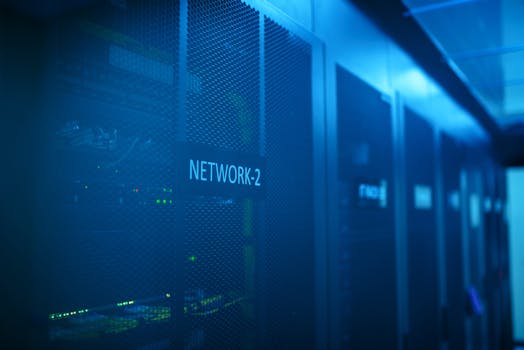 Photo: panumas nikhomkhai / Pexels
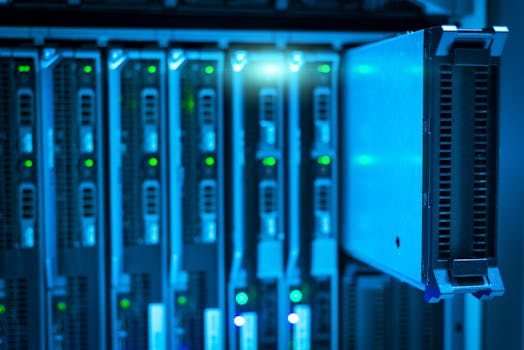 Photo: panumas nikhomkhai / Pexels
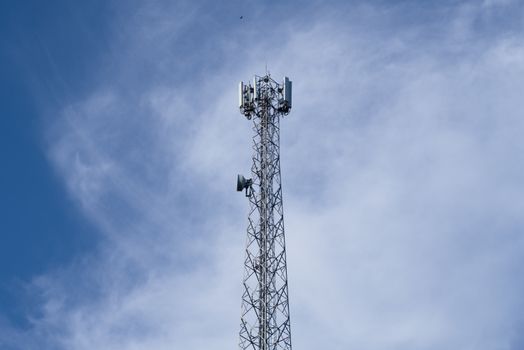 Photo: Qeis Ismail / Pexels
 Photo: Torsten Dettlaff / Pexels