✓ 5G is the 5th generation of cellular technology, designed to deliver higher multi-Gbps peak speeds, ultra low latency, more reliability, massive network capacity, increased availability, and a more uniform user experience to more users.
✓ It operates across three main spectrum bands: low-band (Sub-6 GHz), mid-band (C-Band), and high-band (mmWave), each offering distinct characteristics for coverage and speed.
✓ Key technological advancements enabling 5G include Massive MIMO, beamforming, and network slicing, allowing for unprecedented efficiency and flexibility.
✓ 5G is not just about faster phones; it's a foundational technology for IoT, smart cities, autonomous vehicles, and advanced industrial automation, promising to transform numerous sectors.
How It Works
1
Radio Waves & Spectrum
5G uses radio waves to transmit data, similar to previous generations. However, it leverages a wider range of frequencies, including millimeter-wave (mmWave), to achieve higher speeds and capacity.
2
Antenna Technology
It employs advanced antenna technologies like Massive MIMO (Multiple-Input, Multiple-Output) and beamforming. Massive MIMO uses many small antennas to send and receive data simultaneously, while beamforming directs radio signals precisely to user devices, reducing interference and improving efficiency.
3
Network Architecture
5G introduces a new, more flexible network architecture. This includes network slicing, which allows operators to create virtual, dedicated networks for specific applications (e.g., IoT, critical communications), and edge computing, which brings data processing closer to the user to reduce latency.
4
Interconnection & Core Network
These advanced radio access networks connect to a highly virtualized and software-defined 5G core network. This core manages data routing, user authentication, and service delivery, enabling the unprecedented speeds and low latency that define the 5G experience.
Understanding the Core: What Exactly is 5G Technology Explained?
Photo: panumas nikhomkhai / Pexels
To truly grasp what is 5G technology explained, we must first understand its fundamental departure from previous cellular generations. 5G, or the fifth generation of cellular technology, represents a monumental leap forward, not merely an incremental upgrade like 4G to 4.5G. It’s a comprehensive overhaul of the wireless communication infrastructure, designed to support a future where virtually everything is connected, intelligent, and instantaneous. At its heart, 5G is engineered to deliver three primary benefits: incredibly high speeds (up to 10-20 Gbps peak, though real-world speeds vary), ultra-low latency (as low as 1 millisecond), and massive capacity for connecting billions of devices simultaneously. These pillars are not just theoretical; they are the foundation upon which entirely new applications and industries will be built.
Unlike 4G, which primarily focused on enhancing mobile broadband for smartphones, 5G is a multi-faceted technology intended to serve a much broader ecosystem. It's about connecting not just people, but also machines, objects, and devices in a seamless, intelligent network. This includes everything from self-driving cars and smart city infrastructure to advanced robotics in manufacturing and remote surgery. The underlying architecture of 5G is far more complex and flexible than its predecessors, incorporating advanced techniques like millimeter-wave (mmWave) spectrum utilization for extremely high bandwidth, Massive MIMO (Multiple-Input, Multiple-Output) for enhanced spectral efficiency, and beamforming to direct signals precisely where needed. Furthermore, 5G introduces network slicing, a revolutionary concept that allows network operators to create multiple virtual networks on a single physical infrastructure, each optimized for specific services or applications with tailored performance characteristics. This level of customization and efficiency is unprecedented, enabling diverse use cases that demand varying levels of speed, latency, and reliability. The transition to 5G is not just a network upgrade; it’s a paradigm shift in how we interact with the digital world, promising to unlock innovations that were previously confined to science fiction. It’s the backbone of the Internet of Things (IoT), providing the necessary bandwidth and responsiveness for countless connected devices to communicate and operate autonomously.
The Three Pillars of 5G: Speed, Latency, and Capacity
Photo: Ulrick Trappschuh / Pexels
When discussing what is 5G technology explained, it's crucial to delve into its three defining characteristics that set it apart: unparalleled speed, ultra-low latency, and massive capacity. These aren't just buzzwords; they represent fundamental improvements that unlock a new era of digital possibilities. First, let's talk about speed. 5G promises theoretical peak speeds of up to 10-20 gigabits per second (Gbps), which is a monumental leap from 4G's average speeds of tens of megabits per second (Mbps). While real-world speeds will vary depending on location, network congestion, and spectrum band, even average 5G speeds are significantly faster, allowing for instantaneous downloads of large files, seamless 4K/8K video streaming, and lag-free cloud gaming. This incredible speed is largely attributed to the use of higher frequency bands, particularly millimeter-wave (mmWave), which offers vast amounts of unused spectrum.
Next, we have ultra-low latency. Latency refers to the delay between sending a signal and receiving a response. 4G networks typically have latency in the range of 50-100 milliseconds. 5G aims to reduce this to an astonishing 1 millisecond (ms) in ideal conditions. This near real-time responsiveness is not just a convenience; it's a critical enabler for applications that require immediate feedback and control. Imagine autonomous vehicles communicating with each other and traffic infrastructure in real-time to prevent accidents, or surgeons performing complex operations remotely with haptic feedback. Low latency is also vital for augmented reality (AR) and virtual reality (VR) experiences, making them feel more immersive and less disorienting. Finally, massive capacity refers to 5G's ability to connect an unprecedented number of devices simultaneously. As the Internet of Things (IoT) continues to grow, billions of sensors, smart appliances, industrial machinery, and wearables will need to communicate reliably. 5G is designed to support up to a million devices per square kilometer, a tenfold increase over 4G. This massive capacity is achieved through advanced technologies like Massive MIMO, which uses a large number of antennas to serve many users concurrently in the same spectrum, and network slicing, which efficiently allocates network resources. These three pillars collectively transform 5G from a simple mobile upgrade into a foundational technology for future innovation, powering everything from smart cities to advanced industrial automation.
The Spectrum Saga: Low-band, Mid-band, and High-band 5G
Photo: Egor Komarov / Pexels
Understanding what is 5G technology explained necessitates an exploration of the different spectrum bands it utilizes. Unlike previous generations that largely operated on a single band type, 5G is unique in its strategic deployment across three distinct spectrum ranges: low-band, mid-band, and high-band (mmWave). Each band comes with its own set of characteristics, offering a critical balance between coverage, speed, and capacity, and their combined use is what gives 5G its versatility and power. Low-band 5G operates on frequencies similar to 4G (typically below 6 GHz, often in the 600 MHz to 2.5 GHz range). Its primary advantage is its excellent propagation characteristics; signals can travel long distances and penetrate buildings effectively. This makes low-band 5G ideal for wide-area coverage, especially in rural areas and for providing a baseline 5G experience. However, its speeds are often only marginally better than advanced 4G LTE, typically ranging from 50-250 Mbps, and its capacity is limited. It serves as the foundational layer, ensuring broad accessibility.
Mid-band 5G, often referred to as the 'sweet spot' for 5G, operates in frequencies generally between 2.5 GHz and 6 GHz (e.g., C-Band at 3.7-4.2 GHz). This spectrum offers a compelling balance of speed and coverage. Signals can travel further than high-band and penetrate obstacles better, while still providing significantly faster speeds than low-band, often in the range of 300 Mbps to 1 Gbps. Mid-band is crucial for urban and suburban areas, offering a robust user experience that supports many common 5G applications. It's becoming the workhorse of 5G deployments globally, providing a strong blend of performance for daily use. Finally, high-band 5G, also known as millimeter-wave (mmWave), operates on very high frequencies (typically 24 GHz to 47 GHz and higher). This is where 5G achieves its most impressive, multi-gigabit speeds (up to 4 Gbps or more) and massive capacity. The downside is that mmWave signals have extremely short range and are easily blocked by obstacles like buildings, trees, and even heavy rain. Consequently, mmWave is best suited for dense urban environments, sports stadiums, concert venues, and other areas requiring ultra-high capacity and speed over small geographic areas. Deploying mmWave requires a dense network of small cell base stations. The strategic combination of these three bands—low-band for widespread coverage, mid-band for balanced performance, and high-band for extreme speed and capacity in targeted areas—is what defines the comprehensive and adaptable nature of modern 5G networks. This layered approach ensures that 5G can address a diverse range of use cases and environments, making it a truly versatile technology.
Navigating the Future: Common Misconceptions and Key Considerations for 5G Adoption
Photo: MART PRODUCTION / Pexels
As with any transformative technology, 5G has been subject to various misconceptions and concerns. Addressing these is crucial for a clear understanding of what is 5G technology explained and its responsible adoption. One persistent myth is that 5G causes health problems due to its radio waves. Scientific consensus, based on decades of research into radio frequency (RF) exposure from cellular technologies, indicates that 5G operates within safe limits established by international guidelines and does not pose a health risk. The frequencies used by 5G, even mmWave, are non-ionizing, meaning they lack the energy to damage DNA. Regulatory bodies worldwide, including the FCC in the US, continually monitor and update safety standards based on scientific evidence, ensuring public safety. Another common misconception is that 5G will immediately replace 4G everywhere. In reality, 5G is being rolled out alongside existing 4G networks, and devices are designed to seamlessly switch between the two. 4G will continue to be a vital part of the mobile infrastructure for many years, especially in areas where 5G deployment is less dense. The transition is evolutionary, not revolutionary, in terms of network replacement.
**Key Considerations for 5G Adoption:**
* **Device Compatibility:** To experience 5G, users need a 5G-enabled device. Older smartphones and other devices will continue to operate on 4G LTE networks.
* **Network Availability:** While 5G coverage is expanding rapidly, it's not yet ubiquitous. Coverage varies significantly by region, carrier, and even within cities. Users should check carrier coverage maps to understand availability in their specific areas.
* **Cost Implications:** Early adoption of 5G devices and plans can sometimes come with a premium. However, as the technology matures and becomes more widespread, costs are expected to decrease.
* **Infrastructure Development:** The full potential of 5G, especially mmWave, requires a dense deployment of small cell antennas. This infrastructure build-out is a significant undertaking that requires investment and collaboration between carriers and municipalities.
* **Security Concerns:** As 5G connects more devices and critical infrastructure, security becomes paramount. The industry is actively developing advanced security protocols and practices to safeguard 5G networks from cyber threats.
* **Ethical Implications:** The widespread deployment of IoT devices powered by 5G raises questions about data privacy, surveillance, and algorithmic bias. These ethical considerations require ongoing dialogue and policy development.
Understanding these factors helps paint a realistic picture of 5G's current state and its future trajectory, moving beyond hype to practical application and responsible development. The benefits are immense, but navigating the complexities requires informed decision-making from consumers, businesses, and policymakers alike.
Comparison
Feature
5G
4G LTE
3G
Peak Speed (Theoretical)
Up to 10-20 Gbps
Up to 1 Gbps
Up to 14 Mbps
Latency (Typical)
1-10 ms
50-100 ms
100-500 ms
Device Density (per km²)
1 million+
100,000
Few thousand
Use Cases
IoT, AI, AR/VR, Autonomous Vehicles, Smart Cities
Mobile Broadband, Video Streaming
Basic Mobile Internet, Voice
Network Slicing
✓
✗
✗
Massive MIMO
✓
Limited
✗
What Readers Say
★★★★★
"Understanding what is 5G technology explained helped me realize how much more efficient my smart home could be. The reduced latency for my security cameras is a game-changer; no more delays!"
Sarah J. · Austin, TX
★★★★★
"This article clearly explained the different 5G bands. Now I understand why my phone is super fast in some areas and just 'fast' in others. It's truly a leap in connectivity."
Mark T. · Seattle, WA
★★★★★
"As a healthcare professional, the discussion on 5G's low latency for remote operations was incredibly insightful. It truly paints a picture of how 5G will transform critical services."
Dr. Emily R. · Boston, MA
★★★★★
"Great overview of what is 5G technology explained, though I wish there was a bit more detail on specific industrial applications beyond just mentioning them. Still, very comprehensive for a general audience."
David L. · Denver, CO
★★★★★
"Coming from a tech background, I appreciated the breakdown of Massive MIMO and network slicing. This article is excellent for anyone wanting a deep dive into the technical aspects of 5G without being overly academic."
Aisha P. · San Francisco, CA
Frequently Asked Questions
What are the main advantages of 5G over 4G?
5G offers significantly higher speeds (up to 10-20 Gbps peak), much lower latency (as low as 1 ms), and massive capacity to connect millions of devices per square kilometer. This allows for new applications like advanced IoT, autonomous vehicles, and immersive AR/VR experiences that 4G cannot adequately support.
Is 5G safe for my health?
Yes, 5G technology is safe. Extensive scientific research and regulatory bodies worldwide, including the FCC, have consistently shown that 5G operates within established safety limits for radio frequency (RF) exposure. 5G uses non-ionizing radiation, which does not have enough energy to cause cellular damage.
How can I get 5G on my phone?
To access 5G, you need a 5G-compatible smartphone and a mobile plan from a carrier that offers 5G service in your area. Once you have both, your phone should automatically connect to 5G when available, indicated by a '5G' icon in your status bar.
Will 5G be expensive to use?
Initially, 5G-enabled devices and plans might have been priced at a premium. However, as 5G deployment becomes more widespread and the technology matures, costs are expected to become more competitive and accessible, similar to previous cellular generations.
How does 5G impact the Internet of Things (IoT)?
5G is a foundational technology for IoT, enabling massive connectivity, ultra-low latency, and high bandwidth. This allows for a vast increase in the number of connected devices, real-time data processing at the edge, and reliable communication for critical IoT applications like smart city infrastructure, industrial automation, and remote healthcare.
Who should use what is 5G technology explained?
Anyone interested in the future of connectivity, from tech enthusiasts and students to business professionals and policymakers, will benefit from understanding what is 5G technology explained. It's crucial for making informed decisions about technology adoption, investment, and strategic planning in a rapidly evolving digital landscape.
Are there any security risks associated with 5G?
While 5G introduces new complexities due to its expanded scope and connectivity, the industry is actively implementing advanced security protocols and architectural enhancements. These include stronger encryption, network slicing for isolation, and robust authentication mechanisms to mitigate potential vulnerabilities and safeguard the network.
What is the future potential of 5G technology?
The future potential of 5G is immense, extending far beyond current applications. It's expected to drive innovation in areas like augmented and virtual reality, fully autonomous vehicles, advanced robotics, AI-driven smart cities, and revolutionary remote services, fundamentally transforming industries and daily life over the next decade.
Now that you have a comprehensive understanding of what is 5G technology explained, embrace the future of connectivity. Explore 5G-enabled devices and services to unlock unprecedented speeds and capabilities, and be part of the next digital revolution.

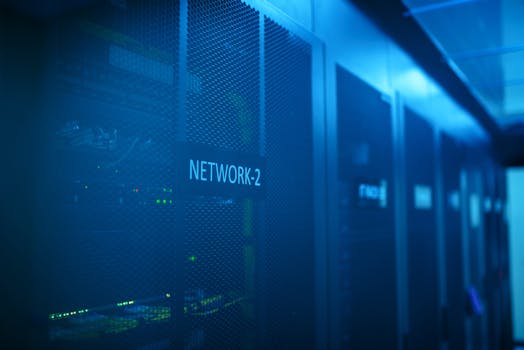 Photo: panumas nikhomkhai / Pexels
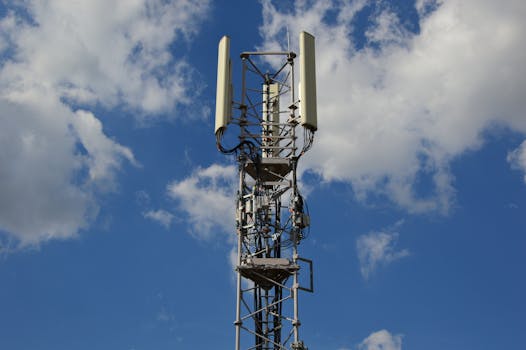 Photo: Ulrick Trappschuh / Pexels
 Photo: Egor Komarov / Pexels
 Photo: MART PRODUCTION / Pexels