Profound impact of 5G on mobile technology explained
impact of 5G on mobile technology

Profound impact of 5G on mobile technology explained

Unlock the future of connectivity with 5G, transforming devices and industries with unparalleled speed and responsiveness.

Explore 5G's Revolution

Key Takeaways

  • ✓ 5G offers theoretical peak speeds up to 10 Gbps, significantly faster than 4G LTE.
  • ✓ Latency with 5G can be as low as 1 millisecond, crucial for real-time applications.
  • ✓ 5G enables massive machine-to-machine communication, supporting up to 1 million devices per square kilometer.
  • ✓ The technology is a foundational pillar for emerging innovations like autonomous vehicles and advanced IoT.

How It Works

1
Enhanced Mobile Broadband (eMBB)

5G utilizes wider channels and higher frequency bands to deliver significantly faster download and upload speeds. This dramatically improves streaming, gaming, and large file transfers on mobile devices.

2
Ultra-Reliable Low-Latency Communications (URLLC)

Through advanced coding and network slicing, 5G reduces the time delay between sending and receiving data to near-instantaneous levels. This is critical for applications requiring immediate feedback, such as remote surgery or industrial automation.

3
Massive Machine-Type Communications (mMTC)

5G is designed to efficiently connect a vast number of low-power devices, enabling the widespread deployment of the Internet of Things (IoT). It supports billions of connected sensors and smart devices with minimal power consumption.

4
Network Slicing and Edge Computing

5G allows network operators to create virtual, isolated network slices tailored for specific use cases, optimizing performance and security. Edge computing brings data processing closer to the user, further reducing latency and improving responsiveness.

The Dawn of Ultra-Fast Mobile Connectivity and its Implications
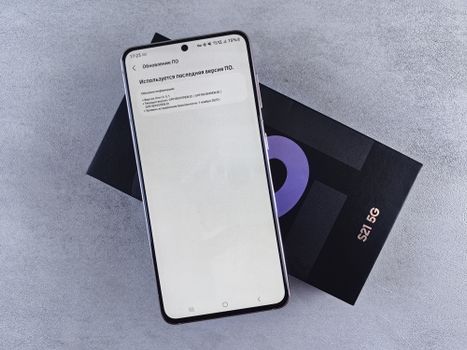
A smartphone on a box showing a software update screen, creating a tech-focused scene. Photo: Andrey Matveev / Pexels
The advent of 5G, the fifth generation of cellular technology, marks a pivotal moment in the evolution of mobile communications, fundamentally redefining what's possible on our handheld devices and beyond. Unlike its predecessors, 5G isn't just about faster internet; it's a foundational shift designed to support an entirely new ecosystem of connected experiences and services. At its core, 5G promises three major advancements: vastly increased speed, ultra-low latency, and massive capacity. These pillars are not merely incremental improvements but rather transformative capabilities that are already beginning to reshape industries and daily life. For the average mobile user, the most immediately noticeable impact is the sheer speed. Imagine downloading a full-length HD movie in seconds, or streaming 4K content flawlessly even in crowded areas. This enhanced mobile broadband (eMBB) capability liberates users from the frustrations of buffering and slow load times, making mobile devices more powerful than ever as primary computing and entertainment hubs. Beyond individual device performance, 5G's high bandwidth is crucial for the proliferation of high-definition video conferencing, cloud-based gaming with console-level graphics, and immersive augmented reality (AR) and virtual reality (VR) experiences directly on smartphones without cumbersome tethering. This level of responsiveness opens doors to applications that were previously confined to science fiction, allowing for real-time interaction with digital content overlaid onto the physical world. The implications extend far beyond personal entertainment. Businesses are leveraging 5G's speed for more efficient remote work setups, enabling seamless collaboration and access to vast cloud resources from any location. Field service technicians can access detailed schematics and diagnostic tools instantly, improving productivity and reducing downtime. The move towards ubiquitous, high-speed mobile connectivity is not just about convenience; it's about unlocking new economic potential and driving innovation across sectors. The sheer volume of data that can be transmitted and processed on 5G networks facilitates a new era of data-driven insights and services. This profound shift is just the beginning, laying the groundwork for an even more connected and intelligent future. Understanding network infrastructure is key to appreciating how 5G achieves these leaps in performance.

Transforming Industries: Beyond the Smartphone
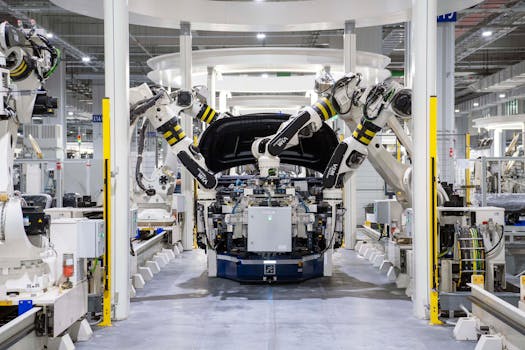
High-tech robots assembling a car in a modern factory setting, showcasing automation. Photo: Hyundai Motor Group / Pexels
While the immediate impact of 5G on individual mobile devices is undeniable, its true revolutionary potential lies in its ability to transform entire industries and enable a new generation of technologies. The combination of ultra-low latency and massive machine-type communications (mMTC) makes 5G a critical enabler for the Internet of Things (IoT) at an unprecedented scale. Imagine smart cities where traffic lights adapt in real-time to congestion, waste management systems optimize collection routes autonomously, and public safety is enhanced through interconnected sensor networks. These aren't futuristic concepts; they are becoming realities powered by 5G. In manufacturing, 5G facilitates Industry 4.0, enabling smart factories where robots, sensors, and machines communicate seamlessly and instantly. This allows for predictive maintenance, remote control of machinery, and highly efficient, flexible production lines. For example, a robotic arm can receive instructions and execute tasks with millisecond precision, essential for complex assembly or hazardous environments. The healthcare sector stands to gain immensely from 5G. Remote surgery, where a surgeon operates on a patient miles away using robotic instruments, becomes feasible due to 5G's ultra-low latency and high reliability. Telemedicine advances significantly, with doctors able to conduct high-fidelity virtual consultations, monitor patients remotely with connected medical devices, and even transmit large diagnostic images instantly. This improves access to specialized care, particularly in rural or underserved areas. The automotive industry is another prime beneficiary, with 5G being a cornerstone for the development of autonomous vehicles. Self-driving cars require constant, instantaneous communication with other vehicles (V2V), infrastructure (V2I), and the cloud to navigate safely and efficiently. 5G provides the necessary bandwidth and low latency for these complex interactions, paving the way for safer roads and intelligent transportation systems. Furthermore, the concept of 'network slicing' in 5G allows operators to create dedicated virtual networks tailored to specific industry needs, guaranteeing performance and security for critical applications. This means an autonomous vehicle network can have different QoS (Quality of Service) guarantees than a public Wi-Fi hotspot, ensuring critical operations are never compromised. The ripple effect of 5G extends into agriculture, logistics, energy, and countless other sectors, fundamentally altering operational paradigms and fostering innovation. The ability to connect billions of devices reliably and efficiently opens up new possibilities for automation, data collection, and intelligent decision-making across the board.

Challenges and the Road Ahead for 5G Adoption
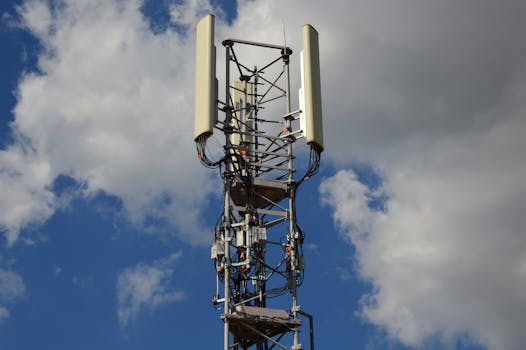
High-angle view of a modern cell tower with technology components against a blue sky with clouds. Photo: Ulrick Trappschuh / Pexels
Despite the immense promise and ongoing deployment, the widespread adoption and full realization of 5G's potential are not without their challenges. One of the primary hurdles is the significant investment required for infrastructure rollout. 5G networks, especially those leveraging millimeter-wave (mmWave) frequencies for ultra-fast speeds, often require a denser network of smaller cell towers (small cells) compared to previous generations. These small cells have a shorter range and are more susceptible to physical obstructions, necessitating more extensive deployment. This translates into considerable capital expenditure for telecommunications companies and often involves navigating complex regulatory and permitting processes in urban and rural areas alike. Another challenge lies in ensuring equitable access. While major metropolitan areas in the US are seeing rapid 5G expansion, rural communities often lag behind due to the economic impracticality of dense small cell deployment in sparsely populated regions. Bridging this digital divide is crucial to ensure that the benefits of 5G are accessible to all, preventing a further exacerbation of existing inequalities. Device compatibility is also a factor. To fully utilize 5G capabilities, consumers need 5G-enabled smartphones or other devices, which often come at a premium compared to their 4G counterparts. As the technology matures, device prices are expected to drop, but this initial barrier can slow adoption rates. Security concerns also loom large. With an exponentially larger number of connected devices and the increasing reliance on wireless networks for critical infrastructure, 5G networks present a broader attack surface for cyber threats. Robust security protocols and continuous vigilance are essential to protect data privacy and national security. The sheer volume of data generated by 5G networks also raises questions about data management, storage, and ethical use. Furthermore, public perception and understanding play a role. Misinformation regarding health risks associated with 5G technology, though largely debunked by scientific consensus, can create hesitation among some segments of the population. Educating the public about the safety and benefits of 5G is an ongoing effort. Despite these hurdles, the momentum for 5G deployment is strong. Governments are investing in infrastructure, telcos are expanding their footprints, and innovation in 5G-enabled devices and applications continues to accelerate. The evolution towards 5G-Advanced and eventually 6G is already underway, promising even greater capabilities. The journey to a fully 5G-enabled world is complex, but the transformative potential makes it an endeavor worth pursuing. Understanding wireless communication standards helps put these challenges into perspective.

Maximizing Your 5G Experience: Tips and Common Pitfalls

A person holding a smartphone with a blank screen while relaxing in a chair. Photo: MART PRODUCTION / Pexels
To truly unlock the power of 5G on your mobile device and beyond, understanding how to maximize your experience is crucial. One of the most important tips is to ensure you have a 5G-compatible device. Not all new smartphones support 5G, and even among those that do, some may only support certain 5G bands (like sub-6 GHz vs. mmWave), which impacts speed and coverage. Always check your device specifications and carrier compatibility. Another key tip is to be mindful of your data plan. While 5G offers incredible speeds, these speeds can lead to significantly higher data consumption if you're not careful. Streaming 4K video or downloading large files in seconds can quickly eat through limited data allowances. Opt for unlimited plans if you plan to heavily utilize 5G, or monitor your usage closely. **Common Pitfalls to Avoid:** * **Expecting Ubiquitous mmWave Coverage:** While mmWave offers the fastest speeds, its range is very limited and easily obstructed. Don't expect these top-tier speeds everywhere; sub-6 GHz 5G is more widespread and offers a good balance of speed and coverage. * **Ignoring Network Settings:** Some phones might have settings to optimize battery life by preferring 4G over 5G. If you prioritize speed, ensure your phone's network settings are configured to use 5G when available. * **Overlooking Home Connectivity:** While mobile 5G is powerful, don't forget about 5G fixed wireless access (FWA) as a potential home internet solution, especially if traditional broadband is slow or unavailable in your area. This can be a game-changer for household connectivity. * **Not Utilizing 5G-Specific Apps/Services:** To fully appreciate 5G, engage with applications that genuinely benefit from its capabilities, such as cloud gaming services, AR/VR apps, or high-fidelity video conferencing platforms. Simply browsing social media won't showcase its full potential. * **Ignoring Battery Drain:** 5G radios can consume more power than 4G, especially during initial deployment phases or in areas with weaker 5G signals where your phone works harder to connect. Be prepared for potentially shorter battery life, or carry a portable charger. By being informed and proactive, you can ensure your transition to and experience with 5G is as smooth and beneficial as possible.

Comparison

Feature5G4G LTE3G
Peak Speed (Theoretical)10 Gbps100 Mbps - 1 Gbps384 Kbps - 21 Mbps
Latency1 ms30-50 ms100-500 ms
Device Density (per km²)1,000,000100,000~10,000
Key Use CasesAutonomous vehicles, AR/VR, IoT, remote surgeryMobile broadband, video streaming, social mediaVoice calls, basic internet, text messaging
Network Slicing
Energy EfficiencyHigh (for low-power IoT)ModerateLow

What Readers Say

"The impact of 5G on mobile technology for my work has been phenomenal. I can now upload massive design files to the cloud in seconds, which used to take minutes on 4G. It's truly boosted my productivity."

Sarah J. · Austin, TX

"Gaming on my phone with 5G is a completely different experience. No lag, crystal-clear graphics, even when playing demanding online titles. It feels like having a console in my pocket."

Mark D. · Miami, FL

"I was skeptical, but the 5G fixed wireless internet at my new apartment is faster and more reliable than my old cable connection. My entire family can stream and video call without a single hiccup, saving us money too."

Emily R. · Seattle, WA

"The speeds are incredible when I'm in a good 5G area, especially downtown. However, coverage can still be spotty in some suburban spots, and I notice my battery drains a bit faster. Still, a huge step up from 4G."

David L. · Denver, CO

"As a student, the impact of 5G on mobile technology has been a lifesaver for research and online classes. I can download lecture videos and access library resources instantly, even when I'm on the go between campuses."

Jessica M. · Chicago, IL

Frequently Asked Questions

What is the most significant impact of 5G on mobile technology for everyday users?

The most significant impact for everyday users is vastly increased mobile internet speeds, allowing for instantaneous downloads, seamless 4K/8K video streaming, and lag-free cloud gaming directly on smartphones. It also enables more reliable connectivity in crowded areas, improving overall mobile experience.

Is 5G safe to use, given concerns about radiation?

Yes, 5G is considered safe. Numerous scientific bodies and health organizations, including the WHO and FCC, have concluded that 5G technology, operating within established safety guidelines, does not pose a health risk. The radio frequencies used are non-ionizing and do not cause DNA damage.

How can I check if my current phone supports 5G?

To check if your phone supports 5G, look at its specifications on the manufacturer's website or in your phone's settings under 'About Phone' or 'Network & Internet'. Most phones released in the last 2-3 years, especially mid-range to flagship models, are 5G-enabled.

Is upgrading to a 5G phone worth the cost right now?

Upgrading to a 5G phone is increasingly worthwhile, especially as 5G networks expand and more 5G-specific applications emerge. While initial costs can be higher, prices are decreasing, and the long-term benefits in speed, latency, and future-proofing your device make it a sound investment for many users.

How does 5G compare to Wi-Fi 6 for home internet?

Both 5G and Wi-Fi 6 offer significant speed improvements, but they serve different purposes. 5G (specifically 5G Fixed Wireless Access) is a cellular technology used for mobile and home internet where traditional broadband is limited. Wi-Fi 6 is a local area network (LAN) standard designed to improve Wi-Fi performance within your home or office, especially with many connected devices. They are complementary rather than competing.

Who benefits most from the impact of 5G on mobile technology?

Virtually everyone benefits from 5G, but those involved in data-intensive tasks, such as content creators, gamers, remote workers, and businesses leveraging IoT or AI, will see the most immediate and profound impact. Industries like manufacturing, healthcare, and transportation are also major beneficiaries through new automation and connectivity capabilities.

What are the privacy risks associated with the expansion of 5G and IoT?

The expansion of 5G and IoT increases the number of connected devices, potentially leading to more data collection points and a larger attack surface for cyber threats. Risks include data breaches, unauthorized surveillance, and the misuse of personal data. Robust cybersecurity measures, encryption, and adherence to privacy regulations are crucial to mitigate these risks.

What future mobile innovations will 5G enable?

5G is set to enable truly immersive mobile AR/VR experiences, real-time holographic communication, advanced AI on edge devices, seamless integration of smart cities with mobile infrastructure, and the widespread adoption of autonomous robotics and vehicles. It's the backbone for a hyper-connected, intelligent future.

The impact of 5G on mobile technology is not just an upgrade; it's a paradigm shift. Embrace the future of connectivity and unlock unparalleled possibilities for your mobile experience and beyond.

Topics: impact of 5G on mobile technology5G benefitsfuture of mobile5G applicationsmobile network evolution
Leo List
Brampton weed
Adultwork EstrelaBet Vai de Bet R7 Bet Betão Galera Bet Rainbet Bet9ja Shop SportyBet BetKing Sisal Loto Foot Hollywoodbets YesPlay Odibets RushBet Jugabet BetWarrior BetCity MSport betPawa Fortebet