
How Do Self-Driving Cars Work? Your Ultimate Tech Guide
how do self-driving cars work

How Do Self-Driving Cars Work? Your Ultimate Tech Guide

Dive deep into the intricate technologies that power autonomous vehicles and are reshaping the future of mobility.

Explore Autonomy

Key Takeaways

  • ✓ Self-driving cars rely on a sophisticated array of sensors to perceive their environment.
  • ✓ Artificial Intelligence (AI) and machine learning are crucial for decision-making and prediction.
  • ✓ There are six levels of autonomy, ranging from Level 0 (no automation) to Level 5 (full automation).
  • ✓ High-definition maps provide essential contextual information for navigation.
  • ✓ Redundancy in systems is key for safety in autonomous vehicle design.

How It Works

1
Sensing the Environment

Lidar, radar, cameras, and ultrasonic sensors continuously collect vast amounts of data about the car's surroundings. This data forms a real-time, 360-degree view.

2
Perception and Localization

Onboard computers process raw sensor data to identify objects, pedestrians, and traffic signs. Simultaneously, the car precisely determines its own location on a high-definition map.

3
Prediction and Planning

Using AI algorithms, the system predicts the behavior of other road users and plans the safest, most efficient path. This involves calculating trajectories and making decisions like accelerating, braking, or turning.

4
Execution and Control

Once a plan is established, the car's actuators (steering, throttle, brakes) are commanded to execute the planned maneuvers. Continuous monitoring ensures the car stays on track and adapts to changes.

The Sensor Suite: Eyes and Ears of Autonomous Vehicles
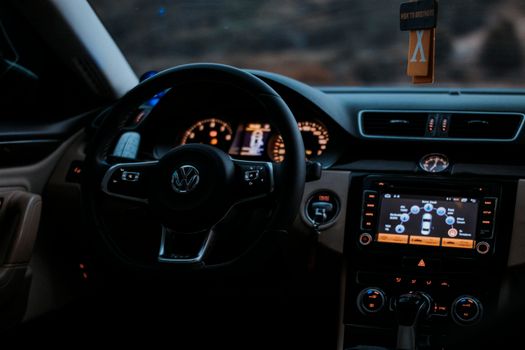
Cozy Volkswagen car interior showing dashboard display and steering wheel. Photo: Orhan Pergel / Pexels
At the core of understanding how do self-driving cars work lies their ability to perceive the world around them with unparalleled precision. Unlike human drivers who rely primarily on vision, autonomous vehicles employ a diverse array of sensors, each with unique strengths, to create a comprehensive and redundant understanding of their environment. This multi-modal approach is critical for safety and robustness, ensuring that even if one sensor type is compromised, others can compensate. The primary sensors include cameras, lidar, radar, and ultrasonic sensors, often supplemented by GPS and inertial measurement units (IMUs). Cameras, for instance, are the 'eyes' of the car. They provide rich visual data, essential for tasks like recognizing traffic lights, lane markings, road signs, and classifying objects (e.g., distinguishing a pedestrian from a lamppost). Modern self-driving systems often utilize multiple cameras, offering a 360-degree view and even stereo vision for depth perception. However, cameras can be affected by challenging lighting conditions like glare, fog, heavy rain, or complete darkness. This is where lidar (Light Detection and Ranging) comes into play. Lidar systems emit pulses of laser light and measure the time it takes for these pulses to return, creating a precise 3D map of the surroundings. This 'point cloud' data is invaluable for accurately measuring distances, identifying obstacles, and mapping the environment regardless of lighting conditions. While highly accurate, lidar can be expensive and its performance can degrade in heavy rain or snow. Radar (Radio Detection and Ranging) complements lidar and cameras by emitting radio waves and detecting their reflections. Radar excels at measuring velocity and distance, making it particularly effective for detecting vehicles and other large objects at longer ranges, even through adverse weather conditions like fog or heavy rain, where optical sensors might struggle. Its lower resolution compared to lidar means it's less adept at detailed object classification. Ultrasonic sensors, typically found on the bumpers, use sound waves to detect objects at very close range. These are primarily used for low-speed maneuvers like parking or navigating tight spaces, providing crucial proximity warnings. Finally, GPS (Global Positioning System) provides a global positioning estimate, while IMUs track the car's orientation and acceleration, helping to refine its precise location and movement. The fusion of data from all these sensors is processed by the vehicle's onboard computer, creating a robust and detailed environmental model, a foundational step in how do self-driving cars work. Understanding sensor fusion is key to appreciating the complexity involved. This intricate sensor suite, constantly gathering and interpreting data, is what enables the car to 'see' and 'understand' its world in real-time, laying the groundwork for safe and effective autonomous operation.

The Brains of the Operation: AI, Machine Learning, and Decision-Making
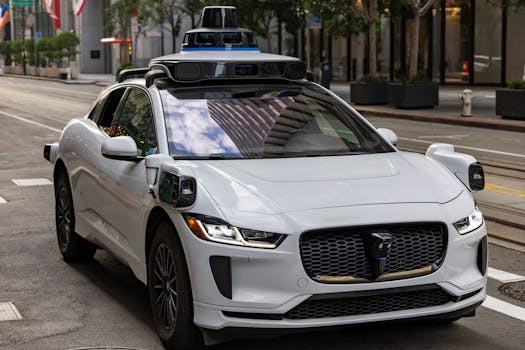
A white autonomous vehicle navigating a city street, reflecting urban architecture in daylight. Photo: Stephen Leonardi / Pexels
Once the sensor suite has gathered an enormous amount of raw data about the vehicle's surroundings, the next critical phase in understanding how do self-driving cars work involves processing this data and making intelligent decisions. This is where Artificial Intelligence (AI) and machine learning algorithms truly shine, acting as the 'brain' of the autonomous vehicle. The raw sensor data is fed into complex neural networks and other AI models that have been trained on millions of miles of driving data, both real-world and simulated. The first step in this cognitive process is 'perception.' The AI system takes the raw point clouds from lidar, images from cameras, and radar returns, and transforms them into a meaningful representation of the world. This involves identifying and classifying objects – distinguishing between pedestrians, cyclists, other vehicles, traffic cones, and static obstacles. It also involves detecting lane lines, traffic signs, and traffic lights, and estimating their distance and velocity relative to the autonomous car. This perception layer builds a dynamic, 3D model of the environment, constantly updating as the car moves. Following perception is 'localization,' where the vehicle precisely determines its position on a high-definition (HD) map. These HD maps are far more detailed than typical navigation maps, containing intricate information about lane geometry, road boundaries, traffic light locations, and even the height of curbs. By comparing its real-time sensor data with these pre-mapped features, the car can pinpoint its location down to a few centimeters, which is vital for safe navigation. With a clear understanding of its surroundings and its precise location, the system then moves to 'prediction' and 'planning.' Prediction algorithms forecast the likely future movements of other road users. For example, if a car in an adjacent lane is signaling, the AI predicts it might merge. If a pedestrian is at a crosswalk, the AI predicts they might step into the road. This predictive capability is crucial for proactive, rather than reactive, driving. Based on these predictions and the current environmental model, the 'planning' module generates a safe and efficient path. This involves complex computations to determine the optimal speed, lane changes, braking, and acceleration, while adhering to traffic laws and ensuring passenger comfort. The planning is not static; it's a continuous process that adapts to changing conditions in real-time. Finally, the 'control' module translates these high-level plans into specific commands for the vehicle's actuators – steering, throttle, and brakes. This entire cycle, from sensing to control, happens many times per second, allowing the self-driving car to navigate dynamically and safely. This sophisticated interplay of AI, machine learning, and robust algorithms is the engine behind the intelligence of how do self-driving cars work.

Levels of Autonomy and the Road Ahead for Self-Driving Cars

A white autonomous vehicle navigating a city street, reflecting urban architecture in daylight. Photo: Stephen Leonardi / Pexels
Understanding how do self-driving cars work also requires a grasp of the different levels of autonomy, which define the extent to which a vehicle can operate independently without human intervention. The Society of Automotive Engineers (SAE) International has established a widely accepted standard, J3016, which categorizes driving automation into six distinct levels, from Level 0 to Level 5. These levels provide a clear framework for discussing and developing autonomous driving technology, highlighting the gradual progression towards full self-sufficiency. Level 0, or 'No Driving Automation,' means the human driver performs all driving tasks. This is typical of most cars on the road today without any driver assistance features. Level 1, 'Driver Assistance,' introduces basic automation, such as adaptive cruise control or lane keeping assist, where the system can control either steering or speed, but not both simultaneously. The human driver remains fully responsible and must constantly supervise. Level 2, 'Partial Driving Automation,' represents a significant step, allowing the vehicle to control both steering and acceleration/deceleration simultaneously under certain conditions. Features like 'hands-on' adaptive cruise control with lane centering fall into this category. The driver must still remain engaged, supervise the system, and be ready to take over at any moment. Many advanced driver-assistance systems (ADAS) available in new cars today operate at Level 2. Level 3, 'Conditional Driving Automation,' is where things get truly interesting. At this level, the vehicle can perform all driving tasks under specific conditions (e.g., highway driving in good weather) and the driver is not required to monitor the environment constantly. However, the system will request the driver to take over if it encounters a situation it cannot handle, and the driver must be ready to intervene within a few seconds. This 'takeover' challenge is a major hurdle for Level 3 deployment, as human reaction times can be unpredictable. Level 4, 'High Driving Automation,' signifies a major leap. The vehicle can perform all driving tasks and monitor the driving environment under specific operational design domains (ODDs), which could be a geofenced area or specific road types. In these ODDs, the driver is not expected to intervene at all. If the system encounters a situation outside its ODD, it will safely bring the vehicle to a minimal risk condition (e.g., pulling over). Fully autonomous robotaxis operating in designated areas are examples of Level 4. Finally, Level 5, 'Full Driving Automation,' represents the ultimate goal: the vehicle can perform all driving tasks under all conditions, equivalent to a human driver. There is no expectation for human intervention at any point, and the vehicle would not even require steering wheel or pedals. This is the future vision many companies are working towards. The journey through these levels showcases the escalating complexity and the incredible engineering required to master how do self-driving cars work. Each level builds upon the previous, integrating more sophisticated sensors, more powerful AI, and more robust software to inch closer to a fully autonomous future. Exploring the ethics of autonomous driving further highlights the societal implications of these advancements.

Navigating the Challenges and the Road Ahead for Autonomous Vehicles
Participant in car race maneuvering between red and white traffic cones or barriers in front of audience Photo: Diana ✨ / Pexels
While the technology behind how do self-driving cars work is undeniably impressive, the path to widespread adoption is fraught with significant challenges. Overcoming these hurdles is paramount for the safe and reliable integration of autonomous vehicles into our daily lives. One of the primary technical challenges lies in handling unpredictable edge cases. While AI systems are excellent at recognizing common scenarios, they can struggle with rare, unusual, or ambiguous situations that human drivers might instinctively navigate. Examples include a child chasing a ball into the street, an unexpected road hazard, or complex construction zones with constantly changing layouts. Training AI for every conceivable edge case is an almost impossible task, requiring continuous data collection and sophisticated simulation environments. Another significant challenge is adverse weather conditions. While radar performs well in fog or heavy rain, cameras and lidar can be severely impacted, reducing the system's ability to accurately perceive its environment. Snow, in particular, can obscure lane markings and create a blanket over the road that makes it difficult for sensors to differentiate between objects and the ground. Robust solutions for all-weather operation are still under active development and remain a critical area of research. Regulatory and legal frameworks also present substantial obstacles. Governments worldwide are grappling with how to legislate autonomous vehicles, including questions of liability in the event of an accident, data privacy concerns, and the establishment of uniform safety standards. The lack of consistent regulations across states and countries can hinder deployment and innovation. Public acceptance is another vital factor. Many people harbor skepticism or fear about riding in a vehicle without human control, often fueled by sensationalized media reports of accidents. Building trust through transparent testing, demonstrable safety records, and clear communication about the technology's capabilities and limitations is crucial. Furthermore, the sheer computational power required to process vast amounts of sensor data in real-time is immense, demanding powerful and energy-efficient onboard computing platforms. The cybersecurity implications are also paramount; autonomous vehicles must be protected from hacking attempts that could compromise their safety or functionality. Despite these challenges, the progress in autonomous driving is relentless. Future developments will likely focus on improving AI's ability to handle complex social interactions on the road, enhancing sensor fusion algorithms for better redundancy and robustness, and developing more sophisticated simulation tools for rapid testing and validation. The economic implications, from job displacement in the transportation sector to new business models, also require careful consideration. The road ahead for self-driving cars is long and complex, but the ongoing advancements in how do self-driving cars work promise a transformative impact on transportation.

Comparison

FeatureLevel 2 (ADAS)Level 3 (Conditional)Level 4 (High Automation)
Driver MonitoringConstant supervision requiredSystem monitors, driver must take overNo driver monitoring in ODD
Operational DomainLimited (e.g., highway, single lane)Specific conditions (e.g., traffic jams)Defined geofenced areas/road types
Hands-off DrivingBriefly possible, hands readyPossible for extended periodsNot required within ODD
Eyes-off DrivingPossible, but ready to intervene✓ (within ODD)
Fallback PerformanceDriver takes overSystem requests takeover, then minimal riskSystem performs minimal risk maneuver

What Readers Say

"Understanding how do self-driving cars work used to seem like science fiction, but this guide really breaks it down. The explanation of sensors and AI made it so clear. I feel much more confident about the future of this tech now."

Sarah J. · Austin, TX

"As a tech enthusiast, I appreciate the depth of detail on how do self-driving cars work. The sections on AI and machine learning were particularly insightful, showcasing the incredible complexity involved. Excellent resource!"

Michael D. · San Jose, CA

"I was skeptical about autonomous vehicles, but learning about how do self-driving cars work, especially the redundancy in sensor systems, has really changed my perspective. It's clear a lot of thought goes into safety. Very informative article."

Emily R. · Boston, MA

"The article on how do self-driving cars work was incredibly comprehensive. While I still have concerns about edge cases, the detailed breakdown of the levels of autonomy and sensor tech helped me grasp the current state and future potential."

David L. · Seattle, WA

"This article was a fantastic resource for understanding how do self-driving cars work from a user's perspective. It demystified the technology and made the concept of an autonomous future much more tangible and exciting."

Jessica M. · Denver, CO

Frequently Asked Questions

What are the core components of a self-driving car?

The core components include a sophisticated sensor suite (cameras, lidar, radar, ultrasonic), powerful onboard computers, high-definition maps, and advanced AI/machine learning software for perception, prediction, planning, and control. These elements work in concert to enable autonomous operation.

Are self-driving cars truly safe?

Safety is the paramount concern in the development of self-driving cars. While no system is 100% foolproof, autonomous vehicle developers employ extensive testing, redundancy in critical systems, and rigorous validation processes to achieve safety levels that aim to surpass human driving capabilities over time. Accidents do occur, but the data often indicates a lower rate per mile compared to human drivers in similar conditions.

How do self-driving cars 'learn' to drive?

Self-driving cars learn primarily through machine learning, a subset of AI. They are trained on vast datasets of real-world driving scenarios and simulated environments. Neural networks analyze this data to identify patterns, make predictions about other road users, and learn optimal driving strategies, constantly refining their decision-making algorithms.

How much will self-driving cars cost?

The cost of self-driving cars varies significantly depending on the level of autonomy. Vehicles with Level 2 features are already widely available at a premium. Fully autonomous Level 4 and Level 5 vehicles are currently very expensive due to the advanced hardware and software, but costs are expected to decrease as technology matures and scales, potentially making them more accessible through ride-sharing services initially.

How do self-driving cars compare to advanced driver-assistance systems (ADAS)?

ADAS features (like adaptive cruise control or lane keeping assist) are typically Level 1 or 2 automation, requiring constant human supervision. Self-driving cars, particularly Level 3 and above, take over more or all of the driving tasks, reducing or eliminating the need for human intervention within their operational design domain. They are a progression of ADAS, but with significantly greater autonomy and complexity.

Who benefits most from self-driving cars?

Self-driving cars promise benefits for a wide range of users. They could offer increased mobility for the elderly and disabled, reduce traffic congestion and pollution, and potentially save lives by minimizing human error. Commuters could reclaim time, and businesses could optimize logistics and delivery services.

What happens if a self-driving car's sensors fail?

Self-driving cars are designed with redundancy to mitigate sensor failure. They typically use multiple types of sensors (cameras, lidar, radar) that complement each other. If one sensor type fails or is obstructed, the system can often rely on data from the others. In critical situations, the system is programmed to perform a 'minimal risk maneuver,' such as safely pulling over to the side of the road.

What does the future hold for self-driving car technology?

The future of self-driving car technology includes continuous improvements in AI for handling complex social driving scenarios, enhanced sensor fusion for all-weather reliability, and advancements in vehicle-to-everything (V2X) communication for better coordination. We can expect a gradual rollout of higher levels of autonomy, initially in controlled environments, with a long-term vision of widespread, fully autonomous transportation.

Now that you understand how do self-driving cars work, you're better equipped to navigate the future of transportation. Stay informed and prepare for a world where your car drives itself, offering unprecedented convenience and safety.

Topics: how do self-driving cars workautonomous vehicles explainedself-driving technologyAI in carsfuture of transportation
Leo List

DK Escorts LU Escorts AT Escorts SE Escorts FI Escorts CH Escorts DE Escorts HR Escorts IE Escorts GR Escorts CZ Escorts NO Escorts BE Escorts FR Escorts SI Escorts IL Escorts NL Escorts PL Escorts HU Escorts ES Escorts IT Escorts PT Escorts SK Escorts RO Escorts ZA Escorts UY Escorts US Escorts UK Escorts NZ Escorts AU Escorts
Brampton weed
Adultwork EstrelaBet Vai de Bet R7 Bet Betão Galera Bet Rainbet Bet9ja Shop SportyBet BetKing Sisal Loto Foot Hollywoodbets YesPlay Odibets RushBet Jugabet BetWarrior BetCity MSport betPawa Fortebet