
How Do Self-Driving Cars Work? The Tech Behind Autonomous Vehicles
Explore the intricate systems and artificial intelligence powering the next generation of transportation.
Discover the TechKey Takeaways
- ✓ Self-driving cars operate on a complex interplay of sensors, AI, and detailed mapping.
- ✓ The Society of Automotive Engineers (SAE) defines six levels of driving automation, from 0 (no automation) to 5 (full automation).
- ✓ Lidar, radar, cameras, and ultrasonic sensors are the primary 'eyes and ears' of autonomous vehicles.
- ✓ Advanced algorithms process vast amounts of data in real-time to perceive, predict, and plan vehicle movements.
How It Works
Vehicles use an array of sensors (cameras, lidar, radar, ultrasonic) to collect continuous data about their surroundings. This data identifies other vehicles, pedestrians, traffic signs, lane markings, and obstacles.
High-definition maps, GPS, and sensor data are combined to pinpoint the car's precise location on the road. This is crucial for understanding its environment within a pre-defined context.
Artificial intelligence algorithms analyze the perceived environment and predict the behavior of other road users. This allows the car to anticipate potential hazards and plan accordingly.
Based on perception, localization, and prediction, the car's software calculates the optimal path and speed. It then sends commands to the steering, acceleration, and braking systems to execute the planned maneuvers.
The Sensory Suite: Eyes and Ears of Autonomous Vehicles
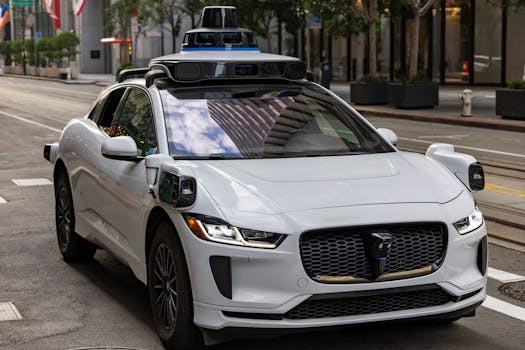 Photo: Stephen Leonardi / Pexels
The Brains of the Operation: AI, Machine Learning, and Decision-Making
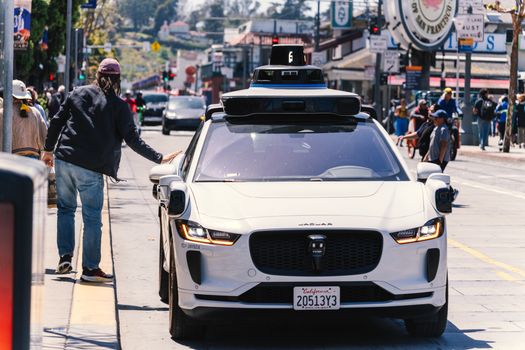 Photo: Abhishek Navlakha / Pexels
Mapping and Localization: Navigating with Precision
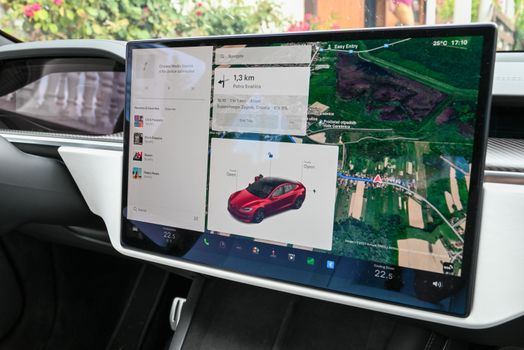 Photo: Vladimir Srajber / Pexels
Challenges and the Road Ahead for Autonomous Driving
 Photo: Vladimir Srajber / Pexels
Comparison
| Feature | Level 5 (Full Automation) | Level 3 (Conditional Automation) | Human Driver (No Automation) |
|---|---|---|---|
| Driver Engagement | None required, vehicle handles all tasks | Monitored, intervention required in some conditions | Full, constant engagement |
| Operational Domain | Any road, any conditions | Specific conditions (e.g., highways, clear weather) | Any road, any conditions (human limits apply) |
| Fallback Performance | Vehicle handles all failures | Driver must take over | Human handles all failures |
| System Limitations | ✓ (None within ODD) | ✗ (Limited by ODD) | ✓ (Human error, fatigue) |
What Readers Say
"Understanding how do self-driving cars work was fascinating. The article broke down the complex sensor fusion and AI into easily digestible parts. It really clarified the 'how' behind the hype."
Sarah J. · Austin, TX"This article is incredibly thorough. I've always been curious about the specifics of how do self-driving cars work, and the explanations of lidar, radar, and HD mapping were exceptionally clear."
Mark D. · Seattle, WA"As an engineering student, this deep dive into how do self-driving cars work was invaluable. It helped me connect the dots between theoretical AI concepts and their real-world application in autonomous vehicles, specifically the prediction algorithms."
Emily R. · Boston, MA"Great overview of how do self-driving cars work, though I wish there was a bit more on the ethical implications of the decision-making algorithms. Still, a very informative read on the technology itself."
David L. · San Francisco, CA"I often hear about self-driving cars but never truly grasped the technical underpinnings. This article on how do self-driving cars work made it all click, from the sensors to the AI 'brain'. Very helpful for anyone wanting to understand the future of transport."
Jessica M. · Chicago, ILFrequently Asked Questions
What are the main components that explain how do self-driving cars work?
Self-driving cars primarily rely on a sophisticated combination of sensors (cameras, lidar, radar, ultrasonic), powerful onboard computers running advanced artificial intelligence and machine learning algorithms, and highly detailed, pre-built high-definition (HD) maps. These components work in concert to perceive the environment, localize the vehicle, predict other road users' behavior, and plan safe driving maneuvers.
Are self-driving cars safe to use right now?
The safety of self-driving cars depends on their level of autonomy. While some vehicles offer Level 2 or 3 features (requiring driver supervision), fully autonomous Level 5 vehicles are not yet available to the public. Companies are rigorously testing these systems, and while they show promise, widespread deployment requires further validation, regulatory frameworks, and public acceptance to ensure consistent safety across all conditions.
How do self-driving cars 'see' in the dark or bad weather?
Self-driving cars use a combination of sensors to 'see' in challenging conditions. Radar is particularly effective in fog, heavy rain, or snow, as radio waves can penetrate these elements. Lidar can work in low light, generating 3D maps. Infrared cameras can also assist in night vision. The car's AI fuses data from all these sensors to build a comprehensive environmental model, even when one sensor's performance is degraded.
How much do self-driving cars cost compared to regular cars?
Currently, vehicles with advanced self-driving features (like Level 2 or 3) typically cost more than their standard counterparts due to the added hardware (sensors) and software. Fully autonomous Level 5 vehicles, when they become available, are expected to be significantly more expensive initially, as the technology is still cutting-edge and requires substantial research and development investment. Costs are projected to decrease with mass production.
How do self-driving cars compare to human drivers in terms of reaction time?
Self-driving cars can often have faster and more consistent reaction times than human drivers because their sensors and AI systems can process information and initiate responses in milliseconds, without distraction or fatigue. However, human drivers excel in interpreting complex, ambiguous, or unpredictable 'edge cases' that current AI systems still struggle with, making a direct comparison nuanced.
Who benefits most from understanding how do self-driving cars work?
Anyone interested in the future of transportation, technology enthusiasts, urban planners, policymakers, and automotive industry professionals will benefit most from understanding how self-driving cars work. It provides insights into potential societal shifts, infrastructure needs, and the technological advancements driving innovation.
What are the biggest risks associated with self-driving cars?
The biggest risks include potential software glitches, sensor limitations in extreme conditions, cybersecurity vulnerabilities, and the challenge of accurately predicting complex human behavior on the road. There are also ethical considerations in accident scenarios and legal complexities regarding liability.
What is the future trend for self-driving cars?
The future trend for self-driving cars points towards continued incremental advancements through higher levels of automation (L3, L4, and eventually L5), increased integration with smart city infrastructure (V2X communication), and a focus on electric autonomous vehicles. We can expect more widespread deployment in controlled environments like ride-sharing fleets before personal ownership of fully autonomous vehicles becomes common, with a strong emphasis on safety and regulatory compliance.
Delve deeper into the fascinating world of autonomous vehicles and truly grasp how do self-driving cars work. The future of transportation is already here, and understanding its mechanics is key to navigating tomorrow's roads.