The Future of Virtual Reality Gaming: An Immersive Odyssey

Person enjoying a virtual reality gaming session with a VR headset and controllers.Photo: SHVETS production / Pexels

The Future of Virtual Reality Gaming: An Immersive Odyssey

Step into tomorrow's gaming: unparalleled immersion, seamless interaction, and boundless virtual worlds.

Dive Into VR's Future

Key Takeaways

  • ✓ VR gaming market projected to reach over $50 billion by 2030.
  • ✓ Haptic feedback and full-body tracking are becoming standard.
  • ✓ Cloud VR streaming will reduce hardware barriers for many.
  • ✓ AI-powered NPCs will create more dynamic and responsive game worlds.

How It Works

1
Advanced Hardware Integration

Next-gen headsets offer higher resolutions, wider fields of view, and lighter designs for extended comfort. Integrated eye-tracking and foveated rendering optimize visual fidelity where it matters most.

2
Enhanced Immersion & Interaction

Full-body tracking, haptic suits, and scent generators bridge the gap between the virtual and physical. Players will not just see and hear, but feel and even smell their virtual environments, deepening presence.

3
Seamless Connectivity & Social Play

High-speed internet and cloud computing enable massive multiplayer VR experiences without lag. Persistent virtual worlds and cross-platform compatibility foster vibrant online communities.

4
AI-Driven Dynamic Worlds

Artificial intelligence will power more intelligent NPCs, procedural content generation, and adaptive narratives. This creates unique, replayable experiences that respond to individual player choices.

The Evolution of VR Hardware: Beyond the Headset
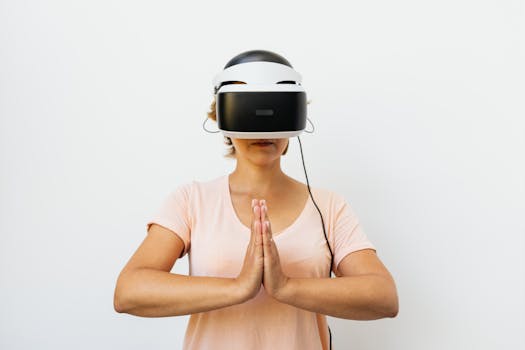
Adult woman practicing meditation with a virtual reality headset against a white background.Photo: www.kaboompics.com / Pexels
The journey of virtual reality gaming has been one of relentless innovation, and the future promises an acceleration of this trend, particularly in hardware. While today's headsets offer impressive experiences, the next generation is set to redefine what's possible. We're moving beyond simple visual and auditory immersion to a multi-sensory engagement that blurs the lines between the digital and physical. High-resolution displays are becoming standard, with panels offering 4K per eye or even higher, eliminating the 'screen door effect' that can break immersion. Wider fields of view (FoV) will move from the current 100-110 degrees to closer to 180 degrees, matching natural human peripheral vision, making virtual worlds feel truly boundless. Comfort and ergonomics are also paramount. Lighter materials, better weight distribution, and integrated cooling systems will allow for longer, more comfortable play sessions. Wireless connectivity, already a feature in some high-end devices, will become ubiquitous, freeing players from tethers and enabling greater freedom of movement. But the hardware evolution isn't just about what's on your head. Peripheral devices are set to revolutionize how we interact with virtual worlds. Haptic feedback, currently limited to controllers, is expanding to full-body suits and gloves. Imagine feeling the recoil of a virtual weapon, the gentle patter of rain, or the texture of a digital surface. These advanced haptics will provide tactile sensations that significantly enhance presence and realism. Eye-tracking technology, already present in some premium headsets, will become standard. This not only allows for foveated rendering – where only the area you're looking at is rendered in full detail, saving computational power – but also opens doors for more intuitive user interfaces and character interactions. Imagine NPCs making eye contact with you, or menus responding to your gaze. Furthermore, brain-computer interfaces (BCIs), while still in their nascent stages, represent the ultimate frontier. While not mainstream for gaming yet, early research suggests a future where thoughts alone could control aspects of your virtual experience, offering unparalleled accessibility and direct interaction. The convergence of these hardware advancements will lead to an unprecedented level of immersion, making the virtual indistinguishable from reality in many aspects. This technological leap will undoubtedly shape the future of interactive entertainment, pushing boundaries we can only begin to imagine.

Unlocking New Game Genres and Narrative Possibilities
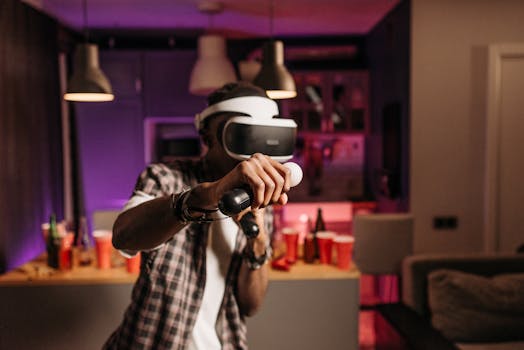
Young adult playing virtual reality games with headset and controller in a stylish indoor setting.Photo: Pavel Danilyuk / Pexels
The enhanced capabilities of future VR hardware aren't just about prettier graphics; they're about unlocking entirely new game genres and narrative possibilities that are currently unimaginable. Traditional gaming often relies on abstraction – a health bar, a map, a menu. In future VR, these abstractions will melt away, replaced by intuitive, diegetic interfaces that exist within the game world itself. Imagine navigating a complex space by pointing and gesturing, or interacting with objects in a truly physical way, rather than button presses. This deeper level of interaction will give rise to experiences that demand a different kind of engagement from players. Consider the potential for role-playing games (RPGs). Instead of choosing dialogue options from a menu, players might engage in nuanced conversations with AI-powered NPCs, where their tone of voice, body language, and even gaze influence the outcome. Empathy and social intelligence could become core gameplay mechanics. Horror games, already potent in VR, will reach terrifying new heights with advanced haptics and environmental feedback. Feeling a spider crawl on your arm or the cold breath of a monster on your neck will redefine terror. Beyond existing genres, entirely new forms of interactive storytelling will emerge. Persistent virtual worlds, akin to a digital metaverse, will allow players to shape and contribute to ongoing narratives alongside thousands of others. These worlds won't just be games; they'll be digital societies, economies, and canvases for collective creation. Educational simulations, interactive documentaries, and even virtual tourism will blend seamlessly with entertainment, offering experiences that are both fun and enriching. The lines between creator and consumer will blur as user-generated content (UGC) becomes a cornerstone of VR gaming. Tools for easy asset creation and world-building within VR itself will empower players to design their own experiences, share them, and even monetize them. This democratization of creation will foster an explosion of diverse content, from intricate puzzle games to expansive social hubs. The narrative possibilities extend to adaptive storytelling, where AI dynamically adjusts plotlines and character reactions based on individual player choices and behaviors, ensuring that every playthrough is uniquely personal. This level of responsiveness will create an unparalleled sense of agency and consequence, making players feel like true protagonists in their own epic tales. The future of virtual reality gaming is not just about playing games; it's about living them, exploring them, and co-creating them in ways that transcend traditional media.

The Role of AI and Cloud Computing in Future VR Gaming
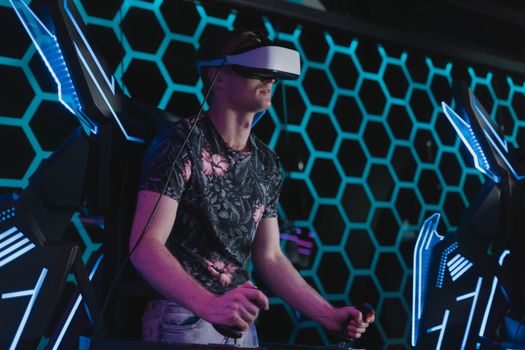
An adult male enjoying a virtual reality game in an arcade setting with futuristic elements.Photo: Tima Miroshnichenko / Pexels
Artificial intelligence (AI) and cloud computing are not just supporting technologies for the future of virtual reality gaming; they are fundamental pillars that will enable its most ambitious visions. AI is set to revolutionize every facet of VR game development and player experience. Gone are the days of predictable, scripted non-player characters (NPCs). Future VR will feature AI-driven NPCs with complex behavioral models, capable of learning, adapting, and even exhibiting emotions. Imagine an NPC companion who remembers your past actions and reacts accordingly, or an enemy who learns your combat style and devises counter-strategies. This level of dynamic intelligence will make virtual worlds feel truly alive and responsive, creating emergent gameplay scenarios that are endlessly engaging. AI will also be crucial for procedural content generation (PCG). Instead of developers painstakingly crafting every detail, AI algorithms can create vast, unique landscapes, intricate dungeons, and diverse character models on the fly. This not only speeds up development but also ensures infinite replayability, as players can explore ever-changing worlds. Furthermore, AI will personalize experiences, adapting difficulty, narrative pacing, and even environmental elements to suit individual player preferences and skill levels. This ensures an optimal experience for every player, from casual explorers to hardcore competitors. Cloud computing, on the other hand, addresses one of VR's biggest hurdles: computational power. High-fidelity VR experiences demand significant processing capabilities, often requiring expensive, powerful PCs. Cloud VR streaming, where the game is rendered on remote servers and streamed to your headset, alleviates this burden. This means even less powerful, standalone headsets could deliver graphics quality comparable to high-end PC VR, democratizing access to premium experiences. Latency, once a major concern for cloud gaming, is being rapidly overcome with advancements in network infrastructure and streaming algorithms, making cloud VR a viable and attractive option. Beyond raw processing, cloud computing enables massive multiplayer experiences on an unprecedented scale. Persistent virtual worlds, supporting thousands of simultaneous players, will become feasible, fostering vibrant digital economies and communities. Updates and new content can be deployed instantly from the cloud, ensuring players always have access to the latest versions. The synergy between AI and cloud computing is profound. AI can leverage the vast computational resources of the cloud to run more sophisticated simulations and generate more complex content. Cloud platforms can host AI models that learn from player data across thousands of sessions, continuously improving the intelligence and responsiveness of virtual worlds. This combination will drive the next wave of innovation in VR gaming, making experiences richer, more accessible, and infinitely more dynamic. For those interested in the broader impact of AI, understanding its role in gaming is key to grasping the future of artificial intelligence itself.

Overcoming Challenges and Embracing the Future of Virtual Reality Gaming
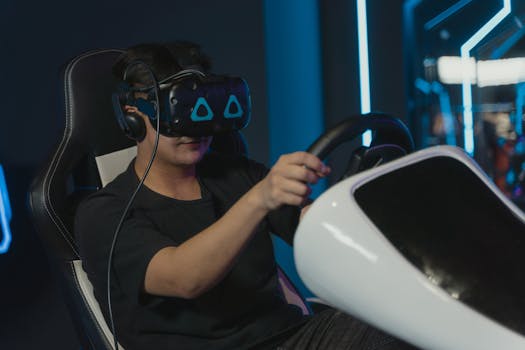
Man engaging in immersive virtual gaming with VR headset and steering wheel setup indoors.Photo: Tima Miroshnichenko / Pexels
While the future of virtual reality gaming glows with immense potential, it's not without its challenges. Addressing these hurdles is crucial for VR to move from a niche enthusiast market to a mainstream entertainment platform. One of the most significant challenges remains accessibility and cost. High-end VR setups can still be prohibitively expensive for many, creating a barrier to entry. However, prices are steadily decreasing, and the advent of cloud VR streaming promises to mitigate hardware costs by shifting the computational burden to remote servers. This will make high-fidelity VR experiences available on more affordable, standalone devices. Another key challenge is comfort and motion sickness. While significant strides have been made in reducing motion sickness through higher refresh rates, better tracking, and foveated rendering, some users still experience discomfort. Continued research into display technologies, optical designs, and user-adaptive comfort features will be vital. Furthermore, game developers are becoming more adept at designing experiences that minimize motion sickness, offering various locomotion options and comfort settings. Content creation is also a hurdle. Developing high-quality VR games is often more complex and resource-intensive than traditional flat-screen games. However, as development tools mature and AI-powered procedural generation becomes more sophisticated, the barrier to entry for content creators will lower. User-generated content platforms will also play a massive role in diversifying the VR content library. Interoperability and standardization are areas that need attention. A fragmented ecosystem with proprietary hardware and software can hinder growth. Industry collaboration on open standards for hardware, software, and content will be crucial for a seamless user experience. This includes cross-platform play and universal avatar systems that allow players to move between different virtual worlds with their digital identity. Finally, the social aspect needs refinement. While VR offers incredible social experiences, making it as intuitive and appealing as traditional online gaming requires continued innovation in social hubs, communication tools, and shared virtual spaces. The future of virtual reality gaming will largely depend on how effectively these challenges are met, turning potential obstacles into opportunities for innovation and growth. Here are some tips for embracing the future of VR gaming:
  • Start with affordable standalone headsets: Devices like the Meta Quest series offer excellent entry points without needing a powerful PC.
  • Experiment with different genres: VR shines in unique ways across various game types, from puzzle to action.
  • Prioritize comfort settings: Adjusting locomotion, vignette, and guardian boundaries can significantly improve your experience.
  • Engage with the community: Online forums and social VR platforms can enhance your gaming journey.
  • Stay informed about technological advancements: Keep an eye on new hardware, software, and game releases to stay ahead of the curve.

Comparison

FeatureFuture VR (Predicted)Current High-End VRCurrent Standalone VR
Resolution (Per Eye)8K+2.5K - 4K1.8K - 2.2K
Field of View~180 degrees100-120 degrees90-100 degrees
Haptic FeedbackFull-body suits, advanced glovesController-basedController-based
Processing PowerCloud-rendered / On-device AIHigh-end PCOn-device (limited)
Wireless FreedomPartial (with adapters)
Eye Tracking & Foveated RenderingPremium models onlyLimited models

What Our Readers Say

5 ★★★★★

"I'm genuinely excited about the future of virtual reality gaming. The thought of full-body haptics and AI-driven narratives makes me feel like we're on the cusp of a true gaming revolution. It's going to change everything."

5 ★★★★★

"The potential for VR to create entirely new genres is what excites me most. Imagine worlds that adapt to your choices in real-time – that's not just gaming, that's living a story. The future of virtual reality gaming is boundless."

5 ★★★★★

"After trying a prototype with advanced haptics, I can confidently say the future of virtual reality gaming will deliver unparalleled immersion. Feeling the rain and wind in a virtual world was a game-changer; it felt incredibly real."

4 ★★★★☆

"While I'm optimistic about the future of virtual reality gaming, I hope the industry focuses on affordability and comfort. Getting more people into VR is key to its success, and addressing motion sickness is crucial for broader adoption."

5 ★★★★★

"As a developer, the integration of AI and cloud computing is the most exciting aspect of the future of virtual reality gaming. It allows us to create worlds and experiences that were previously impossible, pushing the boundaries of creativity and scale."

Frequently Asked Questions

What are the biggest innovations expected in the future of virtual reality gaming?
The future of VR gaming will see major innovations in multi-sensory feedback (full-body haptics, scent), higher resolution and wider field-of-view displays, AI-driven dynamic content and NPCs, and widespread adoption of cloud VR for accessibility. These advancements will create unprecedented levels of immersion and personalized experiences.
Will VR gaming become more affordable in the future?
Yes, it is widely anticipated that VR gaming will become significantly more affordable. As technology matures and manufacturing scales, hardware costs will decrease. Additionally, cloud VR streaming will allow high-fidelity experiences on less expensive standalone headsets, democratizing access.
How will AI change VR games?
AI will revolutionize VR games by creating more intelligent and adaptive NPCs, generating vast and unique procedural content, and personalizing narratives and gameplay difficulty to individual players. This will lead to more dynamic, replayable, and immersive virtual worlds that feel truly alive.
Is motion sickness still a concern for the future of virtual reality gaming?
While motion sickness has been a concern, significant progress has been made with higher refresh rates, better tracking, and foveated rendering. Future advancements in display technology, optical designs, and game development practices will continue to minimize motion sickness, making VR comfortable for a wider audience.
How will VR gaming compare to traditional console or PC gaming in the future?
Future VR gaming will offer an unparalleled level of immersion and presence that traditional gaming cannot match, transforming passive viewing into active participation. While traditional gaming will still thrive, VR will carve out its own unique space, focusing on experiences that leverage its unique capabilities for deep engagement and multi-sensory interaction.
Who should be excited about the future of virtual reality gaming?
Anyone interested in cutting-edge technology, immersive storytelling, and new forms of interactive entertainment should be excited. This includes gamers seeking deeper engagement, developers looking for new creative canvases, educators exploring immersive learning, and anyone curious about the next frontier of digital experience.
What are the potential risks or downsides of the future of VR gaming?
Potential downsides include privacy concerns with biometric data (eye-tracking, BCIs), the risk of digital addiction given the high immersion, and the need for robust content moderation in persistent virtual worlds. Ethical considerations around AI-driven narratives and digital identities will also become increasingly important as VR evolves.
What role will the metaverse play in the future of virtual reality gaming?
The metaverse is intrinsically linked to the future of virtual reality gaming. It envisions persistent, interconnected virtual worlds where gaming is just one facet. Future VR games will likely exist within or contribute to metaverse ecosystems, allowing players to seamlessly transition between social hubs, entertainment, and gaming experiences with a consistent digital identity.

The future of virtual reality gaming isn't just coming; it's rapidly unfolding before our eyes. Prepare to step into worlds more real, more interactive, and more boundless than anything you've experienced before. Embrace the immersive odyssey that awaits.

Topics: future of virtual reality gamingVR gaming trendsimmersive gamingvirtual reality evolutionnext-gen VR
Leo List
Brampton weed
Adultwork