The Future of Virtual Reality Gaming: Beyond the Horizon
August 23, 2026 15 min read 3,010 words
Dive into the next generation of immersive experiences and understand how VR gaming is set to redefine entertainment.
Explore VR's Future
The Evolution of Immersive Technology in VR Gaming
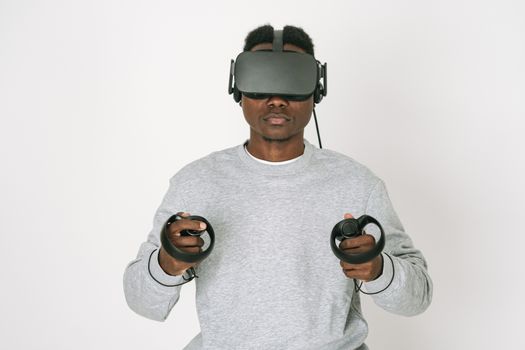 Photo: Ivan S / Pexels
The journey of virtual reality gaming has been nothing short of transformative, moving from bulky, experimental prototypes to sleek, powerful consumer devices. Today, we stand at the precipice of an even more profound evolution, one that promises to blur the lines between the digital and physical worlds with unprecedented fidelity. The initial hurdles of high cost, limited content, and motion sickness are steadily being overcome, paving the way for a future where VR gaming is not just a niche hobby, but a mainstream entertainment pillar. This evolution is driven by relentless innovation across several key areas: hardware advancements, sensory feedback systems, and sophisticated software design. Modern VR headsets, while impressive, are merely the foundation upon which future experiences will be built. We are seeing a rapid increase in display resolution, pushing towards retina-level fidelity where individual pixels become imperceptible, drastically enhancing realism. Wider fields of view are becoming standard, reducing the 'tunnel vision' effect and making environments feel more expansive and natural. Concurrently, the form factor of these devices is shrinking, with lighter, more comfortable designs and improved weight distribution, making longer play sessions feasible without discomfort. Wireless VR technology, like that offered by devices such as the Meta Quest series, has already liberated players from tethered experiences, and this trend will only intensify. Future iterations will feature even lower latency and greater bandwidth, ensuring a seamless, untethered connection that feels as immediate as a wired one. Beyond visual and auditory fidelity, the next frontier in immersive technology is sensory feedback. Haptic technology, once limited to simple vibrations in controllers, is expanding into full-body suits and gloves. These advanced haptic systems can simulate the sensation of rain, wind, impacts, and even the texture of surfaces, adding an entirely new dimension to interaction within virtual worlds. Imagine feeling the recoil of a virtual weapon, the gentle touch of a character, or the resistance of climbing a virtual rock face. This level of tactile immersion fundamentally changes how players perceive and interact with game environments. Furthermore, researchers are actively exploring olfactory (smell) and gustatory (taste) feedback systems. While still in early developmental stages, the prospect of experiencing the aroma of a virtual forest or the taste of a digital meal opens up incredible possibilities for truly holistic sensory immersion. The integration of eye-tracking technology is another critical development. Beyond enabling foveated rendering – a technique that optimizes graphical output by rendering only the area the user is looking at in high detail, saving computational power – eye-tracking can also be used for more intuitive interaction, allowing players to select objects or navigate menus with their gaze. This technology also provides valuable data for developers to understand player engagement and optimize game design. The confluence of these hardware and sensory advancements is creating a powerful platform for game developers to craft experiences that were once confined to the realm of science fiction. The future of virtual reality gaming is not just about seeing and hearing a game; it's about feeling, touching, and truly inhabiting it. As these technologies mature and become more accessible, the barriers to entry for truly immersive virtual worlds will diminish, inviting a broader audience to partake in these groundbreaking experiences. For more insights into how technology is shaping our world, explore our
tech trends analysis.
The Metaverse and Persistent Virtual Worlds
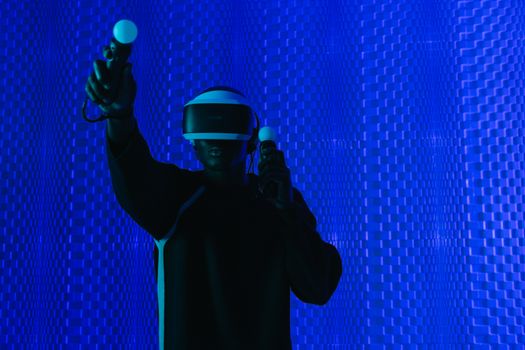 Photo: SHVETS production / Pexels
One of the most significant and often discussed aspects of the future of virtual reality gaming is its inevitable integration with the metaverse. The metaverse is envisioned as a persistent, interconnected network of 3D virtual worlds, where users can interact with each other, digital objects, and AI-driven entities in real-time. It's not just a collection of disparate VR games; it's a unified digital universe where your avatar, your digital assets, and your identity can seamlessly transition between different experiences. This concept promises to revolutionize not only gaming but also social interaction, commerce, and work. In this future, your gaming session might begin in a competitive esports arena within one VR world, transition to a social gathering with friends in a different virtual city, and then conclude with a collaborative creative project in another, all without ever truly 'leaving' the metaverse. The implications for gaming are profound. Imagine massively multiplayer online (MMO) games that are truly persistent, where the actions of players have lasting consequences on the world, and where economies are player-driven and robust. These virtual economies, often powered by blockchain technology and non-fungible tokens (NFTs), will allow players to truly own their in-game assets, trade them, and even derive real-world value from their virtual endeavors. This ownership model fosters a deeper sense of investment and agency within the game world. The metaverse also opens up unprecedented opportunities for cross-game content and experiences. A character skin or a weapon acquired in one game could potentially be used or displayed in another, fostering a sense of continuity and personal expression across the entire virtual landscape. This interoperability is a core tenet of the metaverse vision and stands in stark contrast to the siloed game experiences we have today. Furthermore, user-generated content (UGC) will play an even more crucial role in the metaverse. Players won't just consume content; they will actively create it, designing their own virtual spaces, games within games, and interactive experiences. Platforms like Roblox and Minecraft have already demonstrated the power of UGC, and the metaverse will take this to the next level, providing sophisticated tools and frameworks for anyone to contribute to the ever-expanding digital realm. This democratization of content creation will lead to an explosion of diverse and innovative gaming experiences, driven by the collective creativity of millions. The social aspect of metaverse gaming cannot be overstated. Beyond competitive play, the metaverse will facilitate rich social interactions, allowing friends from across the globe to meet, chat, and participate in shared activities in highly immersive virtual environments. This could range from attending virtual concerts and events to simply hanging out in a personalized digital space. The sense of presence and co-location offered by VR within the metaverse will make these interactions feel far more meaningful and engaging than traditional online communication. The challenges, of course, include ensuring interoperability between different platforms, establishing robust security and privacy protocols, and developing scalable infrastructure to support millions of concurrent users. However, the immense potential for new forms of entertainment, social connection, and economic opportunity is driving significant investment and innovation in this space, making the metaverse a cornerstone of the future of virtual reality gaming.
Advancements in AI and Cloud Computing for Enhanced VR Gaming
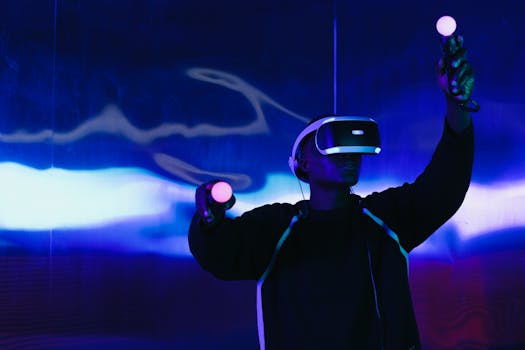 Photo: SHVETS production / Pexels
The future of virtual reality gaming isn't solely about hardware; it's equally about the intelligence and infrastructure that power these experiences. Artificial intelligence (AI) and cloud computing are set to be transformative forces, elevating VR games from predetermined narratives to dynamic, adaptive, and endlessly replayable adventures. The integration of advanced AI will fundamentally change how players interact with non-player characters (NPCs) and the game world itself. Gone are the days of static, predictable NPCs with limited dialogue trees. Future AI will enable NPCs to exhibit genuine intelligence, learn from player behavior, and adapt their strategies and responses in real-time. Imagine an enemy AI that studies your combat style and devises countermeasures, or a friendly NPC that remembers your past interactions and refers to them in conversation, creating a far more personal and believable relationship. This level of dynamic interaction will make every playthrough feel unique and significantly increase the sense of immersion and agency within the virtual environment. AI will also be crucial for procedural content generation (PCG). While PCG is already used in some games, future iterations, powered by sophisticated AI algorithms, will be capable of generating vast, intricate, and logically consistent game worlds on the fly. This means potentially infinite exploration, with unique landscapes, dungeons, and quests being created specifically for each player's journey. This addresses the challenge of limited content, ensuring that even after hundreds of hours, players can still discover something new. Moreover, AI can be used to dynamically adjust game difficulty, pacing, and even narrative elements based on player performance and emotional state, creating a personalized and optimally engaging experience for everyone. Cloud computing is another game-changer for the future of virtual reality gaming. Currently, high-fidelity VR experiences often require powerful and expensive local hardware. Cloud VR, or 'VR streaming,' aims to offload the heavy computational processing to remote servers. This means that graphically intensive VR games can be rendered in the cloud and streamed to relatively lightweight and affordable VR headsets, drastically lowering the barrier to entry for consumers. The implications are immense: players could access cutting-edge VR titles on mobile-powered headsets, without needing a high-end gaming PC. This not only democratizes access to premium VR content but also allows for greater graphical fidelity than what is currently possible on standalone devices. The primary challenge with cloud VR is latency – the delay between a player's action and the visual feedback. However, ongoing advancements in networking infrastructure, such as 5G and fiber optics, combined with sophisticated compression algorithms and edge computing (processing data closer to the user), are rapidly mitigating this issue. As latency drops, the distinction between local and cloud-rendered VR experiences will become imperceptible to the average user. Furthermore, cloud computing facilitates massive multiplayer experiences by providing the robust server infrastructure needed to support hundreds or even thousands of players interacting simultaneously in a single virtual space. This is crucial for the development of the metaverse and large-scale persistent virtual worlds. The synergy between AI and cloud computing will unlock a new era of VR gaming, characterized by unparalleled realism, boundless content, and universal accessibility. The future promises a world where the only limit to our virtual adventures is our imagination. To understand more about the underlying technologies, consider reading up on
cloud infrastructure innovations.
Navigating the Future: Tips for Adopting Advanced VR Gaming
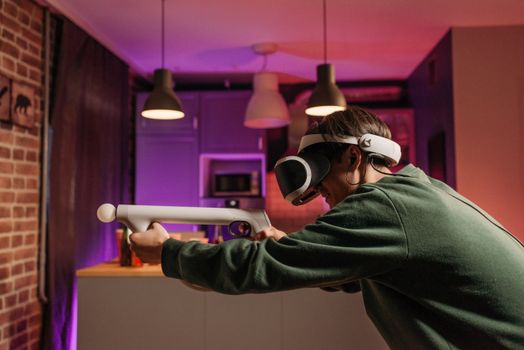 Photo: Pavel Danilyuk / Pexels
As the future of virtual reality gaming rapidly approaches, understanding how to best navigate and adopt these advanced technologies is crucial for enthusiasts and newcomers alike. The landscape will be ever-changing, but a few core principles and tips can help you stay ahead and maximize your immersive experiences.
**Tips for Adopting Advanced VR Gaming:**
* **Invest in Quality Hardware (When Ready):** While cloud VR will make high-end experiences more accessible, owning a capable VR headset remains key. Prioritize devices with high resolution, wide field of view, and comfortable ergonomics. Look for features like eye-tracking and advanced haptics as they become standard. Don't rush into every new iteration; wait for significant generational leaps that offer tangible improvements.
* **Embrace Wireless Freedom:** If possible, opt for wireless VR solutions. The freedom of movement significantly enhances immersion and reduces the friction of cables. As wireless technology improves, the latency gap with wired connections will continue to shrink, making untethered experiences the gold standard.
* **Explore Beyond Traditional Games:** The future of VR gaming will encompass more than just competitive shooters or adventure titles. Experiment with social VR platforms, creative applications, virtual tourism, and educational experiences. The metaverse will offer a vast array of activities beyond conventional gaming.
* **Stay Informed on Metaverse Developments:** Keep an eye on the major players building out the metaverse. Understand their ecosystems, their approach to interoperability, and the types of experiences they are fostering. Early adoption of these platforms can provide a head start in establishing your digital presence and assets.
* **Prioritize Comfort and Safety:** Even with lighter headsets, long VR sessions can be taxing. Ensure your play space is clear, take regular breaks, and adjust headset settings for optimal visual comfort. Hydration and proper ventilation are also important for extended use.
* **Engage with the Community:** The VR gaming community is vibrant and growing. Join forums, Discord servers, and social groups to discover new games, get technical support, and connect with fellow enthusiasts. This is especially valuable as new technologies and experiences emerge.
* **Consider Content Creation:** As user-generated content becomes central to the metaverse, explore tools for creating your own virtual assets, environments, or even mini-games. This can be a rewarding way to deepen your engagement and potentially contribute to the evolving digital economy.
By following these tips, you can ensure you're not just a passive observer but an active participant in the exciting future of virtual reality gaming, ready to dive into the next generation of immersive entertainment.
