✓ Quantum computers leverage qubits, which can exist in multiple states simultaneously (superposition), unlike classical bits (0 or 1).
✓ Key quantum phenomena include superposition, entanglement, and quantum tunneling, enabling new computational paradigms.
✓ The field is currently in the Noisy Intermediate-Scale Quantum (NISQ) era, characterized by limited qubit counts and error rates.
✓ Potential applications span drug discovery, materials science, financial modeling, and artificial intelligence.
✓ Significant challenges remain in error correction, scalability, and maintaining quantum coherence for practical applications.
How It Works
1
Qubit Foundation
Quantum computers use qubits, which are the basic unit of quantum information. Unlike classical bits that are either 0 or 1, qubits can be 0, 1, or both simultaneously through superposition.
2
Leveraging Quantum Phenomena
These machines harness quantum mechanical effects such as superposition and entanglement. Entanglement allows qubits to be linked, so the state of one instantly influences the others, no matter the distance.
3
Quantum Gates and Algorithms
Information is processed using quantum gates, which manipulate qubit states. Quantum algorithms are specifically designed to exploit these unique properties to solve complex problems intractable for classical computers.
4
Measurement and Output
After computation, the qubits are measured, collapsing their superposition into a definite classical state (0 or 1). This measurement provides the probabilistic answer to the problem, often requiring multiple runs for statistical certainty.
The Quantum Leap: Understanding Quantum Technology's Core
Photo: Google DeepMind / Pexels
The emergence of quantum computing represents a paradigm shift in computational power, moving beyond the binary limitations of classical machines. At its heart lies the qubit, a fundamental unit of information that leverages the bizarre rules of quantum mechanics. Unlike a classical bit, which must be either a 0 or a 1, a qubit can exist in a superposition of both states simultaneously. This inherent probabilistic nature is not just a theoretical curiosity; it's the engine driving quantum computers to tackle problems currently deemed impossible for even the most powerful supercomputers. Imagine a light switch that can be both on and off at the same time—that's the essence of superposition, and it allows quantum computers to explore multiple computational paths concurrently, dramatically accelerating certain types of calculations.
Beyond superposition, entanglement is another cornerstone of quantum technology. When two or more qubits become entangled, they form a single, unified quantum system. The state of one entangled qubit instantaneously influences the state of the others, regardless of the physical distance separating them. This profound connection means that measuring one entangled qubit immediately reveals information about its partners, creating a powerful correlation that classical computers cannot replicate. These intertwined states enable algorithms like Shor's algorithm for factoring large numbers and Grover's algorithm for searching unsorted databases to achieve exponential speedups. The ability to manipulate and maintain these delicate quantum states is what defines the engineering challenge and the immense promise of this field.
The current stage of quantum computing is often referred to as the Noisy Intermediate-Scale Quantum (NISQ) era. This period is characterized by quantum processors with a modest number of qubits (typically 50-100+) and significant error rates. While these machines are not yet capable of universal fault-tolerant quantum computation, they are powerful enough to demonstrate 'quantum supremacy' on specific tasks, where they can perform calculations far beyond the reach of classical supercomputers. This era is crucial for experimenting with new algorithms, developing error mitigation techniques, and building the necessary infrastructure for future, more robust quantum systems. Understanding these foundational principles is key to appreciating the transformative potential that quantum computing holds for various sectors, from pharmaceuticals to finance. The journey from theoretical concept to practical application is complex, but the potential rewards are immense, promising breakthroughs in areas long considered intractable. For more foundational knowledge, consider exploring resources on the basics of quantum mechanics.
Breaking Barriers: Applications and Impact Across Industries
Photo: Pachon in Motion / Pexels
The potential applications of quantum computing are vast and far-reaching, promising to revolutionize industries that rely heavily on complex computational tasks. In the realm of drug discovery and materials science, quantum computers could simulate molecular interactions with unprecedented accuracy. This capability would enable researchers to design new drugs more efficiently, predict material properties with greater precision, and accelerate the development of novel compounds for everything from batteries to superconductors. Imagine being able to simulate a new drug's interaction with a specific protein before ever synthesizing it, dramatically reducing development costs and time. The current classical methods often rely on approximations, whereas quantum simulations could offer a more fundamental understanding at the atomic level, leading to truly groundbreaking innovations.
Financial services stand to gain significantly from quantum advancements. Quantum algorithms could optimize complex portfolios, detect fraud with greater accuracy, and develop more sophisticated risk assessment models. The ability to process vast amounts of data simultaneously and explore multiple scenarios could lead to more robust financial strategies and more stable markets. For instance, quantum optimization algorithms could find the most efficient allocation of assets across thousands of variables, a task that quickly becomes intractable for classical computers as the number of variables increases. This could provide a competitive edge and fundamentally change how financial institutions operate.
Artificial intelligence and machine learning are other fields poised for a quantum leap. Quantum machine learning algorithms could potentially process larger datasets, identify more intricate patterns, and train models faster than their classical counterparts. This could lead to breakthroughs in areas like image recognition, natural language processing, and personalized medicine, where the sheer volume and complexity of data often bottleneck classical AI systems. Quantum neural networks, for example, could offer new ways to represent and learn from data, leading to more powerful and efficient AI systems. The synergy between quantum computing and AI could unlock levels of intelligence previously unimaginable.
Furthermore, quantum computing has implications for cybersecurity. While Shor's algorithm poses a threat to current encryption standards (like RSA), quantum cryptography also offers new ways to secure communications through quantum key distribution (QKD), which leverages the laws of quantum mechanics to ensure unhackable data transmission. This creates a fascinating race between quantum decryption and quantum-resistant encryption, shaping the future of digital security. The dual nature of quantum computing—both a threat and a solution to cybersecurity—underscores its profound impact on our digital infrastructure. The ability to solve currently intractable problems will redefine what's possible across a multitude of sectors.
Navigating the Quantum Landscape: Challenges and Roadblocks
Photo: Beyzanur K. / Pexels
Despite the immense promise, the path to a fully functional, fault-tolerant quantum computer is fraught with significant technical and engineering challenges. One of the primary hurdles is qubit stability, often referred to as 'coherence.' Qubits are incredibly fragile and susceptible to environmental noise, such as temperature fluctuations, electromagnetic interference, and vibrations. This noise causes qubits to lose their quantum state (decoherence) very quickly, often within microseconds, before complex computations can be completed. Maintaining coherence for longer durations is essential for building more powerful and reliable quantum machines. Researchers are exploring various qubit technologies, including superconducting qubits, trapped ions, topological qubits, and photonic qubits, each with its own set of advantages and disadvantages regarding stability and scalability. The quest for more robust and stable qubits is a central focus of current research and development.
Another critical challenge is error correction. Due to their inherent fragility, qubits are prone to errors. Unlike classical computers, where errors can be easily detected and corrected (e.g., by using redundant bits), quantum errors are more complex because measuring a qubit to check for an error collapses its superposition, destroying the very information you're trying to preserve. Quantum error correction codes are being developed, but they require a significant overhead of physical qubits to encode a single logical (error-corrected) qubit. This means that building a fault-tolerant quantum computer capable of solving practical problems might require millions of physical qubits, far beyond the hundreds available in today's NISQ devices. The engineering feat to achieve this level of scalability and error correction is monumental, demanding breakthroughs in materials science, cryogenic engineering, and control systems.
Scalability is a third major roadblock. Building quantum processors with an increasing number of interconnected qubits while maintaining high fidelity is incredibly difficult. As the number of qubits grows, so does the complexity of their control and connectivity. Current quantum chips often operate at temperatures colder than deep space (millikelvin ranges) to minimize thermal noise, requiring elaborate and expensive cryogenic infrastructure. Integrating more qubits into such systems without introducing more noise or increasing error rates is a formidable engineering challenge. Furthermore, the development of quantum software and algorithms is still in its nascent stages. While foundational algorithms like Shor's and Grover's exist, developing practical applications that can run efficiently on future fault-tolerant machines requires a new generation of quantum programmers and computational scientists. Bridging the gap between theoretical algorithms and practical implementations is crucial for the field's advancement. The development of robust quantum programming languages and intuitive development environments is essential to democratize access and accelerate innovation in this space. For those interested in the underlying computational principles, exploring resources on advanced computational models can provide valuable context.
The Road Ahead: Milestones and Ethical Considerations for Quantum Computing
Photo: Markus Spiske / Pexels
The journey toward practical quantum computing is marked by several key milestones that researchers and industry leaders are striving to achieve. The immediate focus remains on refining NISQ devices, improving qubit coherence times, and developing more effective error mitigation techniques. Achieving 'quantum advantage' for commercially relevant problems, where a quantum computer can solve a practical task significantly faster than any classical supercomputer, is a critical near-term goal. This differs from 'quantum supremacy,' which demonstrates a computational task only theoretically possible for quantum machines. Subsequent milestones include the development of small-scale fault-tolerant quantum computers capable of running simple error-corrected algorithms, eventually leading to universal fault-tolerant quantum computers that can tackle a wide range of complex problems with high reliability. The timeline for these advancements is uncertain, with estimates ranging from a decade to several decades, underscoring the profound challenges involved.
Beyond the technical hurdles, the future of quantum computing also presents significant ethical and societal considerations that demand proactive attention. The potential for quantum computers to break current encryption standards raises serious concerns about data security and privacy. Governments and organizations are already investing in post-quantum cryptography, developing new encryption methods resistant to quantum attacks. This transition will be a monumental undertaking, requiring careful planning and global collaboration to avoid a potential cybersecurity crisis. The disruptive power of quantum computing also raises questions about its impact on employment, economic inequality, and access to this transformative technology. As quantum technology matures, it could exacerbate existing digital divides if access and benefits are not equitably distributed.
Furthermore, the ethical implications of quantum AI are profound. If quantum computers can accelerate AI development to unprecedented levels, it raises questions about accountability, bias in quantum-enhanced algorithms, and the potential for autonomous decision-making systems with capabilities far beyond human comprehension. The responsible development and deployment of quantum AI will require careful consideration of ethical guidelines, regulatory frameworks, and public engagement. Establishing international standards and fostering open dialogue among scientists, policymakers, ethicists, and the public will be crucial to ensure that the future of quantum computing benefits all of humanity. The dual-use nature of quantum technology, with its potential for both immense good and significant harm, necessitates a thoughtful and collaborative approach to its development and governance. Ignoring these ethical dimensions would be a grave oversight, potentially undermining the very benefits quantum computing promises.
Comparison
Feature
Quantum Computing
Classical Computing
High-Performance Computing (HPC)
Basic Unit
Qubit (0, 1, or superposition)
Bit (0 or 1)
Bit (0 or 1)
Computational Paradigm
Superposition, Entanglement
Binary logic, sequential processing
Parallel processing, large scale classical
Problem Types
Optimization, simulation, cryptography, AI
Data storage, general tasks, web browsing
Complex simulations, data analysis
Speed for Specific Tasks
Exponential speedup
Linear
Polynomial speedup
Error Rates
High (NISQ), improving
Very low
Very low
Scalability
Challenging
Well-established
Well-established
Energy Consumption
High for cooling, low for ops
Moderate
Very high
Current Availability
Limited access (cloud/research)
Ubiquitous
Specialized facilities
What Readers Say
★★★★★
"The insights on the future of quantum computing are incredibly thorough. This article perfectly explains the complex concepts of superposition and entanglement, making them accessible even for non-experts. Truly a premium read!"
Dr. Evelyn Reed · Boston, MA
★★★★★
"As a software engineer, I'm always looking for clear explanations of emerging tech. This piece on quantum computing's future not only clarifies the 'how' but also the profound 'why' across industries. Highly recommended for anyone in tech."
Marcus Chen · San Francisco, CA
★★★★★
"I've been trying to grasp quantum computing for months, and this article finally made it click. The section on error correction and scalability challenges provided a realistic perspective, making me feel more informed about its real-world trajectory."
Sarah Miller · Austin, TX
★★★★★
"Excellent overview, though I'd love to see even more deep dives into specific quantum algorithms in future updates. The ethical considerations section was particularly thought-provoking and essential for this nascent field."
David Kim · Seattle, WA
★★★★★
"My financial analysis firm is closely watching quantum developments. This article provided a fantastic summary of its potential impact on finance, giving us a clearer vision for strategic planning. A must-read for industry professionals."
Jessica Lee · New York, NY
Frequently Asked Questions
What is the biggest breakthrough expected in the future of quantum computing?
The biggest breakthrough expected is the development of fault-tolerant quantum computers. These machines will be capable of correcting errors that arise during quantum computations, allowing for much longer and more complex algorithms to run reliably, unlocking their full potential for practical applications across various industries.
Is quantum computing a threat to current cybersecurity?
Yes, quantum computing, particularly Shor's algorithm, poses a significant threat to many of today's widely used encryption methods, such as RSA. However, researchers are actively developing 'post-quantum cryptography' (PQC) which is designed to be resistant to attacks from future quantum computers, aiming to secure data for the quantum era.
How can I get started learning about quantum computing?
You can start by exploring online courses from universities or platforms like Coursera/edX, reading introductory books, and experimenting with quantum programming SDKs like IBM Qiskit or Microsoft Q#. Many resources offer simulators to run quantum algorithms on classical computers, providing hands-on experience.
Will quantum computers replace classical computers in the future?
It is highly unlikely that quantum computers will completely replace classical computers. Instead, they are expected to work in tandem, with quantum computers acting as powerful accelerators for specific, complex problems that classical computers struggle with, while classical computers continue to handle everyday tasks and general-purpose computing.
How does quantum computing compare to artificial intelligence?
Quantum computing is a new computational paradigm, while artificial intelligence is a field of computer science focused on creating intelligent machines. Quantum computing can potentially enhance AI by speeding up machine learning algorithms and enabling new types of AI models, leading to 'quantum AI' rather than replacing AI itself.
Who should be interested in the future of quantum computing?
Anyone in fields requiring complex simulations, optimization, or advanced data analysis should be interested. This includes researchers in materials science and drug discovery, financial analysts, cybersecurity experts, AI developers, and government agencies concerned with national security and technological advancement.
What are the risks associated with the rapid development of quantum computing?
Key risks include the potential to break current encryption standards, creating significant cybersecurity vulnerabilities. There are also concerns about the ethical implications of quantum-enhanced AI, the concentration of this powerful technology, and the potential for increased technological inequality if access is limited.
What is the timeline for achieving practical, widespread quantum computing?
The timeline is highly debated and uncertain. While NISQ devices are already demonstrating quantum advantage for specific tasks, achieving truly fault-tolerant, universal quantum computing capable of solving a wide range of practical problems is estimated to be 10-30 years away, depending on scientific breakthroughs and engineering progress.
The future of quantum computing is not just a scientific endeavor; it's a journey into uncharted computational territory that promises to reshape our world. Stay informed, engage with the possibilities, and prepare for a future where the impossible becomes routine.
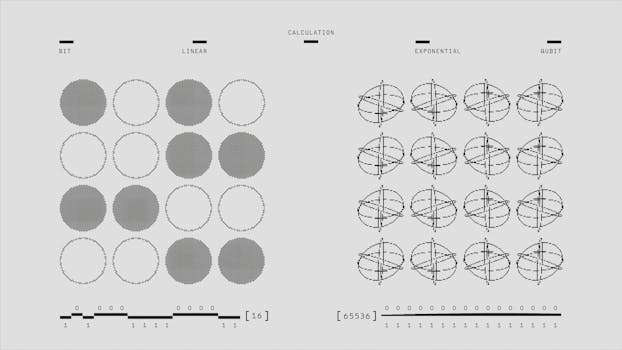 Photo: Google DeepMind / Pexels
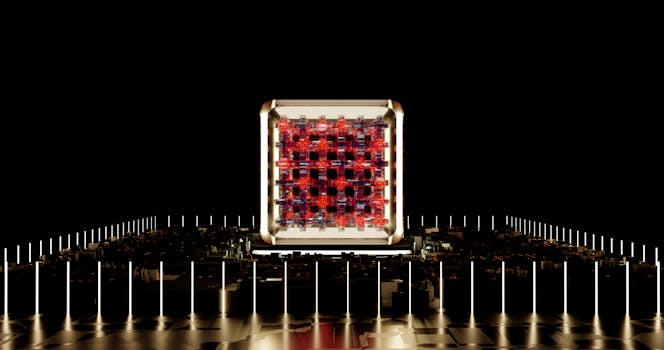 Photo: Pachon in Motion / Pexels
 Photo: Beyzanur K. / Pexels
 Photo: Markus Spiske / Pexels