Explain Quantum Computing Simply: Your Ultimate Guide
explain quantum computing simply

Explain Quantum Computing Simply: Your Ultimate Guide

Unlock the secrets of the next computational frontier without needing a physics degree.

Start Your Quantum Journey

Key Takeaways

  • ✓ Quantum computers use qubits, which can be 0, 1, or both simultaneously (superposition).
  • ✓ Entanglement links qubits, so measuring one instantly affects its entangled partner, regardless of distance.
  • ✓ Quantum computing excels at specific problems classical computers can't solve efficiently, like drug discovery and materials science.
  • ✓ It's not a replacement for classical computers but a powerful tool for specialized tasks.

How It Works

1
Qubits: The Quantum Bit

Unlike classical bits (0 or 1), qubits can exist in a superposition of both states at once. This allows them to store exponentially more information.

2
Superposition: Being in Two Places

Imagine a coin spinning in the air – it's neither heads nor tails until it lands. A qubit in superposition is like that spinning coin, holding both possibilities simultaneously.

3
Entanglement: Spooky Action at a Distance

When qubits are entangled, they become linked. Measuring the state of one instantly reveals the state of its entangled partner, even if they are far apart.

4
Quantum Algorithms: Solving Complex Problems

Scientists design special algorithms that leverage superposition and entanglement to perform calculations. These algorithms can explore many possibilities simultaneously to find solutions faster.

Unpacking the Basics: What Makes Quantum Computing Different?
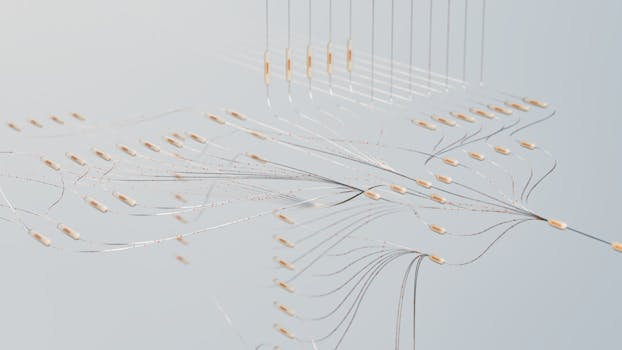
Illustration depicting classical binary bit and quantum qubit states in superposition and binary. Photo: Google DeepMind / Pexels
To truly explain quantum computing simply, we must first understand its fundamental departure from the computers we use every day. Our current laptops and smartphones operate on principles of classical physics. They store information as 'bits,' which are like light switches that can be either ON (represented as 1) or OFF (represented as 0). Every piece of data, every instruction, every pixel on your screen is ultimately broken down into these binary choices. This system, while incredibly powerful and efficient for most tasks, has its limitations when faced with problems of immense complexity. Quantum computing, conversely, dives into the bizarre and counter-intuitive world of quantum mechanics – the physics that governs the universe at its smallest scales, think atoms and subatomic particles. Here, the rules are very different from our everyday experience. The core difference lies in the basic unit of information. Instead of classical bits, quantum computers use 'qubits.' A qubit isn't just a 0 or a 1. Thanks to a quantum phenomenon called 'superposition,' a qubit can be 0, 1, or a combination of both simultaneously. Imagine a light dimmer switch that can be fully off, fully on, or anywhere in between, existing in all those states at once until you observe it. This ability to exist in multiple states at once is what gives quantum computers their potential for exponential processing power. If you have two classical bits, they can represent one of four states (00, 01, 10, 11) at any given time. With two qubits, due to superposition, they can represent all four of those states *simultaneously*. As you add more qubits, the number of states they can represent simultaneously grows exponentially. With just 300 qubits, a quantum computer could theoretically store more information than there are atoms in the observable universe. This immense parallel processing capability is the bedrock of quantum computing's power. Another mind-bending concept crucial to understanding quantum computing is 'entanglement.' When two or more qubits become entangled, they form a deep, interconnected relationship. The state of one entangled qubit instantaneously affects the state of the others, no matter how far apart they are. Albert Einstein famously called this 'spooky action at a distance.' It's as if you have two coins, and when you flip one, you instantly know the outcome of the other, even if it's on the other side of the galaxy, without ever looking at it. This interconnectedness allows quantum computers to perform complex calculations on multiple pieces of information simultaneously, creating shortcuts that classical computers simply cannot replicate. These fundamental differences – superposition and entanglement – are the keys to unlocking computational abilities previously thought impossible. They allow quantum computers to explore vast numbers of possibilities in parallel, making them uniquely suited for certain types of problems that would take classical supercomputers billions of years to solve. Understanding these core concepts is the first step to truly grasp the revolutionary potential of this technology. For a deeper dive into the foundational technologies, explore the principles of quantum mechanics.

Beyond the Hype: What Can Quantum Computers Actually Do?

Abstract representation of a futuristic digital processor with glowing elements. Photo: Pachon in Motion / Pexels
While the theoretical power of quantum computing is immense, it's crucial to differentiate between what it *can* do and what it *will* do in the near future. Quantum computers aren't designed to replace your laptop or smartphone for everyday tasks like browsing the internet, sending emails, or playing video games. Classical computers are exceptionally good at those things and will remain the tool of choice. Instead, quantum computers are specialized machines designed to tackle specific, incredibly complex problems that are currently intractable for even the most powerful supercomputers. Their unique abilities make them ideal for fields requiring the simulation of complex systems, optimization across vast numbers of variables, and the analysis of intricate data patterns. One of the most promising applications is in materials science and drug discovery. The behavior of molecules and atoms is inherently quantum mechanical. Simulating these interactions accurately on classical computers is incredibly difficult because the number of variables and potential interactions grows exponentially with each additional atom. Quantum computers, by mirroring these quantum phenomena, can simulate molecular structures with unprecedented accuracy. This could lead to the development of new drugs with fewer side effects, the creation of novel materials with extraordinary properties (like superconductors at room temperature or highly efficient catalysts), and a deeper understanding of chemical reactions. Imagine designing a new battery material from scratch that stores more energy and charges faster, or discovering a drug that precisely targets cancer cells without harming healthy ones – these are the kinds of breakthroughs quantum computing promises. Another significant area is optimization. Many real-world problems involve finding the best solution from an astronomical number of possibilities. Think about optimizing logistics for a global shipping company to deliver packages along the most efficient routes, managing complex financial portfolios to maximize returns while minimizing risk, or scheduling resources in a factory to maximize output. These are all optimization problems. Classical computers struggle when the number of variables becomes too large, often resorting to approximations. Quantum algorithms, particularly those leveraging the ability to explore many possibilities simultaneously, could find optimal or near-optimal solutions much faster. This has implications for everything from traffic flow management in smart cities to improving artificial intelligence algorithms by optimizing their learning processes. Cryptography is another field that will be profoundly impacted. Modern encryption methods, like RSA, rely on the mathematical difficulty of factoring large numbers. While classical computers would take billions of years to break these codes, quantum algorithms like Shor's algorithm could potentially do it in a fraction of the time. This poses a significant threat to current cybersecurity infrastructure, driving the urgent development of 'post-quantum cryptography' – new encryption methods designed to withstand attacks from quantum computers. While this sounds alarming, it also means quantum computing could be used to create even more secure encryption methods in the future. The potential applications are vast and transformative, promising to reshape industries from healthcare to finance, logistics, and national security.

The Road Ahead: Challenges and the Future of Quantum Technology

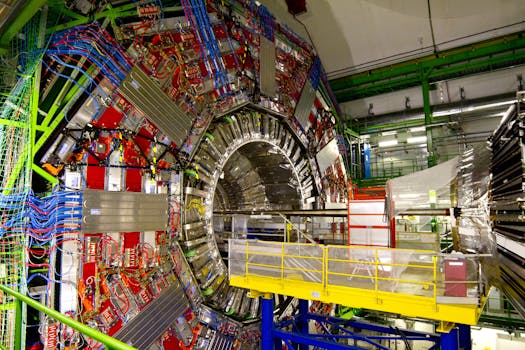
A close-up view inside CERN's Large Hadron Collider in Geneva, Switzerland. Photo: Ramaz Bluashvili / Pexels
While the potential of quantum computing is electrifying, it's important to understand that the technology is still in its nascent stages. We are currently in what many call the 'NISQ era' (Noisy Intermediate-Scale Quantum), meaning today's quantum computers are relatively small (tens to hundreds of qubits) and prone to errors. Building and maintaining quantum computers presents immense engineering challenges. Qubits are incredibly fragile and susceptible to interference from their environment. Even tiny fluctuations in temperature, electromagnetic fields, or vibrations can cause them to 'decohere' – lose their quantum properties and revert to classical bits, leading to computational errors. To combat this, quantum processors often need to be kept at extremely low temperatures, colder than deep space, in specialized refrigerators called cryostats. This makes them expensive to build, operate, and maintain. Developing stable, error-corrected qubits is one of the biggest hurdles. Current qubits have short coherence times, meaning they can only maintain their quantum state for a very brief period. For complex calculations, we need qubits that can remain coherent for much longer and that can be protected from environmental noise. Researchers are exploring various physical implementations of qubits, including superconducting circuits, trapped ions, topological qubits, and photonic qubits, each with its own advantages and disadvantages in terms of stability, scalability, and error rates. The race is on to find the most robust and scalable qubit technology that can form the basis of fault-tolerant quantum computers. Beyond hardware, the development of quantum software and algorithms is equally critical. Writing programs for quantum computers requires a fundamentally different way of thinking compared to classical programming. Quantum algorithms must leverage superposition and entanglement effectively to achieve speedups. While groundbreaking algorithms like Shor's (for factoring) and Grover's (for searching databases) exist, many more need to be discovered and refined for various applications. There's also a significant need for quantum programmers and researchers who understand both quantum mechanics and computer science. The talent pool is growing but remains specialized. Despite these challenges, progress is rapid. Governments, academic institutions, and tech giants like IBM, Google, Microsoft, and Amazon are investing billions into quantum research and development. We are seeing steady improvements in qubit count, coherence times, and error rates. While a fully fault-tolerant, universal quantum computer that can solve any problem thrown at it is still likely decades away, specialized quantum devices and quantum-inspired classical algorithms are already beginning to show promise in specific areas. The future will likely involve a hybrid approach, where classical supercomputers work in tandem with quantum co-processors to solve problems that neither could tackle alone. The journey to harness quantum mechanics for computation is long and complex, but the potential rewards – from revolutionary medical treatments to solving humanity's grandest challenges – make it one of the most exciting frontiers in science and technology. To learn more about the companies leading this charge, see our article on the top quantum computing companies.

Common Misconceptions About Quantum Computing

A close-up view inside CERN's Large Hadron Collider in Geneva, Switzerland. Photo: Ramaz Bluashvili / Pexels
As quantum computing gains more attention, several misconceptions often arise, leading to confusion about its true capabilities and limitations. Understanding these can help clarify what quantum computing is and isn't. **1. Quantum Computers Will Replace All Classical Computers:** This is one of the most pervasive myths. Quantum computers are not general-purpose machines designed to replace your laptop, smartphone, or even traditional supercomputers for most tasks. They are specialized tools excellent at solving specific types of problems that classical computers find intractable. For everyday tasks like browsing the web, word processing, or playing games, classical computers will remain far superior in terms of cost, speed, and energy efficiency. Think of it like comparing a highly specialized scientific instrument to a general-purpose screwdriver; both are useful, but for very different jobs. **2. Quantum Computers Are Just Faster Classical Computers:** While quantum computers can solve certain problems exponentially faster than classical ones, it's not simply about being 'faster' in the traditional sense. They operate on fundamentally different principles. Classical computers process information sequentially or in parallel using bits that are either 0 or 1. Quantum computers leverage quantum phenomena like superposition and entanglement to explore multiple possibilities simultaneously. This isn't just a speed boost; it's a different approach to computation that unlocks new ways to solve problems. **3. Quantum Computers Solve Everything Instantly:** The term 'quantum speedup' can be misleading. While quantum algorithms can offer significant theoretical advantages for certain problems, they don't provide instant solutions for everything. The process still involves complex calculations, and the 'speedup' refers to the reduction in computational steps or time compared to the best-known classical algorithms for those specific problems. Furthermore, the input and output of quantum computations still need to be handled classically, which introduces its own overhead. **4. Quantum Computers Are About to Break All Encryption Now:** While quantum computers *do* pose a theoretical threat to current public-key encryption methods (like RSA) due to algorithms like Shor's, this isn't an immediate crisis. The quantum computers capable of breaking widely used encryption are still theoretical or very far off in the future. Current quantum machines are too small and error-prone for such tasks. However, the threat is real enough that cryptographers are actively developing and standardizing 'post-quantum cryptography' – new encryption methods resistant to quantum attacks. This is a proactive measure, not a sign of imminent danger. **5. Anyone Can Just Start Programming a Quantum Computer:** While there are platforms and SDKs (like IBM Qiskit or Google Cirq) that allow developers to experiment with quantum programming, it requires a solid understanding of quantum mechanics, linear algebra, and specialized quantum algorithms. It's not as straightforward as learning a new classical programming language. The field is still highly specialized, though efforts are being made to make it more accessible to a broader audience. By dispelling these common myths, we can gain a more accurate and realistic understanding of quantum computing's current state and its exciting, albeit specific, potential for the future.

Comparison

FeatureClassical ComputersQuantum Computers
Basic Unit of InformationBit (0 or 1)Qubit (0, 1, or both simultaneously)
Information StorageBinary statesSuperposition of states
Processing MethodSequential/ParallelSimultaneous exploration of possibilities
Key Phenomena UsedBoolean logicSuperposition, Entanglement, Interference
Best Suited ForEveryday tasks, data processing, webOptimization, simulation, AI, cryptography
Current AvailabilityWidespread, affordableLimited, expensive, mostly cloud-based
Error RatesVery lowHigh (noisy, requires error correction)

What Readers Say

"This article finally helped me explain quantum computing simply to my non-technical friends! The analogies used for superposition and entanglement were incredibly clear and easy to grasp. I feel much more confident discussing this complex topic now."

Alex Chen · San Francisco, CA

"As someone curious about future tech but intimidated by physics jargon, this guide was a godsend. It breaks down complex ideas into digestible pieces without oversimplifying. Truly a premium explanation."

Maria Rodriguez · Austin, TX

"I often struggle to explain quantum concepts to my students without getting too technical. This article provides a fantastic framework and clear language that I'll be recommending. It successfully demystifies the core principles."

Dr. Ben Carter · Boston, MA

"A very thorough explanation, though I still had to re-read the entanglement section a couple of times to fully grasp it. Overall, it's an excellent resource for anyone wanting to understand the basics of quantum computing without a PhD."

Sarah Lee · Seattle, WA

"I used to think quantum computing was pure science fiction. This article made it real and understandable, highlighting its practical applications in drug discovery and materials science. It's exciting to see where this technology is heading."

David Kim · New York, NY

Frequently Asked Questions

What is the simplest way to understand a qubit?

Imagine a classical computer bit as a light switch that is either ON or OFF (0 or 1). A qubit, on the other hand, is like a dimmer switch that can be fully off, fully on, or anywhere in between, existing in all those states simultaneously until you look at it. This 'in between' state is called superposition, allowing qubits to hold much more information.

Is quantum computing going to replace classical computers?

No, quantum computing is not expected to replace classical computers. They are specialized tools designed to solve specific, highly complex problems that classical computers struggle with. Think of it as a powerful super-calculator for very niche, difficult mathematical challenges, rather than a general-purpose replacement for your everyday devices.

How do quantum computers actually perform calculations?

Quantum computers perform calculations by manipulating qubits using quantum gates, which are analogous to logic gates in classical computers but operate on quantum principles. These gates leverage superposition and entanglement to process information in parallel, exploring many possibilities at once. The final 'answer' is then extracted by measuring the qubits, which causes them to collapse into a definite state.

How expensive is quantum computing currently?

Currently, quantum computers are extremely expensive to build, operate, and maintain, often costing millions of dollars for research-grade systems. Access is typically provided through cloud-based services by major tech companies like IBM, Google, and Amazon, where users pay for computational time. It's not a technology that individuals or small businesses can own or operate economically at present.

How does quantum computing compare to AI or machine learning?

Quantum computing is a different field than AI/machine learning, but they are complementary. Quantum computers can potentially accelerate certain AI and machine learning tasks, such as training complex neural networks, optimizing machine learning models, or processing vast datasets more efficiently. So, quantum computing can be a powerful tool *for* AI, rather than a competitor *to* AI.

Who should learn about quantum computing?

Anyone with an interest in cutting-edge technology, computer science, physics, or fields like medicine, materials science, and finance that stand to be revolutionized by it. While deep dives require specialized knowledge, a foundational understanding is becoming increasingly valuable for professionals in many industries to anticipate future technological shifts and opportunities.

Are quantum computers a security risk to current encryption?

In the future, large-scale fault-tolerant quantum computers could pose a significant threat to current public-key encryption methods like RSA. However, such powerful quantum computers do not exist yet. Researchers are actively developing 'post-quantum cryptography' to safeguard information against future quantum attacks, ensuring our data remains secure.

What is the biggest future trend in quantum computing?

The biggest future trend is the push towards 'fault-tolerant' quantum computing, where error rates are low enough for complex, reliable computations. This involves developing more stable qubits and advanced error correction techniques. Another major trend is the development of practical 'quantum algorithms' for real-world problems, moving beyond theoretical demonstrations to tangible applications in various industries.

Ready to truly grasp the future of computation? This guide aimed to explain quantum computing simply, providing you with a solid foundation. Continue your exploration and stay informed as this revolutionary technology evolves, shaping our world in unprecedented ways.

Topics: explain quantum computing simplyquantum computing explainedwhat is quantum computingqubits explainedquantum entanglement
Leo List

DK Escorts LU Escorts AT Escorts SE Escorts FI Escorts CH Escorts DE Escorts HR Escorts IE Escorts GR Escorts CZ Escorts NO Escorts BE Escorts FR Escorts SI Escorts IL Escorts NL Escorts PL Escorts HU Escorts ES Escorts IT Escorts PT Escorts SK Escorts RO Escorts ZA Escorts UY Escorts US Escorts UK Escorts NZ Escorts AU Escorts
Brampton weed
Adultwork EstrelaBet Vai de Bet R7 Bet Betão Galera Bet Rainbet Bet9ja Shop SportyBet BetKing Sisal Loto Foot Hollywoodbets YesPlay Odibets RushBet Jugabet BetWarrior BetCity MSport betPawa Fortebet