
Explain Artificial Intelligence Applications: Your AI Guide
artificial intelligence applications

Explain Artificial Intelligence Applications: Your AI Guide

Uncover the profound impact of AI across diverse sectors, transforming industries and daily life with innovative solutions.

Explore AI's Impact

Key Takeaways

  • ✓ AI is rapidly integrating into everyday life, often unnoticed.
  • ✓ Machine learning, a subset of AI, powers many of its most impactful applications.
  • ✓ AI applications span critical sectors like healthcare, finance, transportation, and education.
  • ✓ The ethical implications and societal impact of AI are growing areas of focus.

How It Works

1
Data Collection & Preparation

AI systems require vast amounts of data to learn from. This data is collected from various sources and then cleaned, formatted, and labeled to be usable for training.

2
Algorithm Training

Machine learning algorithms are fed the prepared data, identifying patterns, correlations, and rules. This training phase allows the AI to learn how to perform specific tasks or make predictions.

3
Model Deployment

Once trained and validated, the AI model is integrated into real-world applications or systems. This allows it to process new, unseen data and deliver its intended function.

4
Continuous Improvement

AI models are often designed to continuously learn and adapt as they encounter new data and scenarios. This iterative process refines their accuracy and effectiveness over time.

The Ubiquitous Reach of AI: Everyday Applications

Abstract illustration of AI with silhouette head full of eyes, symbolizing observation and technology. Photo: Tara Winstead / Pexels
Artificial intelligence, once a concept confined to science fiction, has seamlessly woven itself into the fabric of our daily lives. From the moment we wake up to the time we go to sleep, AI is at work, often in ways we don't even consciously recognize. To truly explain artificial intelligence applications, we must first acknowledge its pervasive presence. Consider your smartphone: facial recognition to unlock it, predictive text suggesting your next word, and even the personalized recommendations on your streaming services are all powered by sophisticated AI algorithms. These are not mere conveniences; they are robust examples of AI making technology more intuitive and responsive to individual needs. In the realm of personal assistants like Siri, Alexa, and Google Assistant, AI's natural language processing (NLP) capabilities are on full display. These systems can understand spoken commands, answer questions, set reminders, and even control smart home devices, transforming how we interact with technology and our environment. This ability to interpret and respond to human language has revolutionized personal computing and made technology accessible to a wider demographic. Beyond our personal devices, AI plays a crucial role in enhancing our online experiences. Search engines like Google utilize AI to understand search queries, rank relevant results, and combat spam, ensuring that users find the information they need quickly and efficiently. E-commerce platforms leverage AI for personalized product recommendations, dynamic pricing, and fraud detection, creating a more tailored and secure shopping experience. Social media feeds are also heavily influenced by AI, which curates content based on your past interactions, interests, and connections, aiming to keep you engaged. Even seemingly simple tasks, like spam filtering in your email inbox or the routing suggestions on your GPS navigation app, rely on complex AI models that continuously learn and adapt. These applications highlight AI's capacity for pattern recognition, optimization, and real-time decision-making, significantly improving efficiency and user satisfaction. The integration of AI into these everyday tools underscores its transformative power, making our lives more convenient, connected, and intelligent. Understanding these foundational applications is key to grasping the broader impact of AI across more specialized industries. The continuous evolution of these everyday AI tools also paves the way for more advanced and integrated applications in the future, demonstrating the dynamic nature of artificial intelligence. Discover the latest advancements in AI technology and how they are shaping our future interactions. This pervasive integration is not just about automation; it's about creating smarter, more adaptive systems that learn from our behavior and preferences, ultimately enhancing our digital and physical environments.

Transforming Industries: AI's Impact on Healthcare and Finance

A robotic hand reaching towards a bright light on a white background symbolizing innovation. Photo: Tara Winstead / Pexels
When we aim to explain artificial intelligence applications beyond consumer technology, healthcare and finance emerge as two sectors undergoing profound transformation. In healthcare, AI is revolutionizing everything from diagnostics and drug discovery to personalized treatment plans and operational efficiency. Machine learning algorithms can analyze vast amounts of medical data, including patient records, genomic sequences, and imaging scans, to identify subtle patterns indicative of diseases like cancer or Alzheimer's far earlier than human clinicians might. This early detection capability is critical for improving patient outcomes and enabling timely interventions. Furthermore, AI is accelerating drug discovery and development, a notoriously long and expensive process. AI models can predict how potential drug compounds will interact with biological targets, screen millions of molecules, and optimize drug design, significantly reducing the time and cost associated with bringing new therapies to market. Beyond diagnostics and discovery, AI is also being used in robotic surgery, personalized medicine (tailoring treatments based on an individual's genetic makeup and lifestyle), and even in managing hospital logistics and patient flow, leading to more efficient and effective healthcare delivery. The ethical considerations surrounding patient data privacy and algorithmic bias in healthcare AI are significant and actively being addressed by researchers and policymakers to ensure equitable and responsible deployment. The potential for AI to democratize access to high-quality medical care, especially in underserved regions, is immense, promising a future where advanced diagnostics and treatments are more widely available. In the financial sector, AI applications are equally impactful, driving innovation in fraud detection, algorithmic trading, credit scoring, and customer service. Financial institutions leverage AI and machine learning to analyze transaction data in real-time, identifying unusual patterns that might signal fraudulent activity. This proactive approach helps prevent financial losses and enhances security for consumers and businesses alike. Algorithmic trading, where AI systems execute trades at high speeds based on complex market analysis, has become a cornerstone of modern financial markets, aiming to capitalize on fleeting opportunities and manage risk. AI-powered credit scoring models go beyond traditional metrics, analyzing a broader range of data points to assess creditworthiness more accurately, potentially expanding access to credit for individuals and small businesses previously overlooked. Moreover, chatbots and virtual assistants, powered by natural language processing, are transforming customer service in banking, providing instant support, answering queries, and even performing basic transactions, freeing up human agents for more complex issues. The predictive capabilities of AI are also vital for financial forecasting, risk management, and portfolio optimization, enabling more informed decision-making in an increasingly volatile global economy. As AI continues to evolve, its role in ensuring financial stability, promoting economic growth, and enhancing consumer protection will only grow, making it an indispensable tool for the modern financial landscape. These applications highlight AI's capacity to handle massive datasets, identify complex relationships, and make rapid, data-driven decisions, which are critical in these high-stakes industries.

Beyond the Obvious: AI in Transportation, Education, and Creative Arts
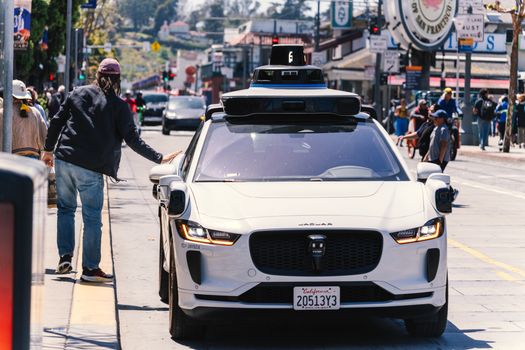
A self-driving car navigates through a bustling city street in San Francisco, capturing urban mobility in action. Photo: Abhishek Navlakha / Pexels
To further explain artificial intelligence applications, it's essential to look at sectors where its influence, while perhaps less immediately apparent to the general public, is profoundly transformative. Transportation is one such area, with AI driving the revolution towards autonomous vehicles. Self-driving cars, trucks, and even drones rely heavily on AI for perception (understanding their surroundings using sensors), decision-making (navigating traffic, obeying laws), and control (steering, acceleration, braking). These systems process vast amounts of real-time data to ensure safe and efficient movement, promising to reduce accidents, alleviate traffic congestion, and enhance mobility for millions. Beyond autonomous vehicles, AI optimizes logistics and supply chains, predicting demand, optimizing delivery routes, and managing inventory to improve efficiency and reduce costs across global networks. Air traffic control systems are also beginning to incorporate AI to manage airspace more effectively, predict potential conflicts, and optimize flight paths, leading to safer and more punctual travel. The future of urban planning is also being shaped by AI, with smart city initiatives using AI to manage traffic flow, public transport, and energy consumption, creating more sustainable and livable environments. Explore how AI is powering the next generation of smart cities and their infrastructure. In education, AI is personalizing learning experiences and making education more accessible. AI-powered tutoring systems can adapt to individual student learning styles and paces, providing customized content, feedback, and support. These systems can identify areas where a student struggles and offer targeted exercises, effectively acting as a personal tutor for millions. AI also assists educators by automating administrative tasks like grading multiple-choice exams, allowing teachers to focus more on direct student interaction and lesson planning. Furthermore, AI tools are breaking down language barriers, offering real-time translation for online courses and educational materials, thus expanding access to knowledge globally. The analysis of student performance data by AI can also help institutions identify trends, predict at-risk students, and implement interventions, leading to improved educational outcomes. The creative arts, often seen as a uniquely human domain, are also embracing AI. AI algorithms are now capable of generating original music compositions, painting in various artistic styles, and even writing compelling narratives. While these creations often raise questions about authorship and authenticity, they open up new avenues for artistic expression and collaboration. Musicians are using AI to generate melodies or drum patterns, visual artists are employing AI to create unique visual effects or entire digital artworks, and writers are experimenting with AI-generated text to inspire new stories or overcome writer's block. AI is not replacing human creativity but augmenting it, providing tools that expand the boundaries of what's possible. From designing fashion to architectural concepts, AI is proving to be a versatile assistant in the creative process, enabling artists to explore new dimensions and push the limits of their imagination. These diverse applications underscore AI's adaptability and its potential to augment human capabilities across an astonishing array of fields, highlighting that its impact is far from limited to just the technological or scientific spheres.

Navigating the Future: Ethical Considerations and Emerging Trends in AI

A robotic hand holding a spoon above a bowl with keyboard keys, showcasing technology themes. Photo: Tara Winstead / Pexels
As we continue to explain artificial intelligence applications and their broad impact, it becomes imperative to address the ethical considerations and emerging trends that will shape AI's future. The rapid advancement of AI technology brings with it a complex set of societal, ethical, and regulatory challenges that demand careful consideration. One of the most significant concerns revolves around algorithmic bias. If AI systems are trained on biased data, they can perpetuate and even amplify existing societal inequalities, leading to unfair outcomes in areas like hiring, loan applications, or even criminal justice. Ensuring fairness, transparency, and accountability in AI algorithms is a critical research and development area, with a growing emphasis on explainable AI (XAI) to help users understand how AI makes decisions. Privacy is another paramount concern, as AI systems often require access to vast amounts of personal data to function effectively. Striking the right balance between leveraging data for beneficial AI applications and protecting individual privacy rights is a delicate act, necessitating robust data governance frameworks and ethical guidelines. The potential for job displacement due to AI automation is also a frequently discussed topic. While AI is expected to create new jobs and augment human capabilities, certain roles may become redundant. This necessitates investments in reskilling and upskilling programs to prepare the workforce for the evolving job market. Emerging trends in AI point towards even more sophisticated and integrated applications. Edge AI, where AI processing happens directly on devices rather than in the cloud, is gaining traction. This reduces latency, enhances privacy, and allows AI to function in environments with limited connectivity, paving the way for smarter IoT devices and more responsive autonomous systems. Generative AI, capable of creating realistic text, images, audio, and video, is also rapidly advancing, with applications ranging from content creation and design to virtual simulations and personalized experiences. While offering immense creative potential, it also raises concerns about deepfakes and the spread of misinformation. Quantum AI, still in its nascent stages, promises to unlock unprecedented computational power, potentially revolutionizing complex problem-solving in areas like drug discovery, materials science, and cryptography. The intersection of AI with other cutting-edge technologies like biotechnology and neuroscience is also opening up new frontiers, leading to advancements in brain-computer interfaces and personalized health solutions. The development of more general AI, or Artificial General Intelligence (AGI), which would possess human-level cognitive abilities, remains a long-term goal, prompting ongoing debates about safety, control, and the very nature of intelligence. As AI becomes more powerful and pervasive, establishing clear ethical guidelines, fostering interdisciplinary collaboration, and engaging in public discourse will be crucial to harness its benefits while mitigating its risks, ensuring that AI serves humanity responsibly and equitably. List of key ethical considerations in AI development: * **Algorithmic Bias:** Ensuring fairness and preventing discrimination in AI decision-making. * **Data Privacy:** Protecting personal information used by AI systems. * **Transparency and Explainability:** Understanding how AI models arrive at their conclusions. * **Accountability:** Assigning responsibility for AI system errors or harms. * **Job Displacement:** Addressing the societal impact of automation on employment. * **Security and Malicious Use:** Preventing AI from being used for harmful purposes. * **Human Oversight:** Maintaining human control and intervention in critical AI applications. * **Environmental Impact:** Addressing the energy consumption of large AI models.

Comparison

FeatureHealthcare AIFinancial AITransportation AI
Primary GoalImprove patient outcomesEnhance financial security & efficiencyIncrease safety & mobility
Core AI MethodsImage recognition, NLP, predictive analyticsFraud detection, algorithmic trading, credit scoringComputer vision, sensor fusion, path planning
Data SensitivityHighly sensitive (patient data)Highly sensitive (financial transactions)Moderately sensitive (location, vehicle data)
Key Ethical ConcernBias in diagnostics, data privacyAlgorithmic bias in credit, market manipulationSafety failures, liability, job displacement

What Readers Say

"This article does an exceptional job to explain artificial intelligence applications in healthcare. It clearly outlines how AI is revolutionizing diagnostics and drug discovery, which is vital for both professionals and the public to understand."

Dr. Emily R. · Boston, MA

"As someone in the tech industry, I found this guide incredibly comprehensive. It not only covers the basics but goes deep into how AI is transforming various sectors, making it easy to explain artificial intelligence applications to others."

David L. · San Francisco, CA

"Before reading this, I only had a vague idea of AI's reach. Now, I can confidently explain artificial intelligence applications in my daily life and work, thanks to the clear examples and structured explanations provided here."

Sarah J. · Austin, TX

"A very informative read on AI applications. While it covers a lot of ground, I would have appreciated a bit more detail on the regulatory challenges. Still, an excellent resource to explain artificial intelligence applications broadly."

Michael S. · Chicago, IL

"This article really helped me grasp the breadth of AI's impact, from self-driving cars to personalized education. It's an indispensable resource for anyone looking to explain artificial intelligence applications to a non-technical audience."

Jessica T. · Miami, FL

Frequently Asked Questions

What are the most common artificial intelligence applications today?

Today, some of the most common AI applications include virtual personal assistants (Siri, Alexa), recommendation engines (Netflix, Amazon), facial recognition, spam filters, fraud detection in banking, and predictive text on smartphones. These are integrated into our daily lives, often without us even realizing their AI backbone, enhancing convenience and efficiency.

Is AI primarily used for automation, or does it have other roles?

While automation is a significant aspect of AI, it has many other crucial roles. AI excels at pattern recognition, complex data analysis, prediction, optimization, and decision support. It augments human capabilities in various fields, from accelerating scientific discovery to enhancing creativity, going far beyond simple task automation.

How can I learn more about specific AI applications in my industry?

To learn more about AI applications in your specific industry, start by researching industry-specific journals, whitepapers, and tech conferences. Many professional organizations and consultancies also publish reports on AI adoption. Online courses and specialized workshops can provide practical insights and case studies relevant to your field.

What is the cost of implementing AI applications for businesses?

The cost of implementing AI applications for businesses can vary dramatically. It depends on factors like the complexity of the AI solution, the amount and quality of data required, the need for specialized hardware, and the integration with existing systems. Initial investments can range from thousands for off-the-shelf solutions to millions for bespoke, enterprise-level AI deployments.

How do AI applications compare to traditional software solutions?

AI applications differ from traditional software by their ability to learn and adapt from data without explicit programming for every scenario. Traditional software follows predefined rules, whereas AI can identify patterns, make predictions, and even generate new content. This makes AI more flexible and capable of handling complex, dynamic problems that traditional software cannot.

Who benefits most from the current wave of artificial intelligence applications?

Currently, a wide range of entities benefits from AI applications. Businesses gain through increased efficiency, improved decision-making, and enhanced customer experiences. Consumers enjoy more personalized services, greater convenience, and improved safety. Researchers and scientists leverage AI to accelerate discoveries, while governments use it for public services and urban planning.

Are there risks associated with relying heavily on AI applications?

Yes, there are risks associated with heavy reliance on AI applications. These include algorithmic bias leading to unfair outcomes, privacy breaches due to extensive data collection, job displacement, and potential security vulnerabilities. Ethical guidelines, robust regulation, and continuous human oversight are crucial to mitigate these risks and ensure responsible AI deployment.

What are the future trends we can expect in artificial intelligence applications?

Future trends in AI applications include further advancements in generative AI for content creation, wider adoption of edge AI for on-device processing, more sophisticated personalized learning and healthcare, and increased integration with robotics for autonomous systems. The pursuit of Artificial General Intelligence (AGI) and quantum AI also represents long-term, transformative trends.

Ready to dive deeper into how artificial intelligence applications are shaping our world? Explore our comprehensive resources and stay informed on the cutting-edge of AI innovation. Your journey to understanding the future starts here.

Topics: artificial intelligence applicationsAI use casesmachine learning applicationsAI in businessfuture of AI
Leo List
Brampton weed
Adultwork