
Unpacking What Are the Ethical Implications of AI
ethical implications of AI

Unpacking What Are the Ethical Implications of AI

Understand the profound moral challenges and societal impacts of artificial intelligence to foster responsible development.

Dive into AI Ethics

Key Takeaways

  • ✓ AI systems can perpetuate and amplify existing societal biases through biased training data.
  • ✓ Data privacy is a major concern as AI requires vast amounts of personal information for training.
  • ✓ Determining accountability for AI-driven decisions, especially in critical applications, is complex.
  • ✓ AI's impact on employment raises ethical questions about job displacement and economic inequality.
  • ✓ Autonomous AI systems pose challenges regarding control, intent, and potential for unintended consequences.

How It Works

1
Identify Core Ethical Principles

Before developing or deploying AI, define fundamental ethical principles like fairness, transparency, and human autonomy. These principles serve as guiding lights for responsible AI.

2
Assess Potential Impacts

Conduct thorough impact assessments to anticipate how AI might affect individuals, communities, and society. This includes evaluating risks related to bias, privacy, and safety.

3
Implement Mitigating Strategies

Develop and integrate technical and organizational strategies to address identified ethical risks. This can involve diverse datasets, explainable AI techniques, and robust governance frameworks.

4
Foster Continuous Oversight and Dialogue

Establish ongoing monitoring, auditing, and feedback loops to ensure AI systems remain aligned with ethical principles. Engage diverse stakeholders in an open dialogue about AI's evolving role.

The Pervasive Challenge of AI Bias and Discrimination

Senior man in a modern office setting facing age bias on-screen message 'too old'. Photo: Ron Lach / Pexels
Artificial Intelligence, at its core, learns from data. This fundamental aspect, while powerful, is also the root cause of one of its most pervasive ethical challenges: bias and discrimination. When the data used to train AI models reflects existing societal prejudices, whether historical, systemic, or unintentional, the AI system will not only learn these biases but often amplify them. This is not a flaw in the AI's logic, but a reflection of the human-generated data it consumes. Consider an AI used for loan applications: if past lending data disproportionately denied loans to certain demographic groups, the AI, without careful intervention, will likely continue this pattern, perpetuating financial inequality. Similarly, facial recognition systems trained on predominantly lighter-skinned male faces have shown significantly higher error rates when identifying women and people of color, leading to potential misidentification and unjust arrests. The implications here are profound, affecting everything from access to credit and healthcare to criminal justice and employment opportunities. Addressing AI bias requires a multi-faceted approach, starting with critically examining and diversifying training datasets. Developers must actively seek out and include representative data, and employ techniques like debiasing algorithms to mitigate inherited prejudices. Furthermore, transparency in how AI models make decisions, often referred to as explainable AI (XAI), becomes crucial. If we understand *why* an AI made a particular decision, we can better identify and correct biases. The ethical imperative here is to ensure that AI serves to enhance fairness and equality, rather than exacerbate existing disparities. The responsibility lies not just with the data scientists and engineers, but with policymakers, ethicists, and society at large to demand and enforce equitable AI development. Failure to do so risks embedding discrimination into the very fabric of our increasingly AI-driven world, creating systems that are technically advanced but morally bankrupt. This challenge underscores the critical importance of a human-centric approach to AI design, where societal impact is considered as vital as technical performance. For more on how technology impacts society, explore the societal impact of emerging technologies. It's a complex dance between innovation and responsibility, where every step must be carefully considered to avoid unintended harm and promote a more just future.

Navigating the Labyrinth of AI, Privacy, and Surveillance
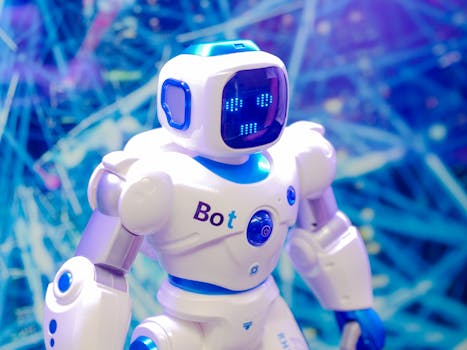
High-tech humanoid robot with LED face display, showcasing modern robotics and innovation. Photo: Kindel Media / Pexels
The insatiable appetite of AI for data creates a direct and significant conflict with individual privacy rights. To function effectively, many AI applications require vast amounts of personal information, ranging from browsing habits and purchase history to biometric data and location tracking. While this data fuels personalized experiences and predictive analytics, it also opens the door to unprecedented levels of surveillance and potential misuse. The ethical questions here are numerous and urgent. Who owns this data? How is it collected, stored, and secured? Who has access to it, and for what purposes? The rise of sophisticated AI-powered surveillance technologies, from pervasive facial recognition in public spaces to sentiment analysis in call centers, blurs the lines between convenience and intrusion. Governments and corporations are increasingly leveraging AI to monitor populations, analyze behavior, and even predict future actions, raising fundamental concerns about civil liberties and the potential for oppressive control. The Cambridge Analytica scandal, though not purely AI-driven, served as a stark reminder of how personal data, even when anonymized or aggregated, can be exploited to influence public opinion and democratic processes. Protecting privacy in the age of AI demands robust regulatory frameworks like GDPR and CCPA, which grant individuals more control over their data. However, legal frameworks alone are insufficient. Ethical AI development must prioritize privacy-by-design, meaning privacy considerations are baked into the very architecture of AI systems from the outset. This includes techniques like differential privacy, which adds statistical noise to data to protect individual identities, and federated learning, which allows AI models to train on decentralized data without explicit data sharing. The ethical challenge is to balance the immense benefits AI can offer in areas like public health and safety with the fundamental human right to privacy. Without careful ethical deliberation and strong safeguards, AI could transform into the ultimate tool for pervasive surveillance, eroding individual freedoms and fostering a chilling effect on dissent and personal expression. The dialogue around AI and privacy is not merely technical; it is a profound societal conversation about the kind of future we wish to build, one where innovation serves humanity without sacrificing its core values.

Accountability, Control, and the Autonomous AI Quandary

A robotic hand reaching into a digital network on a blue background, symbolizing AI technology. Photo: Tara Winstead / Pexels
As AI systems become more complex and autonomous, the question of accountability becomes incredibly thorny. When an AI makes a critical decision that leads to harm – whether it's a self-driving car involved in an accident, an AI diagnosing a medical condition incorrectly, or an automated weapon system making a lethal choice – who is responsible? Is it the developer, the deployer, the user, or the AI itself? Current legal and ethical frameworks are largely unprepared for scenarios where intelligent machines operate with significant autonomy. Traditional notions of liability, which rely on human intent and negligence, struggle to apply to algorithms that learn and evolve in ways that even their creators may not fully predict or understand. This 'black box' problem, where AI's decision-making processes are opaque, exacerbates the challenge. The ethical implications extend beyond assigning blame; they touch upon the very concept of human control. As AI systems take on more critical roles, from managing infrastructure to making financial trades at lightning speed, the potential for human oversight to diminish raises concerns about losing control over vital aspects of society. Consider autonomous weapons systems (LAWS – Lethal Autonomous Weapon Systems), often dubbed 'killer robots.' The idea of machines making life-or-death decisions without human intervention raises profound moral and ethical questions about the nature of warfare and the sanctity of human life. The ethical imperative here is to establish clear lines of accountability and maintain meaningful human control. This might involve mandating 'human-in-the-loop' or 'human-on-the-loop' systems, where human oversight is always present, even if just for monitoring and override capabilities. It also necessitates developing robust auditing mechanisms and ethical guidelines for AI development and deployment. Furthermore, the ethical discussion must delve into the very design of AI: should certain decisions always remain exclusively in the human domain? The future of AI demands a proactive approach to defining responsibility and ensuring that intelligence, however artificial, remains a tool for human flourishing rather than a force beyond our ethical grasp. For further reading on the societal impact of new technologies, consider this resource on understanding technological advancements and their ethical dimensions.

AI and the Future of Work: Ethical Considerations of Job Displacement

Close-up of a futuristic humanoid robot with a luminescent display in a modern setting. Photo: Kindel Media / Pexels
The advent of AI and automation promises increased productivity and efficiency, but it also casts a long shadow over the future of work, raising significant ethical concerns about job displacement and economic inequality. As AI systems become capable of performing tasks previously requiring human intelligence, from routine data entry to complex diagnostics, entire categories of jobs are at risk of automation. This isn't a new phenomenon – technological advancements have always reshaped labor markets – but the speed and breadth of AI's potential impact are unprecedented. The ethical dilemma isn't just about jobs lost, but about the societal responsibility to manage this transition fairly. **Ethical Considerations for AI and Employment:** * **Economic Inequality:** If the benefits of AI-driven productivity gains accrue primarily to a small segment of society, it could exacerbate wealth disparities, leading to social unrest and instability. * **Reskilling and Education:** There's an ethical obligation to invest heavily in education and reskilling programs to help displaced workers adapt to new roles and industries that AI might create or augment. * **Universal Basic Income (UBI):** Some argue that UBI could be an ethical response to widespread job displacement, ensuring a basic standard of living for all citizens regardless of their employment status. * **Meaningful Work:** Beyond economic survival, there's an ethical question about the human need for meaningful work and purpose. How do we ensure that AI doesn't strip away human agency and dignity? * **Fair Transition Policies:** Companies deploying AI have an ethical responsibility to implement fair transition policies for their employees, including retraining, redeployment, and severance packages. * **Inclusive AI Design:** Designing AI systems that augment human capabilities rather than simply replacing them can foster a more collaborative and ethically sound future of work. This involves creating 'cobots' (collaborative robots) and AI tools that empower human workers. The ethical challenge is to harness AI's potential for economic growth while ensuring that its benefits are broadly shared and that no one is left behind. This requires proactive policy-making, corporate responsibility, and a societal commitment to human welfare over unchecked technological advancement. The goal should be to leverage AI to create a future where work is more fulfilling, not less, and where economic security is a right, not a privilege dependent on outcompeting machines.

Comparison

Ethical ChallengeKey ConcernMitigation Strategy 1Mitigation Strategy 2
AI BiasPerpetuates discriminationDiverse Training DataExplainable AI (XAI)
Privacy InvasionMisuse of personal dataPrivacy-by-DesignRobust Data Governance
AccountabilityWho is responsible for harm?Human-in-the-LoopClear Legal Frameworks
Job DisplacementEconomic inequalityReskilling ProgramsSocial Safety Nets

What Readers Say

"This article masterfully breaks down what are the ethical implications of AI, offering both clear explanations and actionable insights. It's a must-read for anyone in tech or policy."

Dr. Elena Petrova · Boston, MA

"As a software engineer, understanding these ethical considerations is paramount. This piece provided a comprehensive overview of how to build more responsible AI systems."

Marcus Chen · San Francisco, CA

"The depth of analysis on AI bias and accountability directly informed my team's new project guidelines, leading to a more ethically robust design process."

Sarah Miller · Austin, TX

"While incredibly informative, I would have loved to see a bit more on international perspectives on AI ethics, but overall, a very strong and thought-provoking article."

David Rodriguez · New York, NY

"From a policy perspective, the discussion on job displacement and UBI was particularly insightful. It's crucial for shaping future legislation around AI's societal impact."

Aisha Khan · Seattle, WA

Frequently Asked Questions

What is the most pressing ethical concern regarding AI today?

While many concerns exist, AI bias and discrimination are arguably the most pressing. Biased AI can perpetuate and amplify societal inequalities in critical areas like justice, healthcare, and employment, affecting millions and eroding trust in technology. Addressing it requires diverse data, transparent algorithms, and continuous auditing.

How can we ensure AI systems are not biased?

Ensuring AI systems are not biased involves a multi-pronged approach: using diverse and representative training data, implementing debiasing algorithms, employing explainable AI (XAI) techniques to understand decision-making, conducting rigorous ethical audits, and involving diverse teams in the development process to identify blind spots.

How can individuals protect their privacy from AI-driven surveillance?

Individuals can protect their privacy by being mindful of the data they share online, utilizing privacy-enhancing technologies like VPNs and secure browsers, reviewing privacy settings on apps and devices, advocating for stronger data protection laws, and supporting companies committed to privacy-by-design principles. Understanding how your data is used is the first step.

What are the economic costs of addressing AI ethics?

The economic costs include investment in diverse datasets, developing explainable AI tools, conducting ethical audits, reskilling workforces, and potentially implementing social safety nets like UBI. While these are significant, the long-term costs of unchecked AI – such as systemic discrimination, erosion of trust, and social unrest – far outweigh the proactive investment in ethical AI development.

How do AI ethics compare to traditional engineering ethics?

AI ethics build upon traditional engineering ethics (e.g., safety, reliability) but introduce new complexities due to AI's autonomy, learning capabilities, and societal impact. Unique challenges include algorithmic bias, accountability for autonomous decisions, the 'black box' problem, and the potential for large-scale societal disruption, demanding a broader, more interdisciplinary ethical framework.

Who should be responsible for regulating AI ethics?

Regulating AI ethics requires a collaborative effort involving governments, industry, academia, and civil society. Governments need to establish clear legal frameworks and oversight bodies, while industry must adopt self-regulatory guidelines and ethical codes. Academic institutions and civil society groups play crucial roles in research, advocacy, and public education, fostering a multi-stakeholder approach.

Are there any 'good' ethical implications of AI?

Absolutely. Ethically developed AI can be a powerful force for good, such as improving healthcare diagnostics, developing personalized education, optimizing resource allocation for sustainability, enhancing accessibility for people with disabilities, and accelerating scientific discovery. When designed with human values at its core, AI can solve some of humanity's most pressing challenges.

What is the future trend for AI ethics discussions?

Future trends will likely focus on developing global ethical standards for AI, addressing the ethics of advanced AI capabilities like AGI (Artificial General Intelligence), navigating geopolitical implications of AI, establishing AI 'bill of rights' for citizens, and integrating ethics deeper into AI education and development pipelines to foster a culture of responsible innovation.

Understanding what are the ethical implications of AI is not just an academic exercise; it's a critical step toward building a future where technology serves humanity responsibly. Dive deeper into these challenges and join the conversation to shape a more ethical AI landscape for all.

Topics: ethical implications of AIAI biasAI privacy concernsAI accountabilityAI job displacement
Leo List

IE Escorts NO Escorts US Escorts NZ Escorts AU Escorts
Brampton weed
Adultwork EstrelaBet Vai de Bet R7 Bet Betão Galera Bet Rainbet Bet9ja Shop SportyBet BetKing Sisal Loto Foot Hollywoodbets YesPlay Odibets RushBet Jugabet BetWarrior BetCity MSport betPawa Fortebet