Unleash Visuals: Affordable 4K Monitors for Gaming

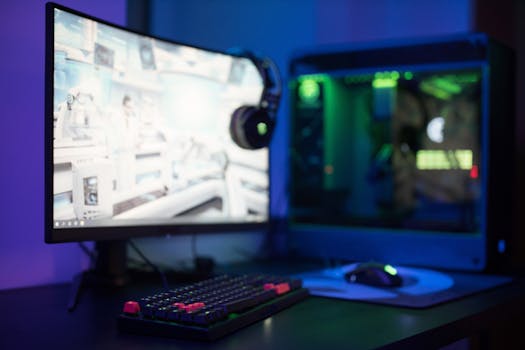
High-tech gaming setup featuring a curved monitor, RGB keyboard, and vibrant lighting.Photo: Ron Lach / Pexels

Unleash Visuals: Affordable 4K Monitors for Gaming

Experience breathtaking 4K resolution in your games without emptying your wallet; stunning immersion is now within reach.

Find Your Perfect Monitor

Key Takeaways

  • ✓ 4K resolution offers four times the pixels of 1080p, delivering incredible detail.
  • ✓ Higher refresh rates (e.g., 120Hz, 144Hz) are crucial for smooth gaming, even at 4K.
  • ✓ Adaptive Sync (FreeSync/G-Sync) eliminates screen tearing for a fluid experience.
  • ✓ IPS panels provide superior color accuracy and wider viewing angles, ideal for visuals.

How It Works

1
Understand Your Gaming Rig's Power

Before diving into 4K monitors, assess your current graphics card. A powerful GPU (like an RTX 3070/4070 or RX 6700 XT/7700 XT and above) is essential to drive 4K gaming at playable frame rates.

2
Identify Key Monitor Specifications

Focus on refresh rate (minimum 60Hz, ideally 120Hz+), response time (1ms GTG is excellent), panel type (IPS for color, VA for contrast), and adaptive sync technology (FreeSync or G-Sync compatible) to match your GPU.

3
Set a Realistic Budget & Feature Priorities

Define your maximum spending limit and prioritize features. Are you willing to compromise on maximum refresh rate for a larger screen, or vice versa? This helps narrow down options efficiently.

4
Research & Compare Models

Utilize online reviews, tech forums, and comparison websites to evaluate specific affordable 4K gaming monitors. Pay attention to user feedback regarding build quality, backlight bleed, and real-world performance.

The Allure of 4K Gaming: Why Resolution Matters

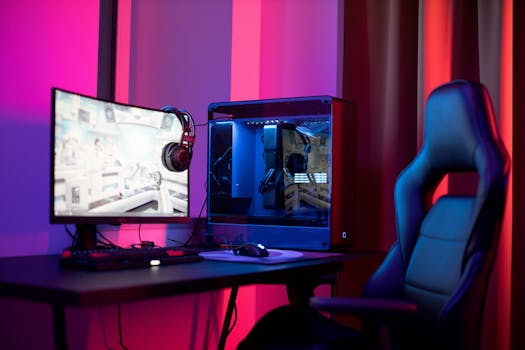
A sleek gaming setup featuring a high-end PC, widescreen monitor, and ergonomic chair lit by neon lights.Photo: Ron Lach / Pexels
For years, 1080p was the standard for PC gaming, offering a good balance of visual fidelity and performance. Then came 1440p, a sweet spot for many, delivering a noticeable bump in clarity without overly taxing hardware. But the ultimate visual upgrade, the pinnacle of crispness and detail, has always been 4K. With four times the pixels of a 1080p display (3840 x 2160 pixels), 4K resolution transforms your gaming experience, making textures pop, environments feel more immersive, and distant objects appear with astonishing clarity. Imagine traversing a vast open world where every blade of grass, every intricate architectural detail, and every subtle shadow is rendered with breathtaking precision. This isn't just about making things look 'nicer'; it's about a deeper level of immersion that pulls you further into the game world. Historically, 4K gaming was a luxury reserved for those with top-tier budgets for both monitors and graphics cards. The cost of entry was prohibitive, and the hardware required to push those pixels at playable frame rates was astronomically expensive. However, the landscape has shifted dramatically. Thanks to advancements in display technology and increased competition among manufacturers, truly affordable 4K monitors for gaming are no longer a myth. You can now find high-quality panels with gaming-centric features at price points that were once reserved for premium 1440p displays. This democratization of 4K technology means that more gamers than ever can experience the visual feast that 4K offers without having to take out a second mortgage. The key is knowing what to look for and understanding where smart compromises can be made without sacrificing the core gaming experience. We're talking about monitors that offer a fantastic balance of resolution, refresh rate, and response time, all while keeping your wallet happy. The jump from 1080p or even 1440p to 4K is often described as a revelation, akin to getting a new pair of glasses for your gaming world. It's a visual upgrade that you truly have to see to believe, making your favorite titles feel fresh and new again. For more insights into optimizing your gaming experience, check out our guide on optimizing PC performance for gaming.

Decoding Key Specifications for Budget 4K Gaming Monitors

High-tech gaming setup featuring a curved monitor, RGB keyboard, and vibrant lighting.Photo: Ron Lach / Pexels
When searching for affordable 4K monitors for gaming, it’s crucial to understand the specifications that truly impact your experience. Not all 4K monitors are created equal, especially when budget is a primary concern. The first and arguably most important spec for gaming is the refresh rate. While 60Hz 4K monitors are the most affordable, they offer a less fluid experience compared to higher refresh rates. Ideally, you’ll want a monitor with at least 120Hz or even 144Hz. This higher refresh rate ensures smoother motion, which is particularly beneficial in fast-paced games. The difference between 60Hz and 120Hz is immediately noticeable and can significantly enhance your responsiveness and overall enjoyment. Manufacturers are increasingly offering 120Hz and 144Hz 4K panels at competitive prices, making this a more attainable feature than ever before. Next, consider response time, typically measured in milliseconds (ms). A lower response time means less motion blur and ghosting, which is critical for competitive gaming. Look for a monitor with a 1ms or 4ms Gray-to-Gray (GtG) response time. While 1ms is the gold standard, 4ms GtG is perfectly acceptable for most gamers and often comes with a more budget-friendly price tag. Panel type is another significant factor. IPS (In-Plane Switching) panels are celebrated for their superior color accuracy, wide viewing angles, and generally good response times, making them excellent for immersive, visually rich games. VA (Vertical Alignment) panels offer higher contrast ratios, leading to deeper blacks, but can sometimes have slower response times and narrower viewing angles compared to IPS. TN (Twisted Nematic) panels are the fastest but typically suffer from poor color reproduction and viewing angles, making them less ideal for a premium 4K visual experience, even on a budget. Lastly, don't overlook Adaptive Sync technologies like AMD FreeSync (and FreeSync Premium/Pro) or NVIDIA G-Sync Compatible. These technologies synchronize the monitor's refresh rate with your GPU's frame rate, eliminating screen tearing and stuttering for a much smoother, tear-free gaming experience. Most affordable gaming monitors today support FreeSync, which is also compatible with many NVIDIA GPUs, offering excellent value. Prioritizing these features will ensure you get the best bang for your buck without compromising on the essential elements of a great gaming display.

Top Budget-Friendly Picks: Affordable 4K Monitors for Gaming

High-tech gaming setup featuring a curved monitor, RGB keyboard, and vibrant lighting.Photo: Ron Lach / Pexels
Navigating the market for affordable 4K monitors for gaming can feel overwhelming, but several manufacturers consistently deliver excellent value. Brands like LG, Samsung, Dell, Gigabyte, and Acer frequently offer compelling options that strike a fantastic balance between price and performance. When looking at specific models, keep an eye out for sales events, as prices on these monitors can fluctuate significantly. For instance, LG’s UltraGear series often features models like the LG 27GN950-B or its successors, which, while not always 'budget' in the strictest sense, frequently see significant discounts that bring them into a more accessible price range. These often boast IPS panels, 144Hz refresh rates, and FreeSync Premium Pro, making them formidable contenders for serious gamers. Samsung's Odyssey G7/G9 series (while often curved and sometimes 1440p) also has 4K flat panel counterparts that offer impressive specifications, including high refresh rates and vibrant VA panels, often at competitive prices during promotional periods. Dell's S-series monitors, such as the Dell S2721QS or S3221QS, are often lauded for their excellent value, offering solid 4K IPS panels with 60Hz refresh rates, perfect for single-player, graphically intensive games where frame rate isn't the absolute top priority. While 60Hz might sound low, for many narrative-driven or strategy games, the visual fidelity of 4K at 60 frames per second is incredibly immersive and perfectly acceptable. Gigabyte and Acer also have strong offerings, with Gigabyte's M-series (e.g., M28U, M32U) being particularly popular for their comprehensive feature sets, including KVM switches, high refresh rates, and excellent color accuracy, all while maintaining an aggressive price point. Acer's Nitro and Predator lines occasionally feature 4K monitors that dip into the 'affordable' category during sales, providing similar high-refresh-rate IPS options. The key is to be patient, do your research, and compare current deals across various retailers. Always check professional reviews and user feedback for any monitor you're considering to ensure it meets your specific gaming needs and expectations. Remember, an 'affordable' 4K gaming monitor isn't about sacrificing quality entirely, but rather about finding the best combination of essential gaming features within your financial comfort zone. Explore more options by visiting our comprehensive guide to gaming peripherals.

Maximizing Your Setup: Tips for Affordable 4K Gaming Monitors

High-tech gaming setup featuring a curved monitor, RGB keyboard, and vibrant lighting.Photo: Ron Lach / Pexels
Even with the best affordable 4K monitors for gaming, optimizing your setup can significantly enhance your experience. First, ensure your graphics card is up to the task. While modern GPUs like the NVIDIA RTX 3070/4070 or AMD RX 6700 XT/7700 XT can handle 4K gaming, you might need to adjust in-game settings to achieve desirable frame rates, especially if you're aiming for 120Hz or 144Hz. Don't be afraid to lower settings like anti-aliasing (which is less critical at 4K anyway), shadow quality, or volumetric clouds to gain precious frames. The visual impact of 4K resolution often outweighs the need for ultra-high settings in other areas. * **Cable Matters:** Always use a high-quality DisplayPort 1.4 or HDMI 2.1 cable. Older cables might not support the full bandwidth required for 4K at high refresh rates, leading to a capped resolution or refresh rate. Check your monitor's specifications for the recommended cable type. * **Monitor Calibration:** Even budget monitors can look stunning with proper calibration. Use your monitor's OSD (On-Screen Display) menu to adjust brightness, contrast, and color temperature to your liking. Many online guides and tools can help you achieve optimal settings. * **Enable Adaptive Sync:** If your monitor and GPU support FreeSync or G-Sync Compatible, ensure it's enabled in both your monitor's settings and your graphics card's control panel. This will eliminate screen tearing and provide a much smoother visual experience. * **Consider HDR (High Dynamic Range):** While true HDR monitors are often expensive, many affordable 4K monitors offer some level of HDR support (e.g., HDR400). While not as impactful as HDR1000, it can still enhance contrast and color vibrancy in compatible games. Experiment with it to see if you like the effect. * **Firmware Updates:** Periodically check the manufacturer's website for firmware updates for your monitor. These updates can sometimes improve performance, fix bugs, or even add new features. * **Ergonomics:** Don't forget ergonomics. Position your monitor at eye level, about an arm's length away, to reduce strain during long gaming sessions. A comfortable setup contributes significantly to overall enjoyment. By paying attention to these details, you can squeeze every bit of performance and visual splendor out of your affordable 4K gaming monitor, ensuring a truly premium experience without the premium price tag.

Comparison

FeatureLG 27GN950-B (or similar)Gigabyte M28UDell S2721QS
Resolution3840x2160 (4K)3840x2160 (4K)3840x2160 (4K)
Panel TypeIPSIPSIPS
Refresh Rate144Hz144Hz60Hz
Response Time1ms GtG1ms MPRT4ms GtG
Adaptive SyncFreeSync Premium ProFreeSync Premium ProFreeSync
HDR SupportDisplayHDR 600DisplayHDR 400HDR10
ConnectivityHDMI 2.0, DP 1.4HDMI 2.1, DP 1.4, USB-CHDMI 2.0, DP 1.2
Price Range (approx.)$550 - $700$500 - $650$250 - $350

What Our Readers Say

5 ★★★★★

"I never thought I'd get a 4K 144Hz monitor for under $600, but my Gigabyte M28U blew me away. The colors are vibrant, and gaming at 4K is an absolute game-changer. No more jagged edges!"

5 ★★★★★

"My Dell S2721QS was a fantastic upgrade from my old 1080p monitor. While it's only 60Hz, for single-player games like Cyberpunk 2077, the visual detail at 4K is just stunning. Great value for the price."

5 ★★★★★

"Finally jumped to 4K with an LG UltraGear model I snagged on sale. The difference in clarity in Warzone is incredible, and the high refresh rate keeps everything silky smooth. My K/D has even seen a slight bump!"

4 ★★★★☆

"I got a budget 4K monitor from Acer, and it's mostly great. The picture quality is amazing, but I do notice some slight backlight bleed in very dark scenes. Still, for the price, it's hard to complain too much."

5 ★★★★★

"As a graphic designer who also games, finding an affordable 4K monitor with good color accuracy and a decent refresh rate was key. My chosen monitor delivers on both, allowing me to switch seamlessly between work and play with beautiful visuals."

Frequently Asked Questions

Are affordable 4K monitors for gaming actually good, or are they too many compromises?
Yes, many affordable 4K gaming monitors offer excellent value. While they might not have every premium feature found in top-tier models (like OLED panels or extreme HDR), they provide a fantastic 4K resolution experience with competitive refresh rates and response times, making them a worthwhile investment for most gamers.
Will my current graphics card be able to handle 4K gaming?
It depends on your GPU. For playable 4K gaming at decent frame rates, especially above 60Hz, you'll generally need a mid-to-high-end graphics card from the last few generations, such as an NVIDIA RTX 3070/4070 or AMD RX 6700 XT/7700 XT and above. Older or lower-tier cards will struggle to maintain smooth performance at 4K.
How do I choose between a 60Hz and a 120Hz/144Hz 4K monitor on a budget?
Consider your game preferences. For graphically intensive, single-player, or strategy games where immersion is key and frame rates are naturally lower, a 60Hz 4K monitor can offer incredible visual fidelity at a lower cost. For fast-paced competitive games, a 120Hz/144Hz monitor is highly recommended for smoother motion and quicker reactions, but it will require a more powerful GPU and a slightly larger budget for the monitor itself.
What's the typical price range for affordable 4K gaming monitors?
Affordable 4K gaming monitors typically range from $250 to $700. Monitors at the lower end often offer 60Hz refresh rates, while those closer to the $500-$700 mark will often feature 120Hz/144Hz refresh rates, better panel quality, and more advanced gaming features like superior Adaptive Sync implementations and better HDR support.
Is 4K gaming better than 1440p high refresh rate gaming?
It's a trade-off. 4K offers unparalleled visual crispness and detail, which is fantastic for immersion. 1440p at very high refresh rates (165Hz+) often provides a smoother, more responsive experience, especially in competitive titles, and is easier for GPUs to drive. The 'better' option depends on whether you prioritize visual fidelity or maximum frame rates and responsiveness.
Who should buy affordable 4K monitors for gaming?
Gamers who prioritize stunning visual detail and immersion in their games, especially those who play graphically rich single-player titles, RPGs, or strategy games. It's also ideal for those with a capable mid-to-high-end GPU who want to experience the next level of visual fidelity without breaking the bank on a premium monitor.
Are there any common issues with budget 4K gaming monitors?
Some common issues can include less consistent panel uniformity, potential for backlight bleed or IPS glow (common with IPS panels), and sometimes less robust build quality compared to premium models. HDR performance on budget models (e.g., DisplayHDR 400) is also often limited compared to higher-tier HDR certifications. Always check reviews for specific models.
What's the future of affordable 4K gaming monitors?
The trend points towards even greater affordability and feature integration. We can expect more widespread adoption of HDMI 2.1, higher refresh rates (165Hz+), improved HDR capabilities (e.g., Mini-LED backlighting), and possibly even more energy-efficient panels, all while prices continue to become more competitive, making 4K gaming accessible to an even broader audience.

Embrace the stunning clarity and immersive worlds that affordable 4K monitors for gaming can offer. With careful research and an understanding of key features, you can elevate your gaming setup significantly without overspending. Start your journey to visual perfection today and redefine your gaming experience.

Topics: affordable 4K monitors for gamingbudget 4K gaming displaycheap 4K gaming monitorbest value 4K monitorgaming monitor deals
Leo List