
Unlocking Potential: Advantages of Augmented Reality Apps
advantages of augmented reality apps

Unlocking Potential: Advantages of Augmented Reality Apps

Experience a new dimension of interaction, productivity, and engagement with the power of augmented reality applications.

Explore AR's Impact

Key Takeaways

  • ✓ AR market projected to reach over $300 billion by 2024.
  • ✓ Enhances real-world perception with digital overlays.
  • ✓ Used in diverse sectors: retail, healthcare, education, manufacturing.
  • ✓ Boosts training efficiency by up to 200% in some cases.

How It Works

1
Capture Real-World Data

Your device's camera captures the environment, feeding visual data to the AR app. This forms the foundational layer for digital augmentation.

2
Analyze and Map

Advanced algorithms process the visual data, identifying surfaces, objects, and spatial relationships. This mapping allows the app to understand its surroundings.

3
Overlay Digital Content

Based on the analysis, the AR app renders virtual objects, information, or experiences directly onto your real-world view. These digital elements appear seamlessly integrated.

4
Interact and Engage

Users can then interact with these augmented elements, moving them, resizing them, or accessing further information. This creates an immersive and dynamic experience.

Revolutionizing User Experience and Engagement through AR

Adult man in blue shirt holding smartphone against white background. Photo: Youssef Samuil / Pexels
Augmented reality (AR) apps are fundamentally reshaping how we interact with the digital and physical worlds, offering a level of immersion and utility previously unimaginable. One of the most significant advantages of augmented reality apps lies in their capacity to revolutionize the user experience, transforming passive consumption into active engagement. Imagine trying on clothes virtually before making a purchase, or visualizing furniture in your living room before it's delivered. This isn't just about convenience; it's about reducing uncertainty, enhancing decision-making, and making the entire process more enjoyable and efficient. Retailers, for example, leverage AR to create virtual try-on experiences for apparel, cosmetics, and eyewear, leading to higher conversion rates and fewer returns. This direct visualization helps consumers overcome the common barrier of not knowing how a product will look or fit, bridging the gap between online browsing and real-world application. Beyond retail, AR elevates entertainment, turning mundane environments into interactive playgrounds. Games like Pokémon GO famously brought digital creatures into our parks and streets, fostering a global phenomenon of exploration and social interaction. But the impact extends further into educational and cultural spheres, where AR apps can overlay historical information onto landmarks or bring museum exhibits to life with interactive 3D models. These applications don't just present information; they allow users to experience it within its relevant context, making learning more intuitive and memorable. The ability to overlay contextual information directly onto our view of the world means that data becomes immediately actionable and relevant. For instance, a tourist using an AR app can point their phone at a historic building and instantly see its history, architectural details, and even relevant reviews, all without breaking their stride or searching through separate applications. This seamless integration of digital content into our physical environment fosters a deeper connection and understanding, moving beyond simple information retrieval to a truly augmented reality. This enhanced engagement isn't just a 'nice-to-have'; it's a powerful driver for businesses seeking to differentiate themselves and capture consumer attention in an increasingly crowded digital landscape. By offering unique, immersive experiences, companies can build stronger brand loyalty and create memorable interactions that resonate long after the app is closed. The future of user experience is undeniably intertwined with AR, promising a world where information and interaction are always at our fingertips, seamlessly integrated into our perception of reality. For more insights into the broader technological landscape, explore the latest tech innovations.

Boosting Productivity and Efficiency Across Industries
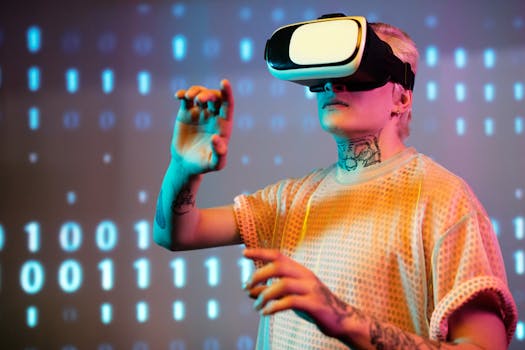
A young man interacts in virtual reality wearing a headset with a digital binary background. Photo: Darlene Alderson / Pexels
The transformative power of augmented reality apps extends far beyond consumer engagement, making significant inroads into enterprise and industrial sectors by dramatically boosting productivity and efficiency. One of the most compelling advantages of augmented reality apps in these contexts is their ability to provide real-time, context-aware information and guidance to workers, often hands-free. Consider the manufacturing floor: technicians can use AR glasses to overlay repair instructions, schematics, or diagnostic data directly onto complex machinery. This eliminates the need to constantly consult manuals, reducing errors, speeding up repair times, and minimizing downtime. The 'see what I see' capability allows remote experts to guide on-site personnel through intricate procedures, effectively bringing specialized knowledge to any location without requiring physical travel. This is particularly invaluable in fields requiring precision and compliance, such as aerospace or medical device assembly, where mistakes can be costly or even dangerous. In the healthcare industry, AR is revolutionizing surgical planning and execution. Surgeons can overlay patient data, such as MRI or CT scans, directly onto the patient's body during an operation, providing a 'x-ray vision' capability that enhances precision and reduces invasiveness. For medical students, AR apps offer immersive training environments, allowing them to practice complex procedures on virtual patients with realistic feedback, accelerating skill acquisition and improving patient safety. Beyond the operating room, AR aids nurses in identifying veins for injections and helps pharmacists visualize medication interactions. The construction sector also benefits immensely from AR. Architects and engineers can use AR apps to visualize 3D building models on-site, comparing planned structures with actual progress, identifying potential clashes, and ensuring accurate placement of components. This leads to fewer rework orders, better project management, and significant cost savings. Furthermore, AR can be used for safety training, simulating hazardous environments or complex equipment operation without putting workers at risk. Logistics and warehousing operations are becoming more efficient with AR-powered smart glasses that guide workers through picking routes, highlight specific items, and provide real-time inventory updates. This reduces picking errors, speeds up order fulfillment, and optimizes warehouse layouts. The ability to access critical information instantly, without breaking workflow or requiring physical interaction with a screen, is a game-changer for frontline workers across diverse industries. The integration of AR into everyday workflows is not just about making tasks easier; it's about unlocking new levels of operational excellence and strategic advantage, driving innovation and competitiveness in a rapidly evolving global economy.

Enhancing Training, Education, and Collaboration through AR

Kids interacting with a touchscreen, embracing technology education. Photo: Alena Darmel / Pexels
The educational and collaborative spheres are experiencing a profound transformation thanks to the unique advantages of augmented reality apps. AR's ability to blend digital content with the real world creates immersive and interactive learning environments that significantly enhance comprehension and retention. Traditional textbooks and lectures, while foundational, often struggle to convey complex concepts in an engaging manner. AR apps overcome this by allowing students to interact with 3D models of organs, historical artifacts, or engineering designs right in their classroom or home. Imagine a biology student dissecting a virtual frog without harming an actual animal, or an astronomy student exploring the solar system as if planets were orbiting around them in the room. This hands-on, experiential learning is far more effective than passive reading or viewing, making abstract concepts tangible and fostering a deeper understanding. For vocational training, AR offers unparalleled benefits. Apprentices can practice complex tasks, like welding or engine repair, with virtual overlays guiding their movements and providing instant feedback. This reduces the need for expensive physical prototypes, minimizes material waste, and allows for safe repetition of dangerous procedures. The ability to simulate real-world scenarios in a controlled environment accelerates skill development and builds confidence before entering actual work settings. This is particularly crucial in fields where practical experience is paramount, such as manufacturing, healthcare, and specialized trades. Furthermore, AR dramatically improves collaboration, especially in geographically dispersed teams. Architects, designers, and engineers can use AR apps to review 3D models together in a shared virtual space, even if they are thousands of miles apart. They can annotate models, highlight areas of concern, and make real-time adjustments, facilitating more efficient design reviews and decision-making. This shared understanding of a digital object in a physical context streamlines communication and reduces misinterpretations that often arise from traditional 2D representations. Remote assistance, as mentioned earlier, is another powerful collaborative application, enabling experts to guide field technicians through complex repairs or installations by drawing directly onto the technician's view of the equipment. This breaks down geographical barriers and ensures that specialized knowledge is accessible exactly where and when it's needed, minimizing downtime and improving service quality. The democratizing effect of AR in education and collaboration is immense, making high-quality, interactive learning and expert assistance accessible to a wider audience, thereby fostering innovation and skill development on a global scale. For a deeper dive into how technology is changing learning, consider exploring resources on educational technology trends.

Navigating Challenges and Maximizing AR App Benefits
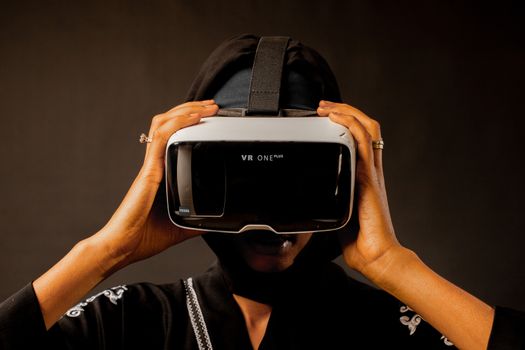
Woman using a VR headset, immersed in a virtual reality experience. Photo: Ila Bappa Ibrahim / Pexels
While the advantages of augmented reality apps are undeniable and transformative, it's crucial to acknowledge and navigate potential challenges to truly maximize their benefits. Understanding these hurdles can help developers and users alike make informed decisions and optimize their AR experiences. One primary challenge revolves around hardware limitations. While smartphones have become powerful AR platforms, dedicated AR glasses or headsets still face issues with field of view, battery life, comfort, and processing power. These limitations can sometimes hinder the seamless, immersive experience that AR promises. Developers must design apps that are optimized for current hardware capabilities while also anticipating future advancements. Another significant consideration is the development complexity and cost. Creating sophisticated AR apps requires specialized skills in 3D modeling, computer vision, and spatial computing, which can be expensive and time-consuming. The learning curve for new AR development tools can also be steep. As the ecosystem matures, however, tools are becoming more accessible, and development frameworks are streamlining the process. User adoption and experience also present challenges. Some users may find AR apps disorienting or struggle with the interface, especially if they are new to the technology. Ensuring intuitive design, clear instructions, and a smooth onboarding process is critical for widespread acceptance. Privacy and data security are paramount concerns, particularly when AR apps access camera feeds and potentially sensitive environmental data. Developers must implement robust security measures and clearly communicate data handling practices to build user trust. Finally, the 'wow' factor of AR can sometimes overshadow practical utility. It's essential to design AR apps that solve real-world problems or genuinely enhance existing experiences, rather than just being a novelty. **Tips for Maximizing AR App Benefits:** * **Define Clear Use Cases:** Focus on specific problems AR can solve or experiences it can genuinely improve. * **Optimize for Performance:** Ensure smooth frame rates and minimal latency to prevent motion sickness or disorientation. * **Prioritize User Experience:** Design intuitive interfaces, provide clear instructions, and make interactions feel natural. * **Consider Hardware Constraints:** Develop with current device capabilities in mind, but prepare for future advancements. * **Ensure Data Privacy & Security:** Implement strong protocols for handling user and environmental data. * **Iterate and Gather Feedback:** Continuously test with target users and refine the app based on their input. * **Integrate with Existing Workflows:** For enterprise applications, ensure AR solutions complement, rather than disrupt, current processes. * **Focus on Value, Not Just Novelty:** Ensure the AR experience provides tangible benefits or a significantly enhanced interaction.

Comparison

FeatureAugmented Reality AppsVirtual Reality AppsTraditional Mobile Apps
Immersion LevelBlends digital with real worldFully immersive digital worldDigital content on screen
Hardware RequirementSmartphone/Tablet (often), AR GlassesVR HeadsetSmartphone/Tablet
Real-World Interaction✓ (Enhanced)✗ (Replaced)✓ (Limited)
Primary Use CaseInformation overlay, contextual interactionSimulations, gaming, remote presenceInformation access, communication, tasks
Cost of Entry (Consumer)Low (smartphone), Medium (glasses)Medium to HighVery Low (smartphone)

What Readers Say

"Using AR apps for interior design has been a game-changer. I can visualize furniture in my home perfectly before buying, saving me so much time and hassle. The advantages of augmented reality apps for home decor are truly incredible."

Sarah J. · Austin, TX

"As a field technician, the AR app my company uses for repairs is indispensable. It overlays schematics directly onto the equipment, making troubleshooting incredibly efficient. It's a clear example of the productivity advantages of augmented reality apps."

Mark D. · Seattle, WA

"For medical training, AR has revolutionized how my students learn anatomy. Being able to interact with 3D models in a real-world context has led to significantly improved understanding and retention. The educational advantages of augmented reality apps are undeniable."

Dr. Elena R. · Boston, MA

"Some AR apps can be a bit glitchy depending on lighting, but when they work well, they're amazing. The virtual try-on features for clothes are surprisingly accurate, though I wish battery life on my phone lasted longer with them. Still, the benefits outweigh the minor issues."

David C. · Los Angeles, CA

"My kids absolutely love the educational AR games; they're learning about dinosaurs and space in such an engaging way. It's fantastic to see them so excited about learning, thanks to the interactive nature of these apps. The advantages of augmented reality apps for family learning are huge."

Emily S. · Chicago, IL

Frequently Asked Questions

What are the primary advantages of augmented reality apps for businesses?

For businesses, AR apps offer significant advantages such as enhanced customer engagement through immersive product visualization, improved operational efficiency with real-time guidance for workers, reduced training costs, and increased sales conversion rates. They can also provide a competitive edge by offering unique, innovative experiences.

Is augmented reality a niche technology, or is it becoming mainstream?

While still evolving, augmented reality is rapidly moving towards mainstream adoption. With powerful AR capabilities now standard on most smartphones and continuous advancements in dedicated AR hardware, its presence in retail, gaming, education, and enterprise is growing exponentially, making it far from a niche technology.

How do I get started with using augmented reality apps?

To get started, you typically only need a modern smartphone or tablet. Many popular apps like Snapchat, Instagram, and Google Maps already incorporate AR features. For more specialized experiences, you can download AR-specific apps from your device's app store, such as IKEA Place for furniture visualization or various educational AR apps.

Are augmented reality apps expensive to develop?

The cost of developing augmented reality apps can vary widely depending on complexity, features, and platform. Simple AR filters can be relatively inexpensive, while highly interactive, custom enterprise solutions can be a significant investment. However, increasingly accessible development tools are helping to lower entry barriers.

How do AR apps compare to VR apps in terms of advantages?

AR apps augment your real-world view with digital information, offering advantages in contextual awareness, real-time guidance, and blending digital with physical. VR apps, on the other hand, fully immerse you in a simulated digital environment, excelling in training simulations, gaming, and remote presence where complete immersion is desired. Their advantages lie in different use cases.

Who benefits most from augmented reality apps?

A wide range of individuals and sectors benefit. Consumers gain from enhanced shopping, entertainment, and learning experiences. Businesses benefit from improved productivity, sales, and training. Educators and students find AR invaluable for interactive learning, and professionals across healthcare, manufacturing, and logistics leverage it for efficiency and precision.

Are there any privacy concerns with augmented reality apps?

Yes, privacy is a valid concern. AR apps often access your device's camera and sensors to map your environment, which could potentially capture sensitive personal or environmental data. It's crucial for users to review app permissions and for developers to implement robust data encryption and clear privacy policies to ensure user trust and data security.

What future trends can we expect regarding the advantages of augmented reality apps?

Future trends include more advanced AR eyewear offering seamless, hands-free experiences, greater integration with AI for more intelligent and context-aware interactions, widespread adoption in industrial maintenance and remote collaboration, and highly personalized AR experiences that adapt to individual user preferences and environments.

The advantages of augmented reality apps are reshaping industries and daily life. Embrace this transformative technology to unlock new levels of engagement, efficiency, and innovation in your personal and professional world.

Topics: advantages of augmented reality appsAR benefitsaugmented reality use casesAR technology impactfuture of AR apps
Leo List
Brampton weed
Adultwork EstrelaBet Vai de Bet R7 Bet Betão Galera Bet Rainbet Bet9ja Shop SportyBet BetKing Sisal Loto Foot Hollywoodbets YesPlay Odibets RushBet Jugabet BetWarrior BetCity MSport betPawa Fortebet